

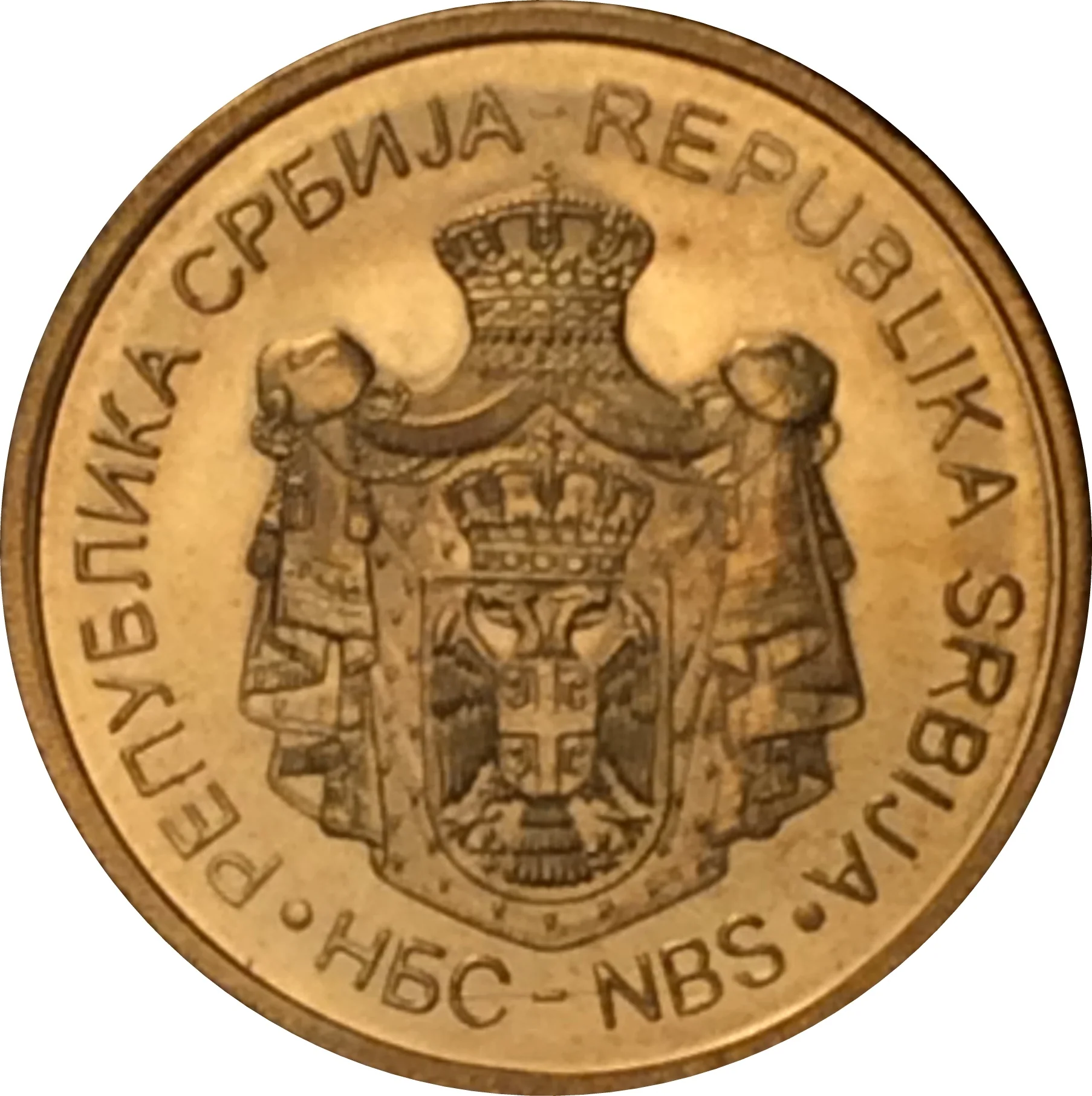
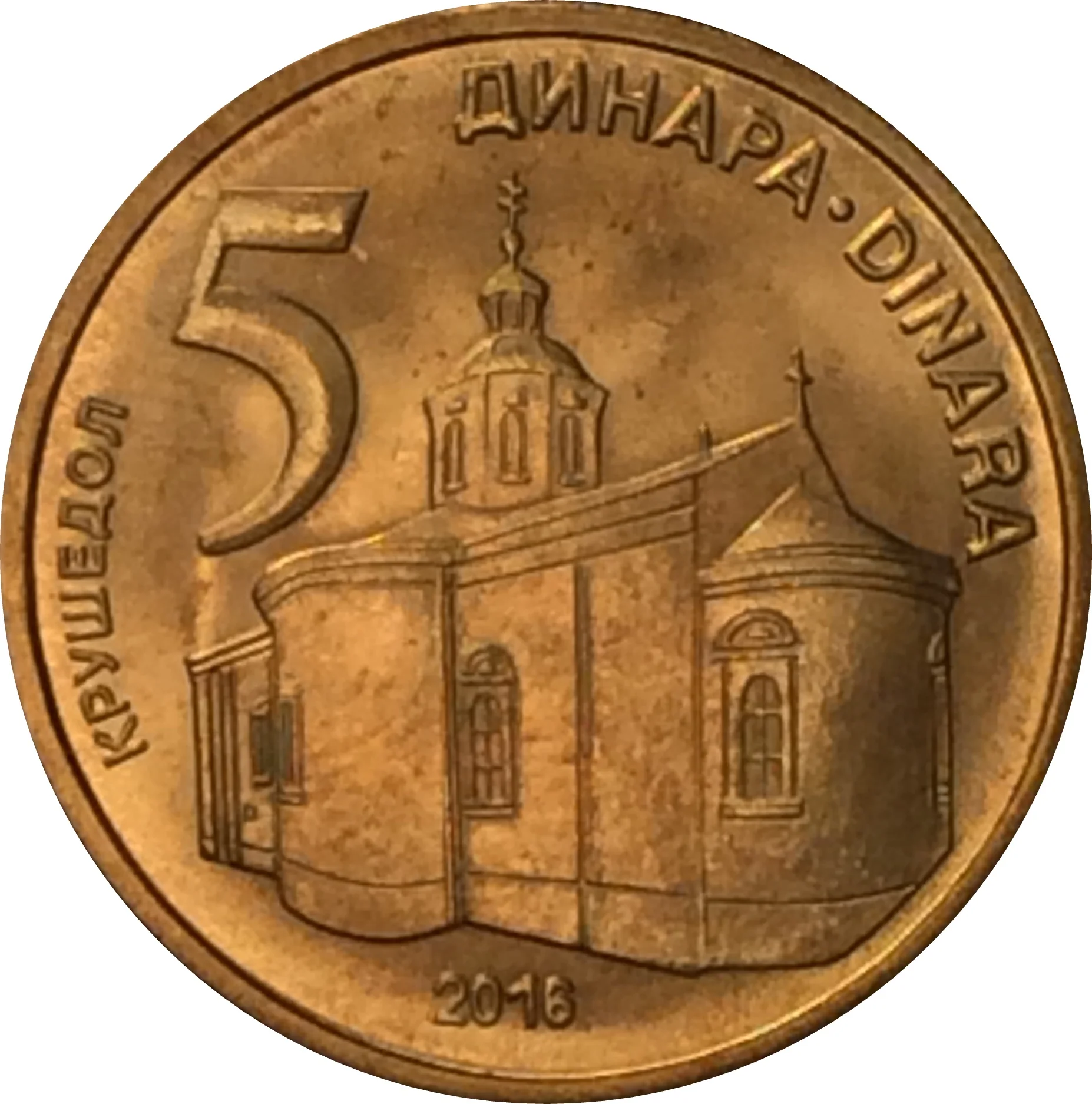
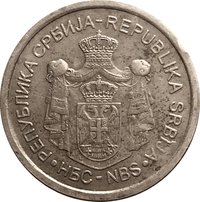
Obverse
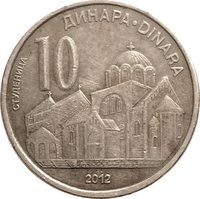
Reverse
Edge
Segmented reeding.
Categories
| Animal> Bird |
| Building> Religious building |
| Symbol> Crown |
| Symbols> Coat of Arms |
| Symbol> Double-headed eagle |
Mints
| Name | Mark |
|---|---|
| Belgrade | — |
Mintings
| Year | Mint Mark | Mintage | Quality | Collection |
|---|---|---|---|---|
| 2013 | — | — | ||
| 2014 | — | — | ||
| 2016 | — | — | ||
| 2018 | — | — | ||
| 2019 | — | — | ||
| 2020 | — | — | ||
| 2021 | — | — | ||
| 2023 | — | — | ||
| 2024 | — | — |
Historical background
In 2013, Serbia's currency situation was characterized by significant pressure on the Serbian dinar (RSD) and heightened concerns over macroeconomic stability. The year began with the country in a technical recession, following contractions in both 2012 and the first half of 2013, which dampened investor confidence and reduced foreign exchange inflows. A major contributing factor was the substantial fiscal deficit and rapidly growing public debt, which prompted international credit rating agencies to downgrade Serbia's sovereign debt to junk status. This eroded trust and led to capital outflows, putting persistent downward pressure on the dinar.
The National Bank of Serbia (NBS) faced a difficult policy dilemma, actively intervening in the foreign exchange market to slow the dinar's depreciation. Throughout the year, the NBS sold billions of euros from its foreign currency reserves to prop up the dinar, seeking to curb inflation and maintain financial stability. However, these interventions came at a cost, depleting reserves and highlighting underlying economic vulnerabilities. Despite these efforts, the dinar depreciated by approximately 7.5% against the euro over the course of the year, reflecting market anxieties.
The situation culminated in late 2013, setting the stage for a major policy shift. The persistent economic challenges and currency weakness underscored the need for external support and decisive structural reforms. Consequently, in early 2014, the Serbian government entered into a new precautionary Stand-By Arrangement with the International Monetary Fund (IMF), which included commitments to fiscal consolidation, the restructuring of state-owned enterprises, and a shift towards a more flexible exchange rate regime. Thus, the currency dynamics of 2013 served as a catalyst for the austerity measures and economic overhaul that defined the subsequent years.
The National Bank of Serbia (NBS) faced a difficult policy dilemma, actively intervening in the foreign exchange market to slow the dinar's depreciation. Throughout the year, the NBS sold billions of euros from its foreign currency reserves to prop up the dinar, seeking to curb inflation and maintain financial stability. However, these interventions came at a cost, depleting reserves and highlighting underlying economic vulnerabilities. Despite these efforts, the dinar depreciated by approximately 7.5% against the euro over the course of the year, reflecting market anxieties.
The situation culminated in late 2013, setting the stage for a major policy shift. The persistent economic challenges and currency weakness underscored the need for external support and decisive structural reforms. Consequently, in early 2014, the Serbian government entered into a new precautionary Stand-By Arrangement with the International Monetary Fund (IMF), which included commitments to fiscal consolidation, the restructuring of state-owned enterprises, and a shift towards a more flexible exchange rate regime. Thus, the currency dynamics of 2013 served as a catalyst for the austerity measures and economic overhaul that defined the subsequent years.
🌱 Very Common