

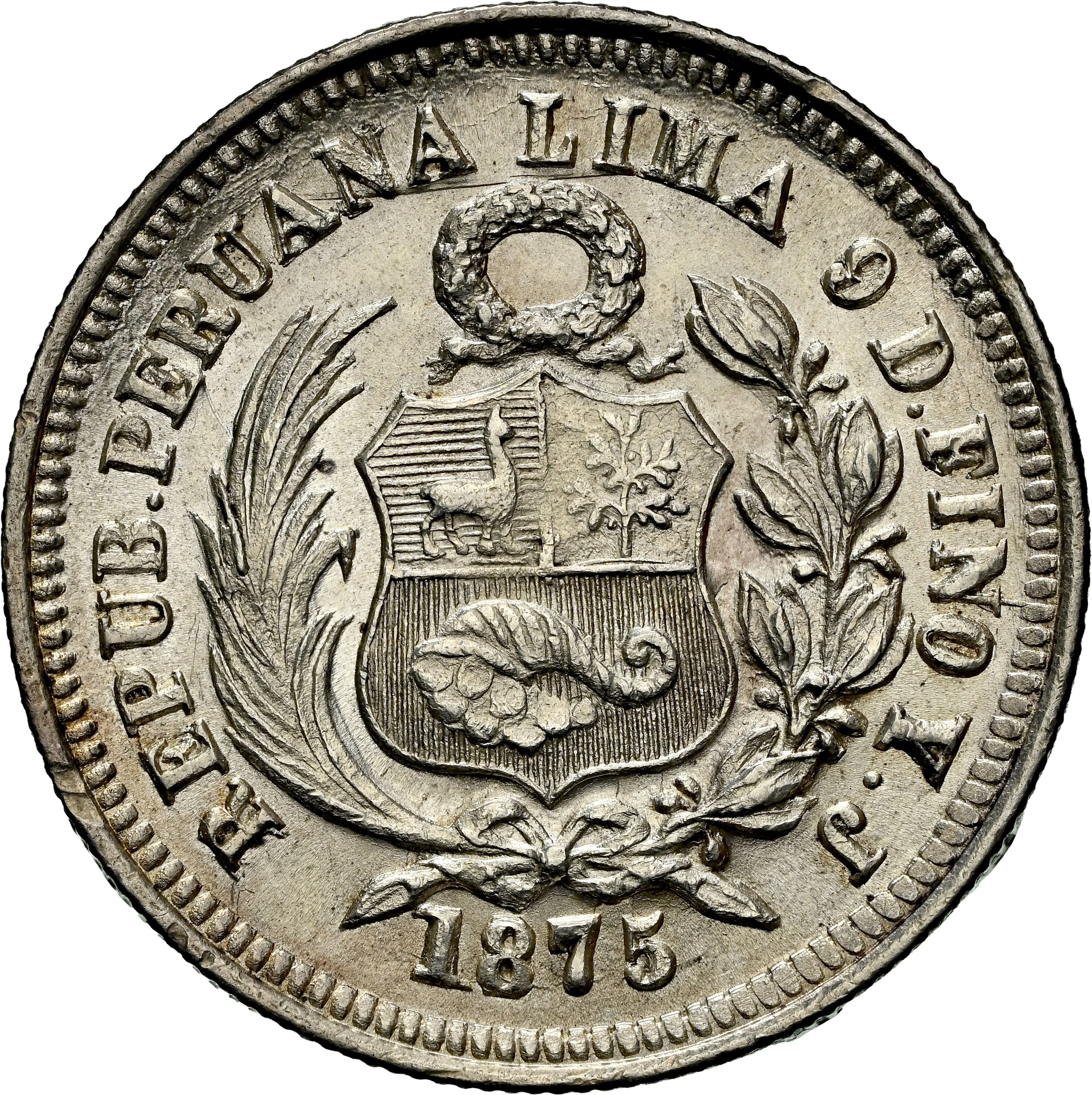
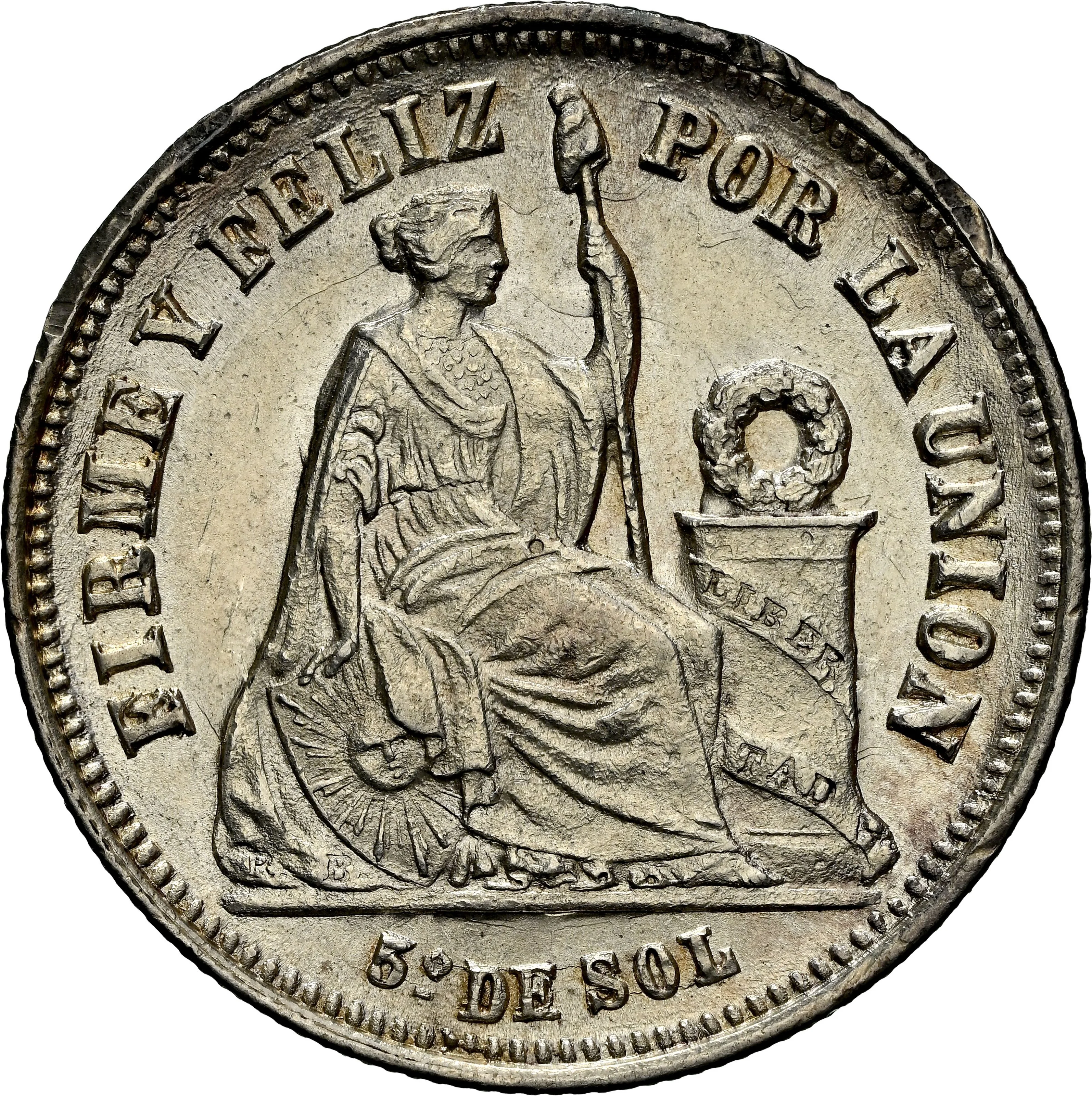
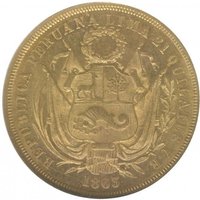
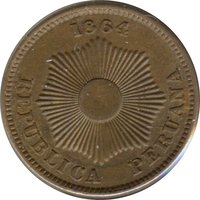
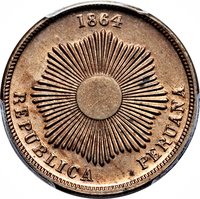
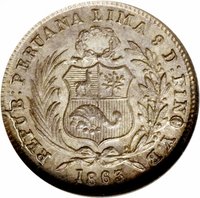
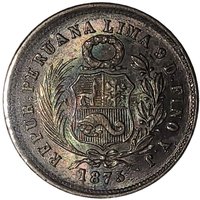
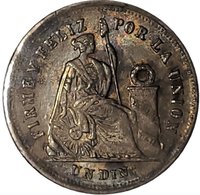
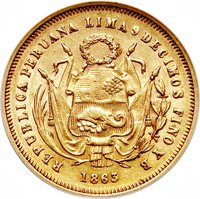
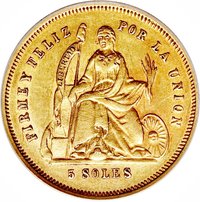
Obverse
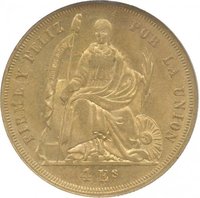
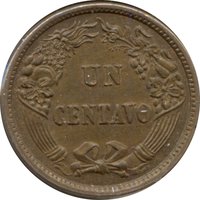
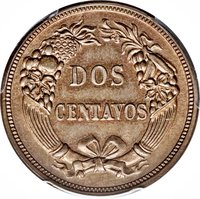
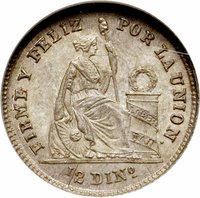
Reverse
Edge
Reeded
Mintings
| Year | Mint Mark | Mintage | Quality | Collection |
|---|---|---|---|---|
| 1863 | YB | — | ||
| 1864 | YB | — | ||
| 1864 | YB-DD | — | ||
| 1865 | YB | — | ||
| 1866 | YB | — | ||
| 1867 | YB | — | ||
| 1869 | YB | — | ||
| 1874 | YB | — | ||
| 1874 | YJ | — | ||
| 1875 | YB | — | ||
| 1875 | YJ | — |
Historical background
In 1863, Peru's currency system was in a state of transition and complexity, rooted in the colonial monetary legacy. The official currency was the silver sol, introduced in the 1860s to replace the old Spanish colonial real. However, the sol existed alongside, and was often overshadowed by, foreign coins that dominated commerce, particularly the Peruvian silver peso (an 8-real coin) and gold currencies like the libra peruana (Peruvian pound). This created a bimetallic system where the values of gold and silver coins fluctuated against each other based on international metal prices, leading to instability and confusion in everyday transactions.
The period was also marked by a chronic shortage of small-denomination coinage (fractional currency), which severely hampered daily economic life for the populace. To address this, the government and private entities issued low-value paper notes and tokens, but these were often mistrusted and circulated at a discount. Furthermore, the nation's fiscal health was precarious due to heavy external borrowing; the government of President Juan Antonio Pezet had just contracted a major loan from London in 1862, increasing the foreign debt burden and creating future obligations that would need to be serviced in gold or stable foreign currency.
This fragile monetary environment existed on the brink of significant upheaval. By the end of 1863, tensions with Spain were escalating toward the Chincha Islands War (which began in 1864), a conflict that would trigger a profound fiscal crisis. The impending war expenses would lead to massive inflation, the suspension of debt payments, and the eventual collapse of the sol's value, making 1863 the final year of relative, though flawed, monetary stability before a decade of severe financial disorder.
The period was also marked by a chronic shortage of small-denomination coinage (fractional currency), which severely hampered daily economic life for the populace. To address this, the government and private entities issued low-value paper notes and tokens, but these were often mistrusted and circulated at a discount. Furthermore, the nation's fiscal health was precarious due to heavy external borrowing; the government of President Juan Antonio Pezet had just contracted a major loan from London in 1862, increasing the foreign debt burden and creating future obligations that would need to be serviced in gold or stable foreign currency.
This fragile monetary environment existed on the brink of significant upheaval. By the end of 1863, tensions with Spain were escalating toward the Chincha Islands War (which began in 1864), a conflict that would trigger a profound fiscal crisis. The impending war expenses would lead to massive inflation, the suspension of debt payments, and the eventual collapse of the sol's value, making 1863 the final year of relative, though flawed, monetary stability before a decade of severe financial disorder.
Series: 1863 Peru circulation coins
🌱 Common