

1 shilling – United Kingdom
Add to wishlist
United Kingdom
Context
Years: 1949–1951
Issuer: United Kingdom
Ruler: George VI
Currency:
(1158—1970)
Demonetization: 31 December 1990
Total mintage: 46,503,704
Material
Diameter: 23.5 mm
Weight: 5.66 g
Thickness: 1.73 mm
Shape: Round
Composition: Copper-nickel
Technique: Milled
Alignment: Medal alignment
flip
References
KM: #
Numista: #3335
Obverse
Description:
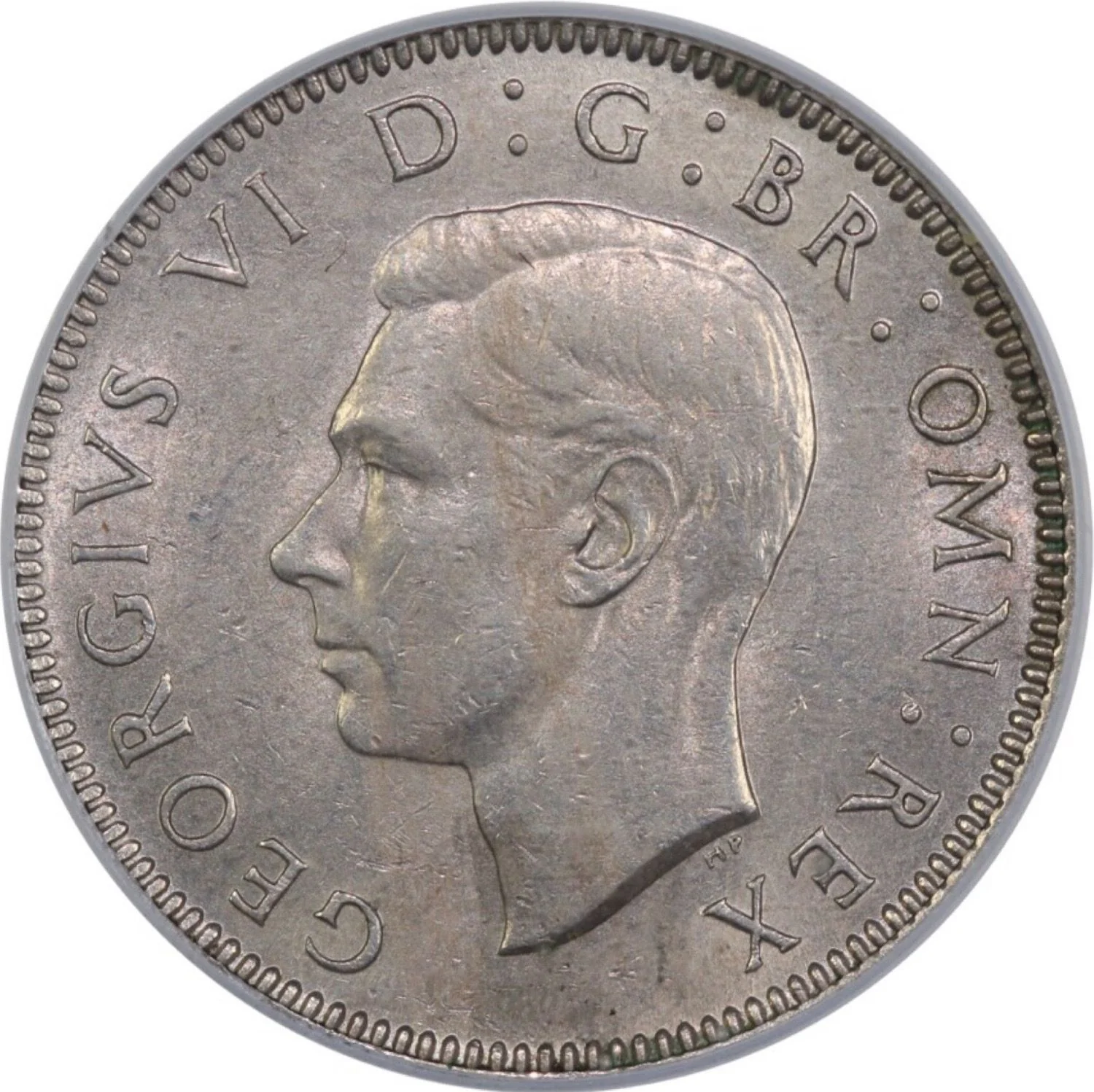
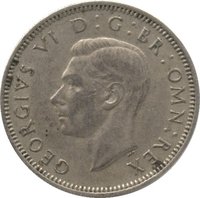
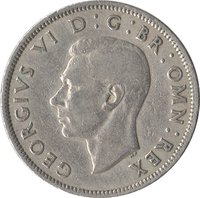
Uncrowned portrait of George VI with designer's initials below and legend around.
Inscription:
GEORGIVS VI D:G:BR:OMN:REX
HP
HP
Translation:
George VI by the Grace of God King of all the Britains
Defender of the Faith Emperor of India
Defender of the Faith Emperor of India
Script: Latin
Language: Latin
Engraver: Thomas Humphrey Paget
Reverse
Description:
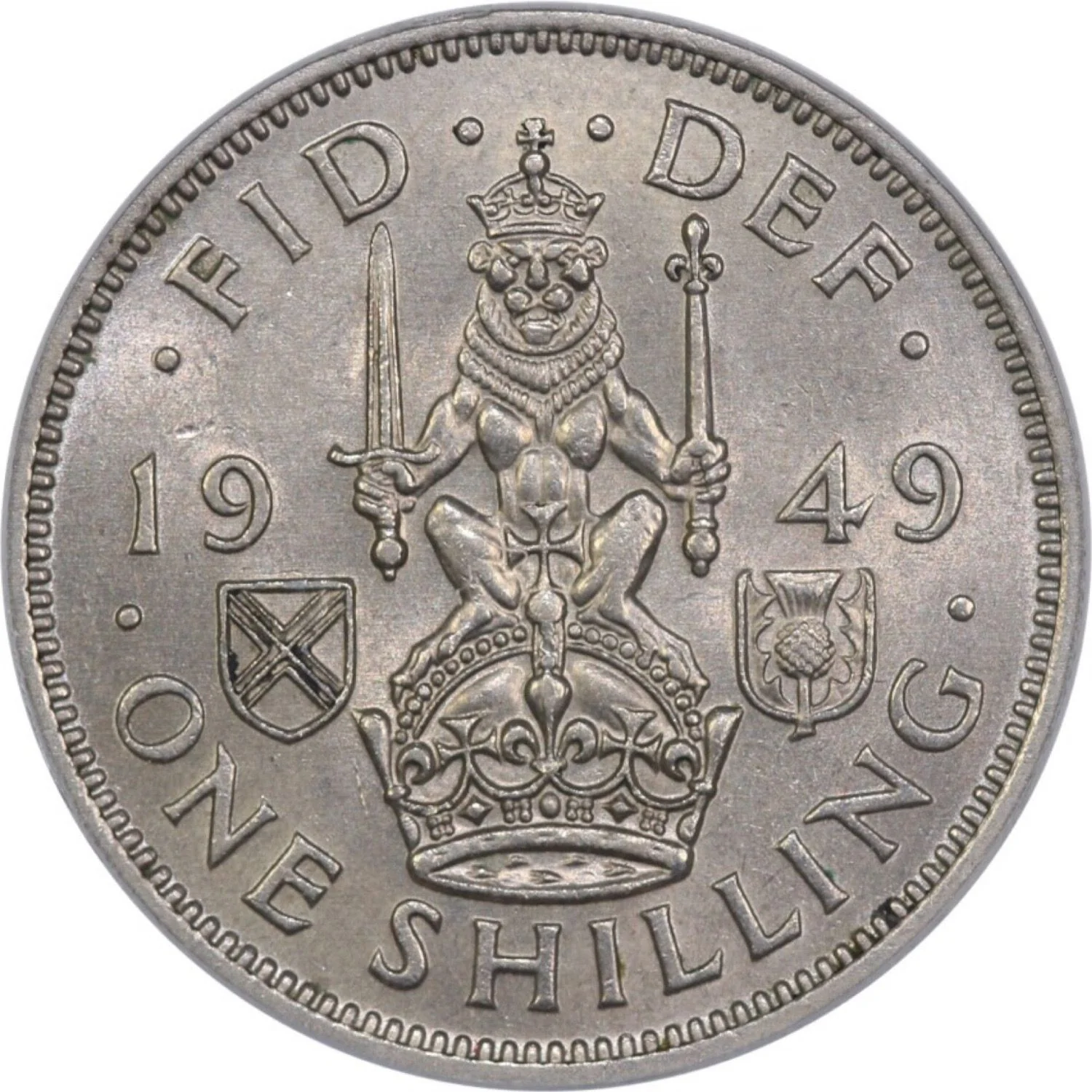
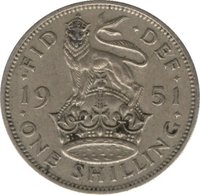
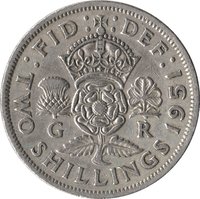
Crowned lion on crown with sword and sceptre, date between flanking shields, legend above, denomination below.
Inscription:
·FID· ·DEF·
19 49
·ONE SHILLING·
19 49
·ONE SHILLING·
Translation:
In Faith Defender
1949
One Shilling
1949
One Shilling
Script: Latin
Engraver: George Kruger Gray
Edge
Reeded
Categories
| Plants> Flower |
| Object> Cold weapons |
| Animal> Feline |
| Symbol> Crown |
| Symbols> Coat of Arms |
| Symbol> Cross |
Mints
| Name | Mark |
|---|---|
| Royal Mint (Tower Hill) | — |
Mintings
| Year | Mint Mark | Mintage | Quality | Collection |
|---|---|---|---|---|
| 1949 | — | 21,243,000 | ||
| 1949 | — | — | Proof | |
| 1950 | — | 14,299,600 | ||
| 1950 | — | 2 | Proof | |
| 1951 | — | 10,961,100 | ||
| 1951 | — | 2 | Proof |
Historical background
In the aftermath of the Second World War, the United Kingdom faced a severe and persistent economic crisis, which set the stage for the currency situation in 1949. The nation was burdened by enormous war debts, a devastated industrial base, and a critical shortage of dollars needed to pay for essential imports from North America. Although the pound sterling had been fixed at $4.03 under the 1944 Bretton Woods system, this rate was widely considered overvalued, leading to a chronic balance of payments deficit. The UK's gold and dollar reserves were being rapidly depleted as it struggled to finance its trade, creating intense pressure on the currency and undermining confidence in the fixed exchange rate.
The situation reached a breaking point in the summer of 1949. A sharp recession in the United States reduced demand for British exports, while a sterling convertibility crisis the previous year had already exposed the currency's fragility. Widespread speculation against the pound intensified, leading to massive capital flight as investors moved funds into dollars. Despite austerity measures and attempts to defend the parity, Chancellor of the Exchequer Sir Stafford Cripps, backed by Prime Minister Clement Attlee's Labour government, was forced to acknowledge that the current rate was unsustainable. The decisive factor was pressure from the United States, which linked further vital dollar aid to a devaluation that would make British goods more competitive and help correct global trade imbalances.
Consequently, on September 18, 1949, the government announced a dramatic devaluation of the pound sterling by 30.5%, lowering its value from $4.03 to $2.80. This drastic measure was intended to boost exports, curb imports, and halt the drain on the nation's reserves. While the devaluation provided temporary relief and stabilized the reserves, it also imported inflation by raising the cost of dollar-denominated goods and reduced the pound's international prestige. The 1949 devaluation became a defining economic event of the post-war period, highlighting the UK's diminished financial power and its dependence on American economic policy within the new Bretton Woods order.
The situation reached a breaking point in the summer of 1949. A sharp recession in the United States reduced demand for British exports, while a sterling convertibility crisis the previous year had already exposed the currency's fragility. Widespread speculation against the pound intensified, leading to massive capital flight as investors moved funds into dollars. Despite austerity measures and attempts to defend the parity, Chancellor of the Exchequer Sir Stafford Cripps, backed by Prime Minister Clement Attlee's Labour government, was forced to acknowledge that the current rate was unsustainable. The decisive factor was pressure from the United States, which linked further vital dollar aid to a devaluation that would make British goods more competitive and help correct global trade imbalances.
Consequently, on September 18, 1949, the government announced a dramatic devaluation of the pound sterling by 30.5%, lowering its value from $4.03 to $2.80. This drastic measure was intended to boost exports, curb imports, and halt the drain on the nation's reserves. While the devaluation provided temporary relief and stabilized the reserves, it also imported inflation by raising the cost of dollar-denominated goods and reduced the pound's international prestige. The 1949 devaluation became a defining economic event of the post-war period, highlighting the UK's diminished financial power and its dependence on American economic policy within the new Bretton Woods order.
🌱 Very Common