

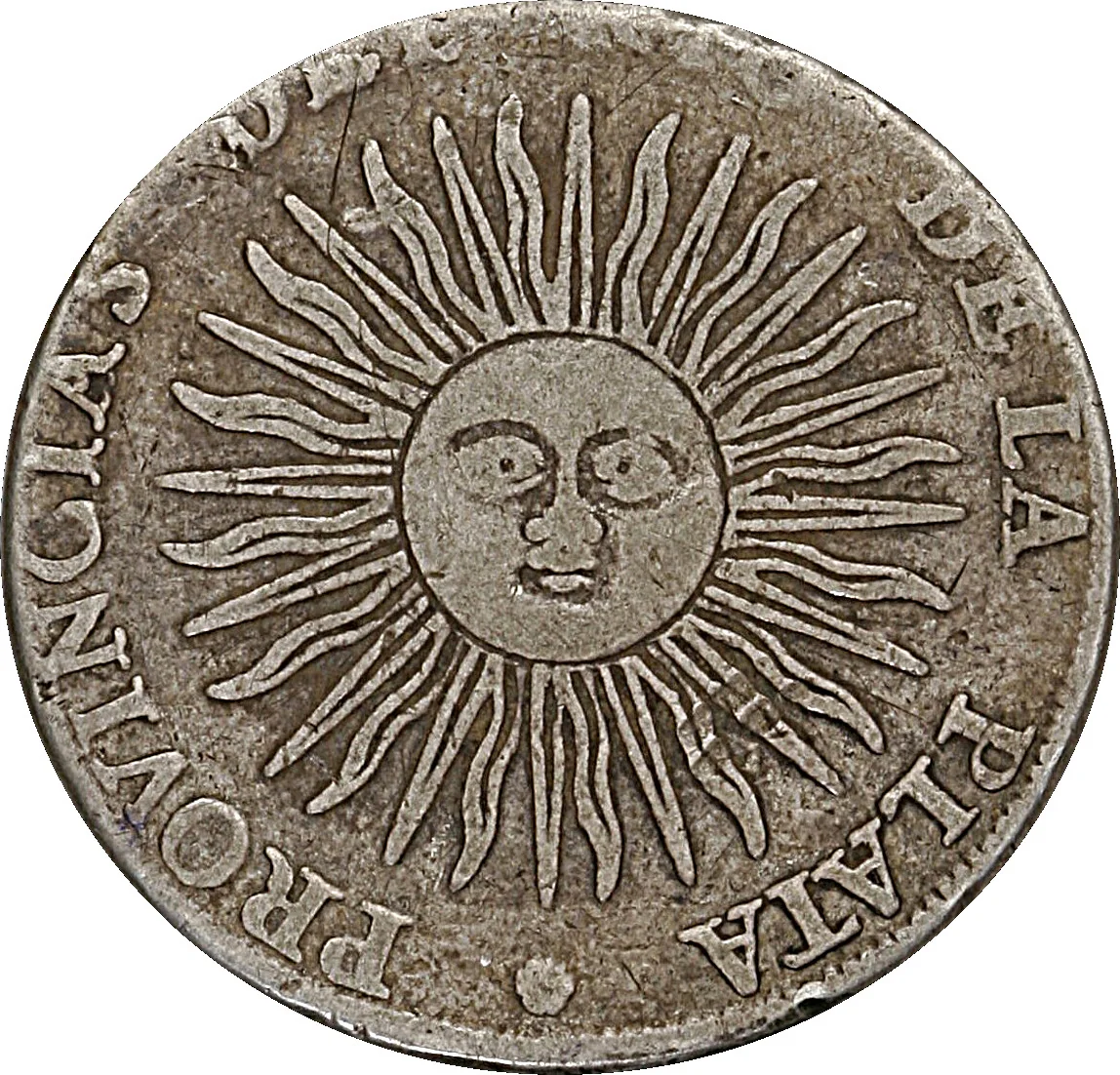
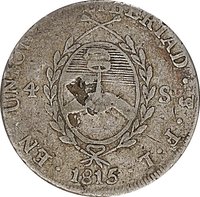
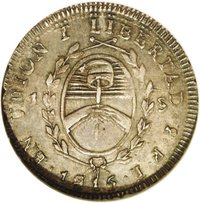
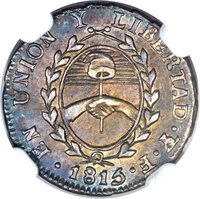
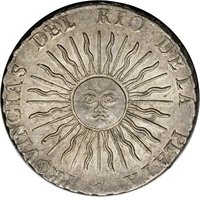
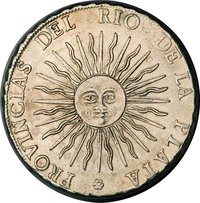
Obverse
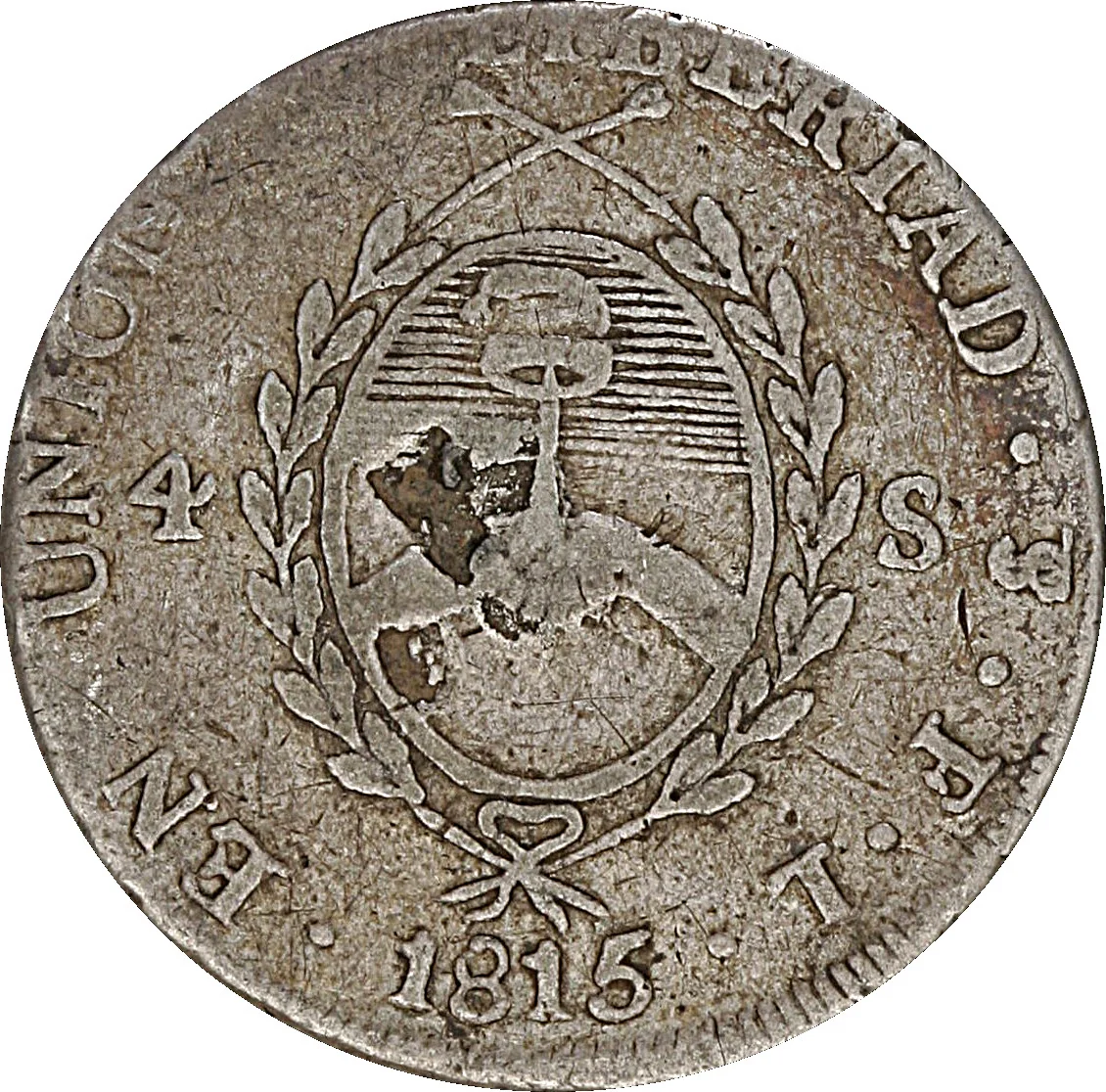
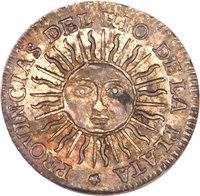
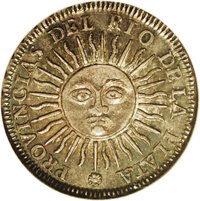
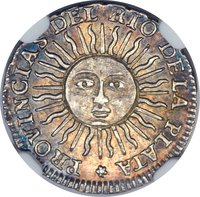
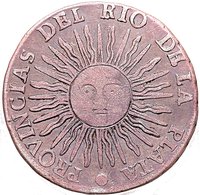
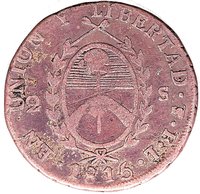
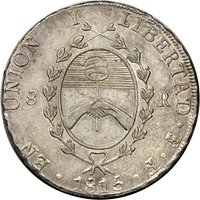
Reverse
Description:
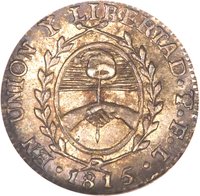
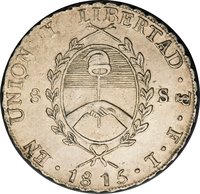
Arms in wreath, crossed at top. Mint mark in monogram.
Inscription:
EN UNION Y LIBERTAD · PTS · F ·L ·1815·
4 S
4 S
Script: Latin
Edge
Laureate
Categories
| Symbol> Sun |
| Symbols> Coat of Arms |
| Symbol> Phrygian cap |
Mints
| Name | Mark |
|---|---|
| Potosi | PTS |
Mintings
| Year | Mint Mark | Mintage | Quality | Collection |
|---|---|---|---|---|
| 1815 | PTSFL | — |
Historical background
In 1815, Argentina’s currency situation was chaotic and inflationary, a direct reflection of the political and economic turmoil of the early independence period. Following the May Revolution of 1810 and the ongoing war against Spanish royalists, the United Provinces of the Río de la Plata lacked a central government with fiscal authority. The First Triumvirate and subsequent governments, facing empty coffers and the immense costs of military campaigns, resorted to printing vast quantities of paper money without metallic backing. This fiat currency, known as billetes or papel moneda, was initially issued by the revolutionary government in 1812 and saw its volume explode in the following years.
The result was a rapid and severe devaluation, creating a destructive cycle of inflation and public distrust. Prices soared as the value of the paper peso plummeted against the still-circulating Spanish silver coins (the peso fuerte), leading to a system of dual currencies. Merchants and the public, preferring the intrinsic value of silver, began hoarding metallic coinage, which disappeared from everyday circulation—a classic example of Gresham’s Law where "bad money drives out good." This currency crisis severely disrupted trade, eroded salaries and savings, and placed an enormous strain on the nascent state's ability to finance its operations and the Army of the Andes.
This financial instability was both a cause and a symptom of the broader political fragmentation of 1815, a year marked by the dissolution of the central authority after the Battle of Sipe-Sipe and the rise of autonomous provincial caudillos. The lack of a unified monetary policy and the inability to collect substantial taxes meant that printing money remained the government's primary fiscal tool, embedding inflation into the economic foundation of the new nation. Thus, the currency chaos of 1815 was not merely a monetary issue but a fundamental challenge to state-building, one that would plague Argentina for decades to come.
The result was a rapid and severe devaluation, creating a destructive cycle of inflation and public distrust. Prices soared as the value of the paper peso plummeted against the still-circulating Spanish silver coins (the peso fuerte), leading to a system of dual currencies. Merchants and the public, preferring the intrinsic value of silver, began hoarding metallic coinage, which disappeared from everyday circulation—a classic example of Gresham’s Law where "bad money drives out good." This currency crisis severely disrupted trade, eroded salaries and savings, and placed an enormous strain on the nascent state's ability to finance its operations and the Army of the Andes.
This financial instability was both a cause and a symptom of the broader political fragmentation of 1815, a year marked by the dissolution of the central authority after the Battle of Sipe-Sipe and the rise of autonomous provincial caudillos. The lack of a unified monetary policy and the inability to collect substantial taxes meant that printing money remained the government's primary fiscal tool, embedding inflation into the economic foundation of the new nation. Thus, the currency chaos of 1815 was not merely a monetary issue but a fundamental challenge to state-building, one that would plague Argentina for decades to come.
Series: 1815 Argentina circulation coins
💎 Extremely Rare