

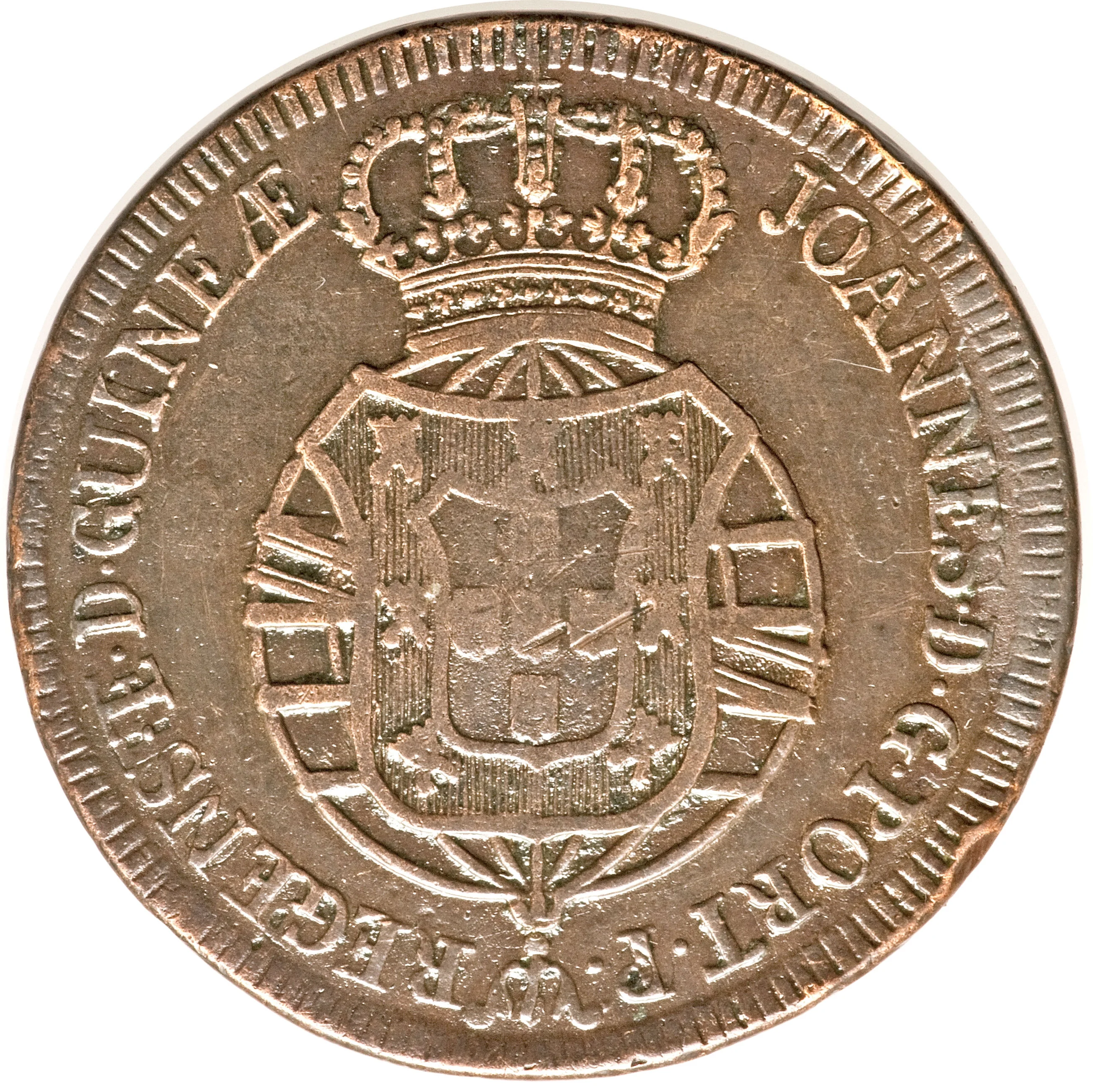
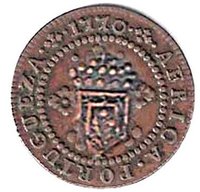
Obverse
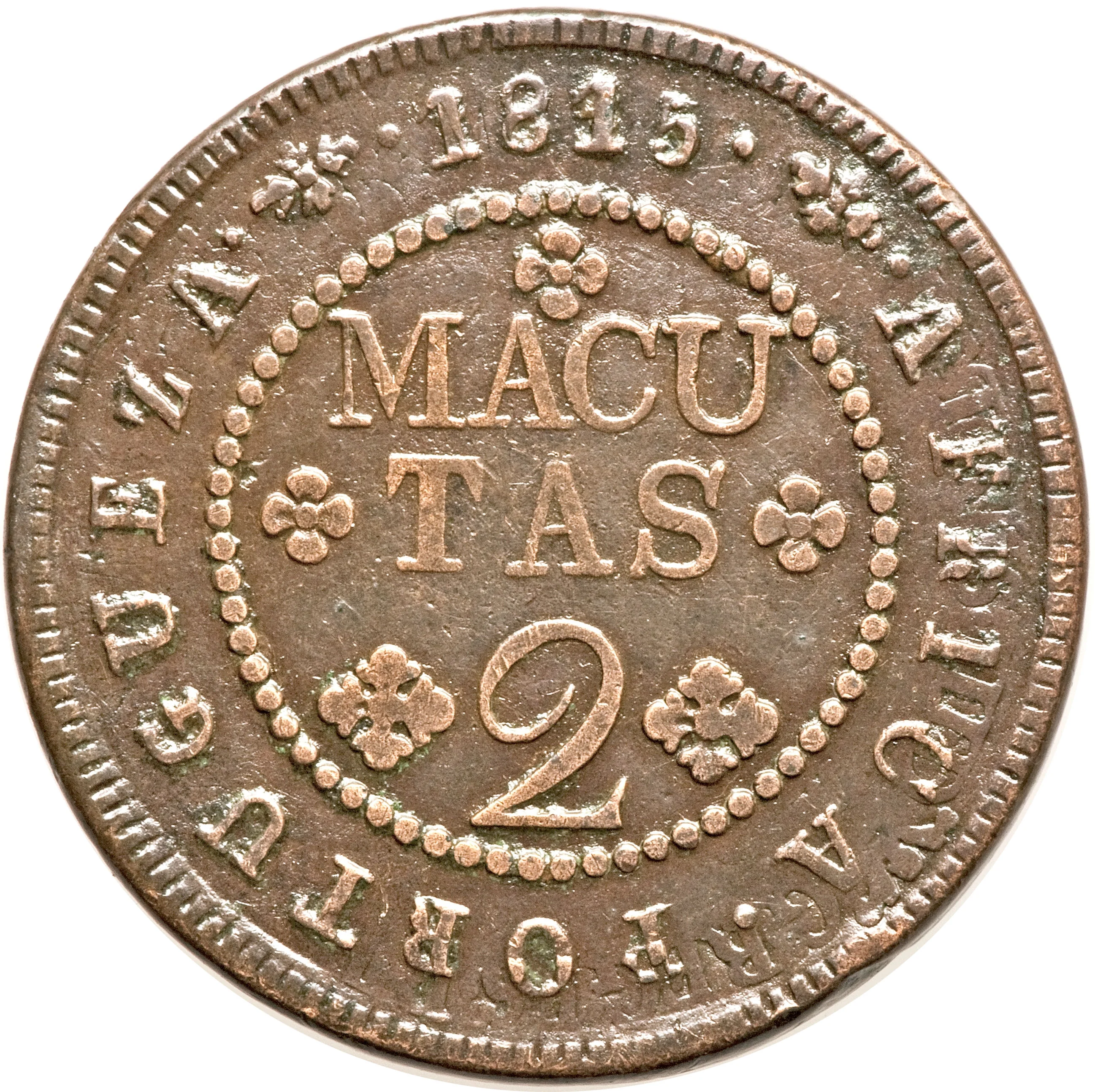
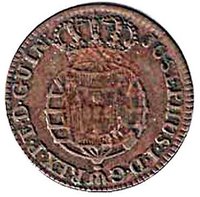
Reverse
Inscription:
AFRICA·PORTUGUEZA·1816
MACUTAS
2
MACUTAS
2
Translation:
Portuguese Africa 1816
Macutas
2
Macutas
2
Script: Latin
Language: Portuguese
Edge
Full
Mints
| Name | Mark |
|---|---|
| Casa da Moeda do Brasil | — |
Mintings
| Year | Mint Mark | Mintage | Quality | Collection |
|---|---|---|---|---|
| 1815 | — | — | ||
| 1816 | — | 3,175 | ||
| 1819 | — | — |
Historical background
In 1815, Angola was not a sovereign nation issuing its own currency but a Portuguese colony integrated into a vast, complex, and often archaic monetary system. The official currency was the Portuguese real (plural: réis), but its circulation within the colony was limited and problematic. The Portuguese monetary system was itself in a state of disarray following the Napoleonic Wars and the flight of the royal court to Brazil, leading to a scarcity of official coinage in distant colonies like Angola.
The day-to-day economic reality in Angola was dominated by a system of commodity money and various foreign coins. The most important unit was not a minted coin but a standardized unit of account called the macuta, which was valued at 50 réis. However, actual transactions heavily relied on trade goods, most notably rolls of cloth (panos), especially those produced in the Luanda region. These panos served as a widely accepted medium of exchange for both local trade and, crucially, for the purchase of enslaved people in the interior. Additionally, other commodities like salt, shells, and spirits circulated, while Brazilian gold coins and Spanish-American silver pesos (pieces of eight) were used for larger mercantile and international transactions.
This fragmented monetary landscape reflected Angola’s primary role in the early 19th century as a hub for the transatlantic slave trade. The economy was geared toward the export of enslaved people, financed by imported goods used as currency. Consequently, the currency situation was unstable, informal, and deeply entangled with the violent commerce in human beings. It was a system designed for extraction rather than internal development, leaving the colony with a weak and dependent economic foundation even as the international movement to abolish the slave trade began to exert pressure on this brutal status quo.
The day-to-day economic reality in Angola was dominated by a system of commodity money and various foreign coins. The most important unit was not a minted coin but a standardized unit of account called the macuta, which was valued at 50 réis. However, actual transactions heavily relied on trade goods, most notably rolls of cloth (panos), especially those produced in the Luanda region. These panos served as a widely accepted medium of exchange for both local trade and, crucially, for the purchase of enslaved people in the interior. Additionally, other commodities like salt, shells, and spirits circulated, while Brazilian gold coins and Spanish-American silver pesos (pieces of eight) were used for larger mercantile and international transactions.
This fragmented monetary landscape reflected Angola’s primary role in the early 19th century as a hub for the transatlantic slave trade. The economy was geared toward the export of enslaved people, financed by imported goods used as currency. Consequently, the currency situation was unstable, informal, and deeply entangled with the violent commerce in human beings. It was a system designed for extraction rather than internal development, leaving the colony with a weak and dependent economic foundation even as the international movement to abolish the slave trade began to exert pressure on this brutal status quo.
💎 Extremely Rare