

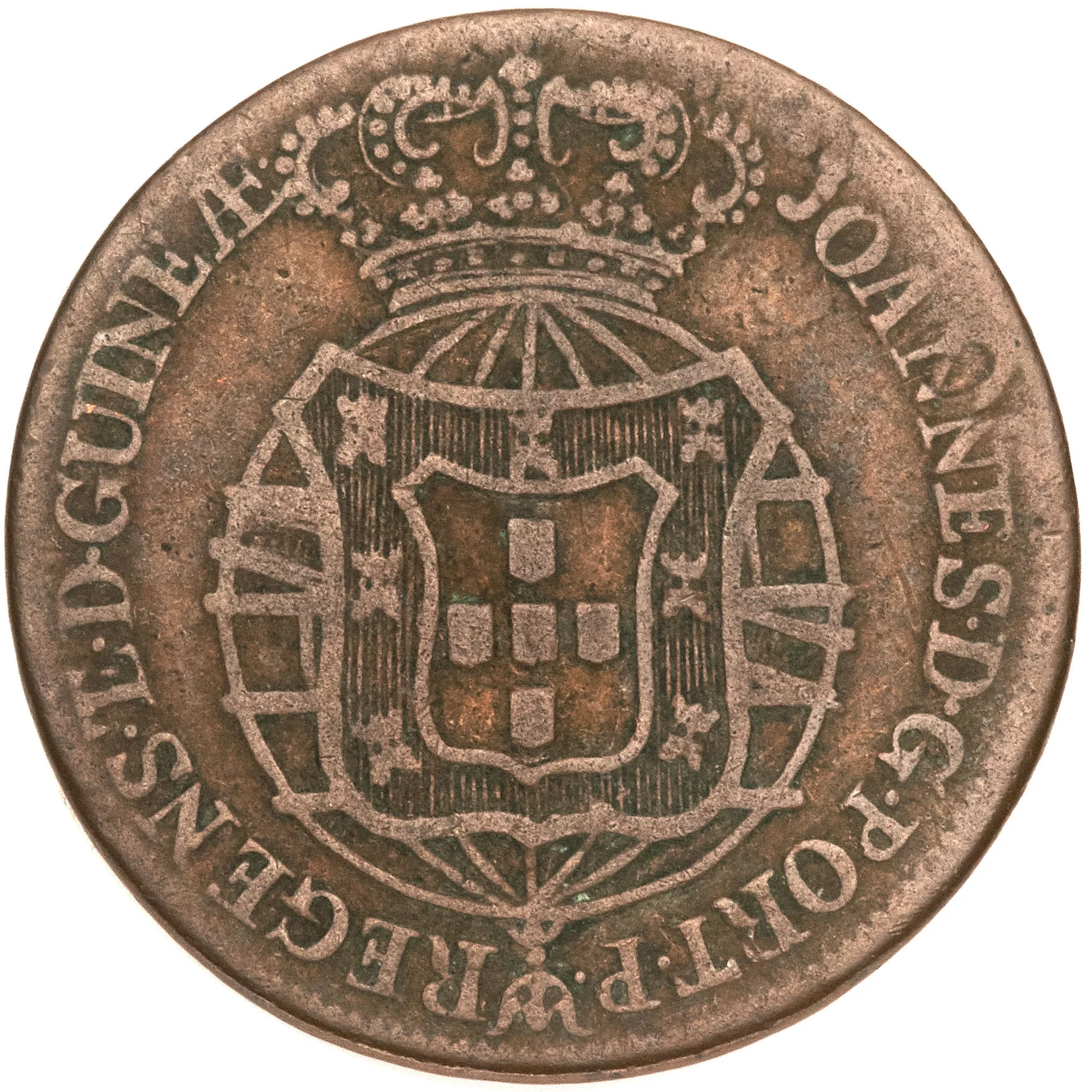
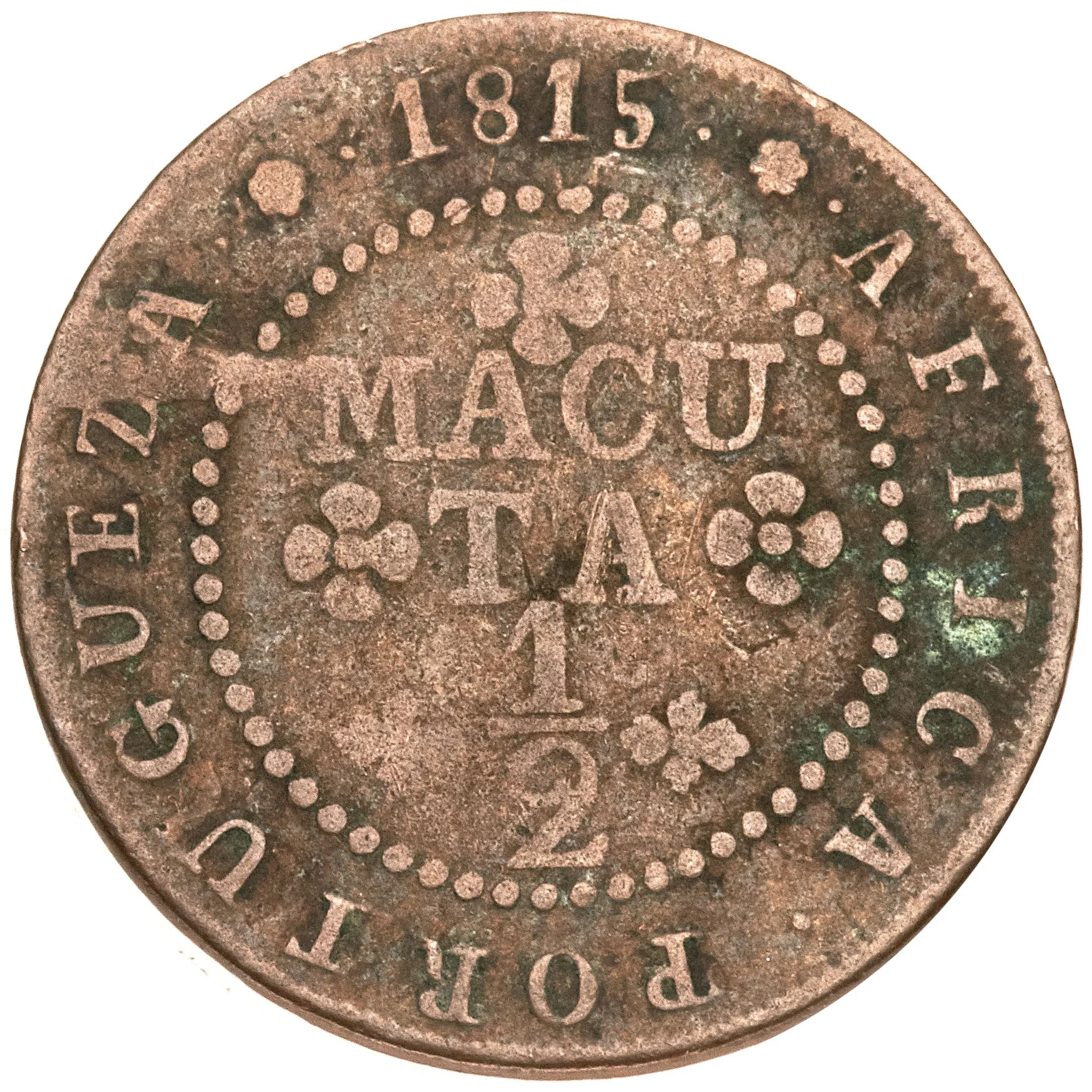
½ macuta – Angola
Add to wishlist
Angola
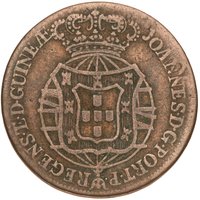
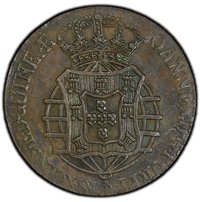
Obverse
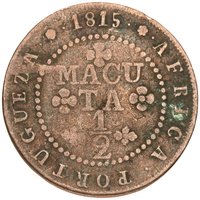
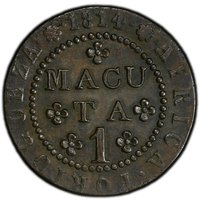
Reverse
Description:
Beaded circle with rosettes and value marks.
Inscription:
AFRICA.PORTUGUEZA.1815.
MACUTA
1/2
MACUTA
1/2
Script: Latin
Edge
Full
Mintings
| Year | Mint Mark | Mintage | Quality | Collection |
|---|---|---|---|---|
| 1814 | — | — | ||
| 1815 | — | 18,000 | ||
| 1819 | — | — |
Historical background
In 1814, the currency situation in the Kingdom of Angola, a Portuguese colony, was characterized by a complex and inadequate monetary system dominated by commodity currencies and foreign coin. The official Portuguese currency, the real, was scarce and primarily used for large transactions and official government business in the coastal administrative centers like Luanda. The Portuguese crown maintained a mercantilist policy, seeking to extract wealth—primarily enslaved people, but also ivory and beeswax—while limiting the outflow of specie (minted coin) from the colony, which created a chronic shortage of legal tender.
The day-to-day economy, especially in the vast interior where the slave trade was orchestrated through African and pombeiro (mixed-race trader) networks, relied heavily on commodity money. The most widespread unit was the libra (pound) of fazenda—a standard bundle of trade goods like textiles, beads, rum, and guns. Enslaved people themselves were a primary medium of exchange and unit of account, with prices for other goods often expressed in terms of "so many slaves." Additionally, zimbos (nzimbu shells), a traditional shell currency harvested from the island of Luanda, continued to circulate for small-scale local transactions, though their value had been heavily inflated by Portuguese overproduction in prior centuries.
This fragmented system created significant challenges for trade and administration. The fluctuating value of commodity bundles and the inhumanity of using people as currency led to instability and conflict. Furthermore, the lack of a standardized, abundant coinage hindered local economic development and made Angola dependent on the volatile rhythms of the Atlantic slave trade. The year 1814, falling within the final years of the massive transatlantic trade before its official abolition by Portugal (though illegal trade continued), thus represents a period where Angola's currency was not a tool of a sovereign economy but a reflection of its extractive and tragic role in the global system.
The day-to-day economy, especially in the vast interior where the slave trade was orchestrated through African and pombeiro (mixed-race trader) networks, relied heavily on commodity money. The most widespread unit was the libra (pound) of fazenda—a standard bundle of trade goods like textiles, beads, rum, and guns. Enslaved people themselves were a primary medium of exchange and unit of account, with prices for other goods often expressed in terms of "so many slaves." Additionally, zimbos (nzimbu shells), a traditional shell currency harvested from the island of Luanda, continued to circulate for small-scale local transactions, though their value had been heavily inflated by Portuguese overproduction in prior centuries.
This fragmented system created significant challenges for trade and administration. The fluctuating value of commodity bundles and the inhumanity of using people as currency led to instability and conflict. Furthermore, the lack of a standardized, abundant coinage hindered local economic development and made Angola dependent on the volatile rhythms of the Atlantic slave trade. The year 1814, falling within the final years of the massive transatlantic trade before its official abolition by Portugal (though illegal trade continued), thus represents a period where Angola's currency was not a tool of a sovereign economy but a reflection of its extractive and tragic role in the global system.
💎 Extremely Rare