

1 cent – French Indochina
Add to wishlist
Context
Years: 1885–1894
Issuer: French Indochina
Period:
(1870—1940)
Currency:
(1880—1952)
Demonetized: Yes
Total mintage: 14,373,054
Material
References
KM: #
Numista: #3311
Value
Exchange value: 0.01 ICFP
Obverse
Description:
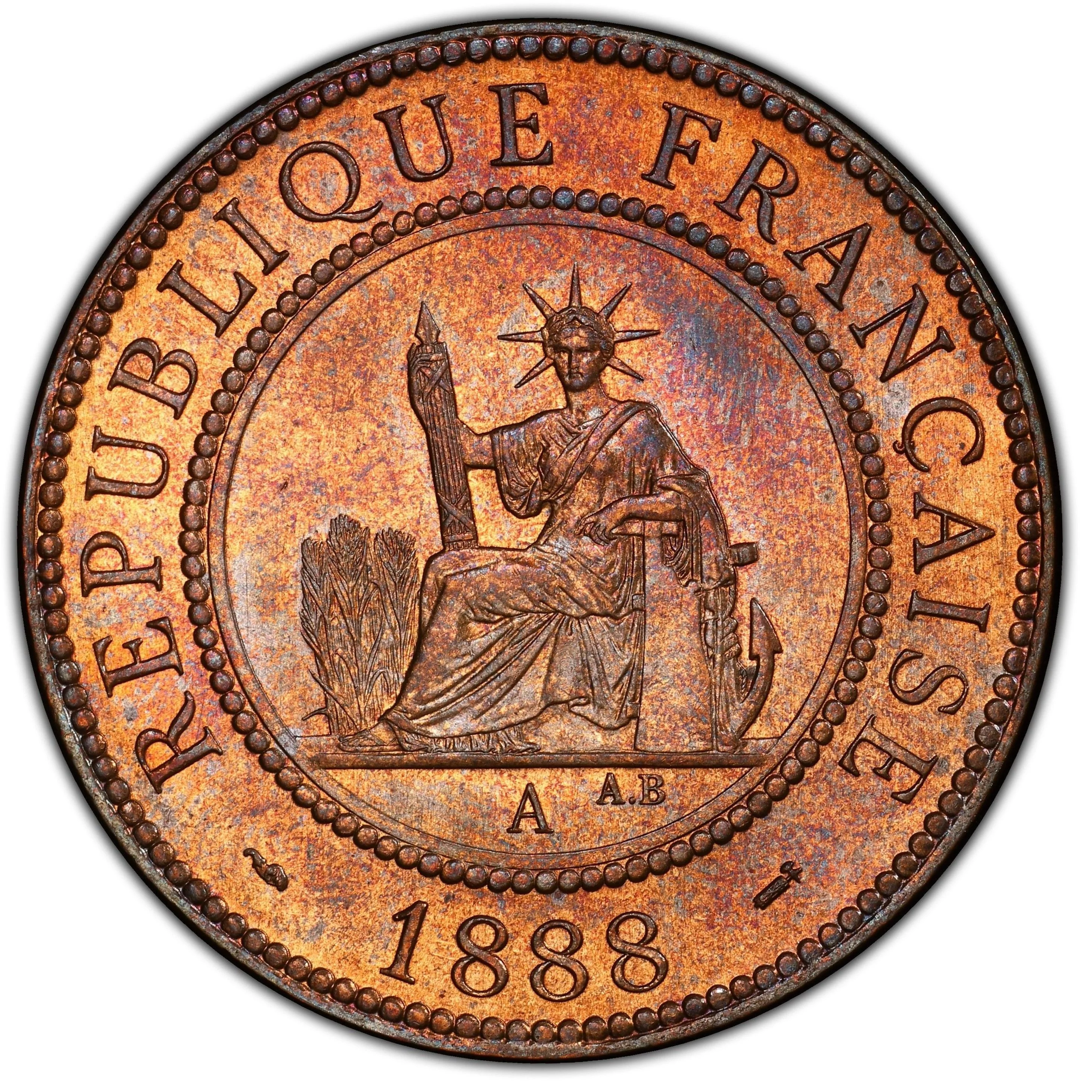
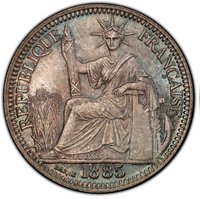
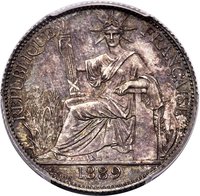
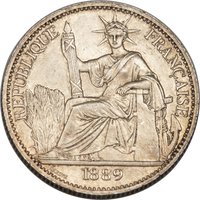
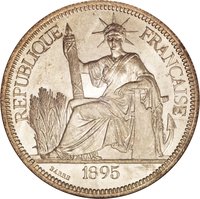
Marianne seated left, fasces beside, mint mark below.
Inscription:
REPUBLIQUE FRANÇAISE
A A.B
1888
A A.B
1888
Translation:
FRENCH REPUBLIC
A A.B
1888
A A.B
1888
Script: Latin
Language: French
Engraver: Jean-Auguste Barre
Reverse
Edge
Plain
Mints
| Name | Mark |
|---|---|
| Monnaie de Paris | (A) |
Mintings
| Year | Mint Mark | Mintage | Quality | Collection |
|---|---|---|---|---|
| 1885 | A | 1 | Proof | |
| 1885 | A | 3,673,190 | ||
| 1886 | A | 1,882,541 | ||
| 1887 | A | 2,362,388 | ||
| 1888 | A | 2,564,148 | ||
| 1889 | A | 1,573,364 | ||
| 1889 | A | 100 | Proof | |
| 1892 | A | 2 | ||
| 1893 | A | 1,852,320 | ||
| 1894 | A | 465,000 |
Historical background
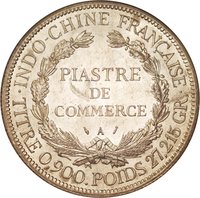
In 1885, the currency situation in French Indochina (encompassing Cochinchina, Annam, Tonkin, and Cambodia) was a complex and transitional mosaic, reflecting the region's incomplete political and economic consolidation under colonial rule. The French administration, having established the piastre de commerce (commercial piastre) as the official currency in 1885, aimed to create a unified monetary system to facilitate colonial trade and administration. This silver coin, pegged to the Mexican silver dollar which was already a dominant trade currency in East Asia, was intended to replace the myriad of existing currencies.
However, the reality on the ground was one of monetary pluralism and confusion. Alongside the new French piastre, a wide array of currencies remained in active circulation. These included Vietnamese zinc and copper-alloy cash coins (văn or sapèques) strung together in bundles for everyday local transactions, Chinese silver sycee ingots and Mexican dollars for major commerce, and even French francs for government salaries. The exchange rates between these systems—silver by weight for bullion, a fluctuating number of cash coins per piastre—were unstable and varied by locality, creating a lucrative but chaotic market for money changers.
This fragmented system presented significant challenges for the colonial state. It hindered tax collection, complicated government payments, and created uncertainty for French businesses and investors. The year 1885, coming just after the establishment of the protectorates over Annam and Tonkin following the Sino-French War, thus marks a pivotal moment when France formally initiated its monetary imperialism. The goal was clear: to displace indigenous and regional currencies with a single, French-controlled system that would anchor the colonial economy to the metropole, though achieving this monetary hegemony would take several more decades of effort.
However, the reality on the ground was one of monetary pluralism and confusion. Alongside the new French piastre, a wide array of currencies remained in active circulation. These included Vietnamese zinc and copper-alloy cash coins (văn or sapèques) strung together in bundles for everyday local transactions, Chinese silver sycee ingots and Mexican dollars for major commerce, and even French francs for government salaries. The exchange rates between these systems—silver by weight for bullion, a fluctuating number of cash coins per piastre—were unstable and varied by locality, creating a lucrative but chaotic market for money changers.
This fragmented system presented significant challenges for the colonial state. It hindered tax collection, complicated government payments, and created uncertainty for French businesses and investors. The year 1885, coming just after the establishment of the protectorates over Annam and Tonkin following the Sino-French War, thus marks a pivotal moment when France formally initiated its monetary imperialism. The goal was clear: to displace indigenous and regional currencies with a single, French-controlled system that would anchor the colonial economy to the metropole, though achieving this monetary hegemony would take several more decades of effort.
🌱 Very Common