

2 denars – North Macedonia
Add to wishlist
North Macedonia
Context
Material
References
KM: #
Numista: #331039
Value
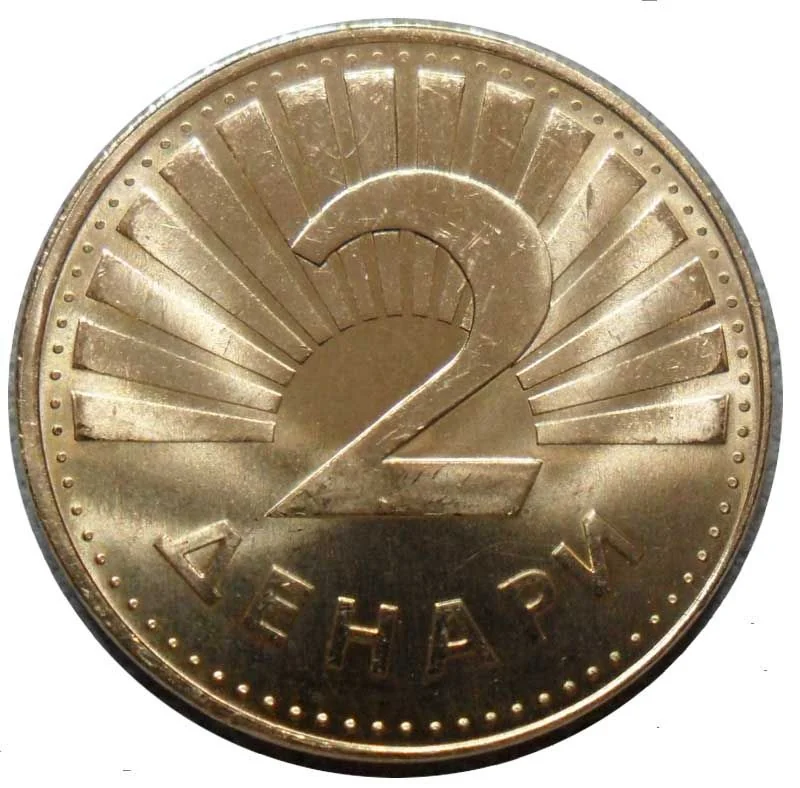
Exchange value: 2 MKD
Obverse
Description:
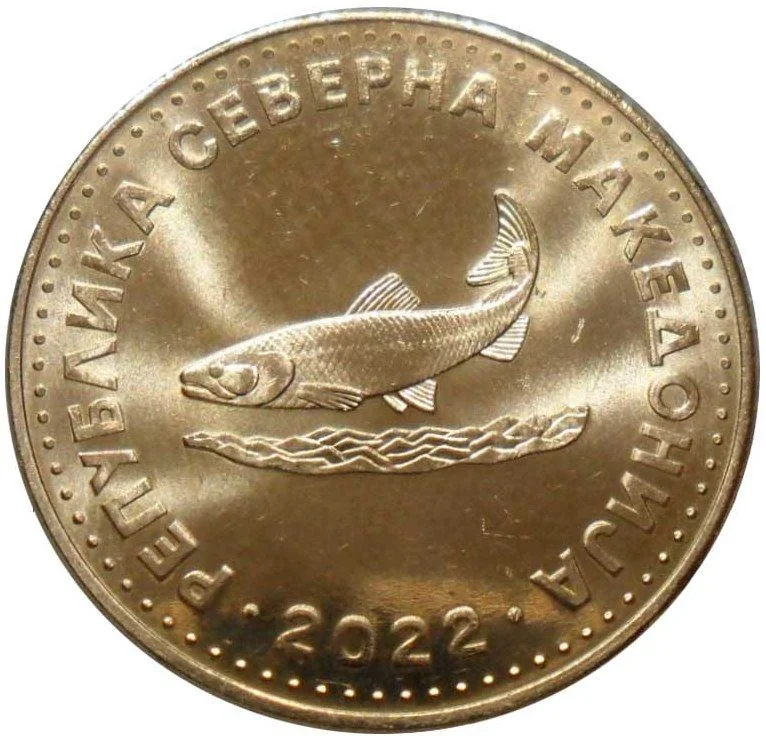
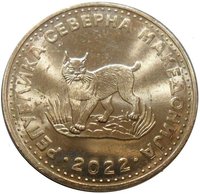
Endemic Ohrid trout design with country name above and date below.
Inscription:
РЕПУБЛИКА СЕВЕРНА МАКЕДОНИЈА
• 2022 •
• 2022 •
Translation:
REPUBLIC OF NORTH MACEDONIA
• 2022 •
• 2022 •
Script: Cyrillic
Language: Macedonian
Reverse
Edge
Plain
Mintings
| Year | Mint Mark | Mintage | Quality | Collection |
|---|---|---|---|---|
| 2022 | — | — | ||
| 2024 | — | — |
Historical background
In 2022, the currency situation in North Macedonia was characterized by notable stability for the Macedonian denar (MKD), which continued its long-standing managed float regime pegged to the Euro. The National Bank of the Republic of North Macedonia (NBRNM) maintained its primary focus on preserving exchange rate stability as a key anchor for macroeconomic confidence, a policy in place for decades. This stability was achieved through regular foreign exchange interventions, buying or selling reserves to smooth out volatility, which helped shield the small, open economy from external shocks and provided predictability for trade and investment.
However, the year was not without significant pressures, primarily driven by the global economic fallout from the war in Ukraine and persistent inflationary trends. Rising prices for energy and food imports widened the trade deficit and increased demand for foreign currency, particularly Euros, putting depreciation pressure on the denar. Furthermore, domestic inflation reached double digits, prompting the NBRNM to raise its key policy rate in a series of steps throughout the year. This tightening of monetary policy aimed to curb inflation and, indirectly, support the currency by making denar-denominated assets more attractive.
Overall, despite these inflationary and external challenges, the NBRNM successfully defended the denar's peg, and the exchange rate remained remarkably stable within its usual band. International reserves experienced some fluctuation but ended the year at adequate levels, providing a sufficient buffer. The currency stability in 2022 thus reflected a balancing act: the central bank prioritized the fixed exchange rate as a nominal anchor, even as it began to more actively use interest rates to address mounting domestic price pressures, setting the stage for continued monetary policy tightening in the following year.
However, the year was not without significant pressures, primarily driven by the global economic fallout from the war in Ukraine and persistent inflationary trends. Rising prices for energy and food imports widened the trade deficit and increased demand for foreign currency, particularly Euros, putting depreciation pressure on the denar. Furthermore, domestic inflation reached double digits, prompting the NBRNM to raise its key policy rate in a series of steps throughout the year. This tightening of monetary policy aimed to curb inflation and, indirectly, support the currency by making denar-denominated assets more attractive.
Overall, despite these inflationary and external challenges, the NBRNM successfully defended the denar's peg, and the exchange rate remained remarkably stable within its usual band. International reserves experienced some fluctuation but ended the year at adequate levels, providing a sufficient buffer. The currency stability in 2022 thus reflected a balancing act: the central bank prioritized the fixed exchange rate as a nominal anchor, even as it began to more actively use interest rates to address mounting domestic price pressures, setting the stage for continued monetary policy tightening in the following year.
🌱 Common