

250 Kuna – Croatia
Croatia
Context
Material
Diameter: 22 mm
Weight: 7.78 g
Gold weight: 7.78 g
Shape: Round
Composition: 99.99% Gold
Standard: Silver quarter ounce
Magnetic: No
Technique: Milled
Alignment: Medal alignment
flip
References
KM: #Click to copy to clipboard129
Numista: #330939
Value
Exchange value: 250 HRK
Bullion value: $1293.36
Obverse
Description:
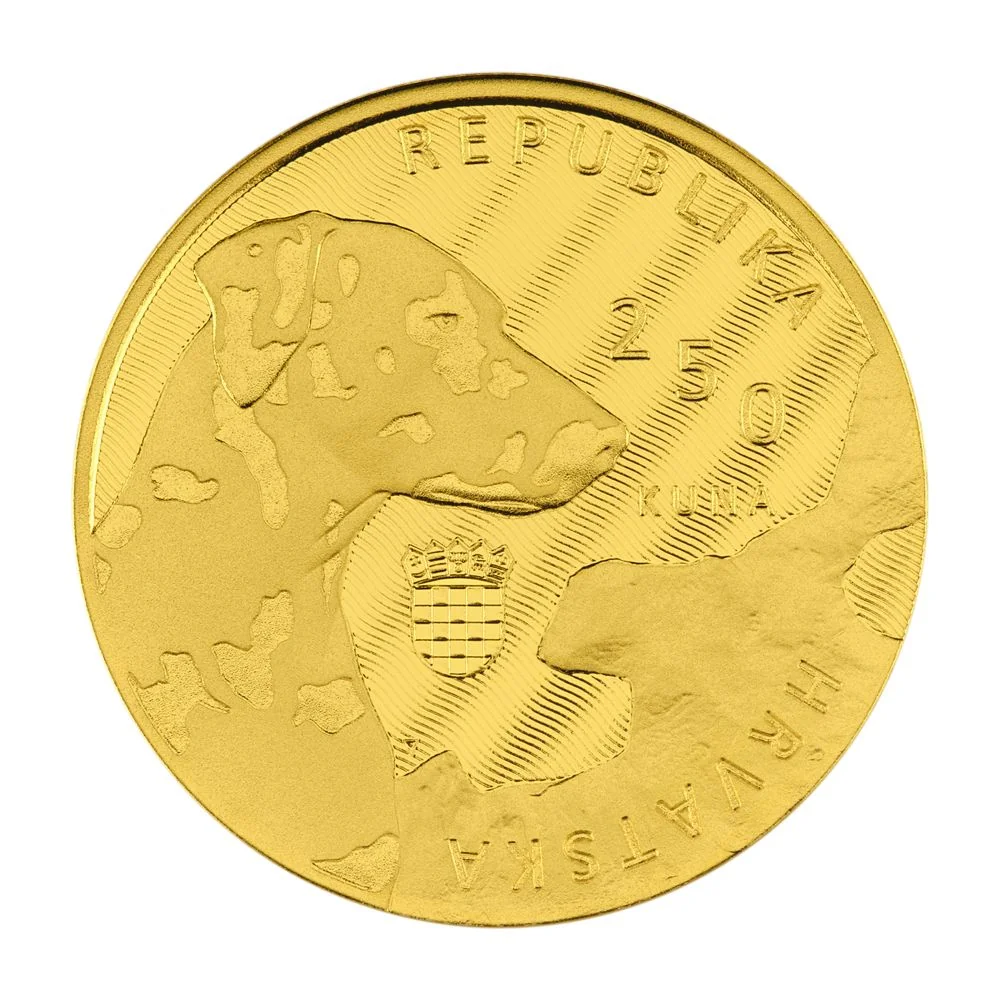
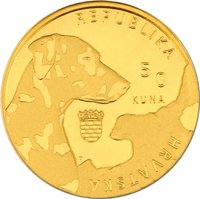
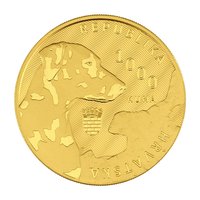
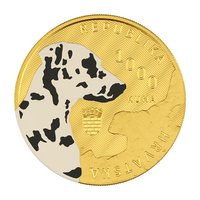
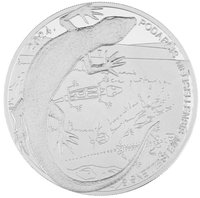
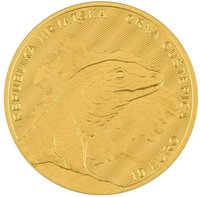
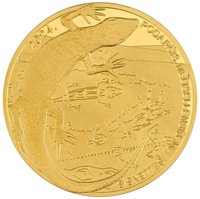
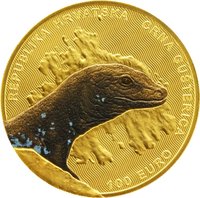
Dalmatian bust, right, with central coat of arms over a sea and coastline.
Inscription:
REPUBLIKA HRVATSKA
250 KUNA
250 KUNA
Translation:
REPUBLIC OF CROATIA
250 KUNA
250 KUNA
Script: Latin
Language: Croatian
Designer: Nikola Vudrag
Reverse
Description:
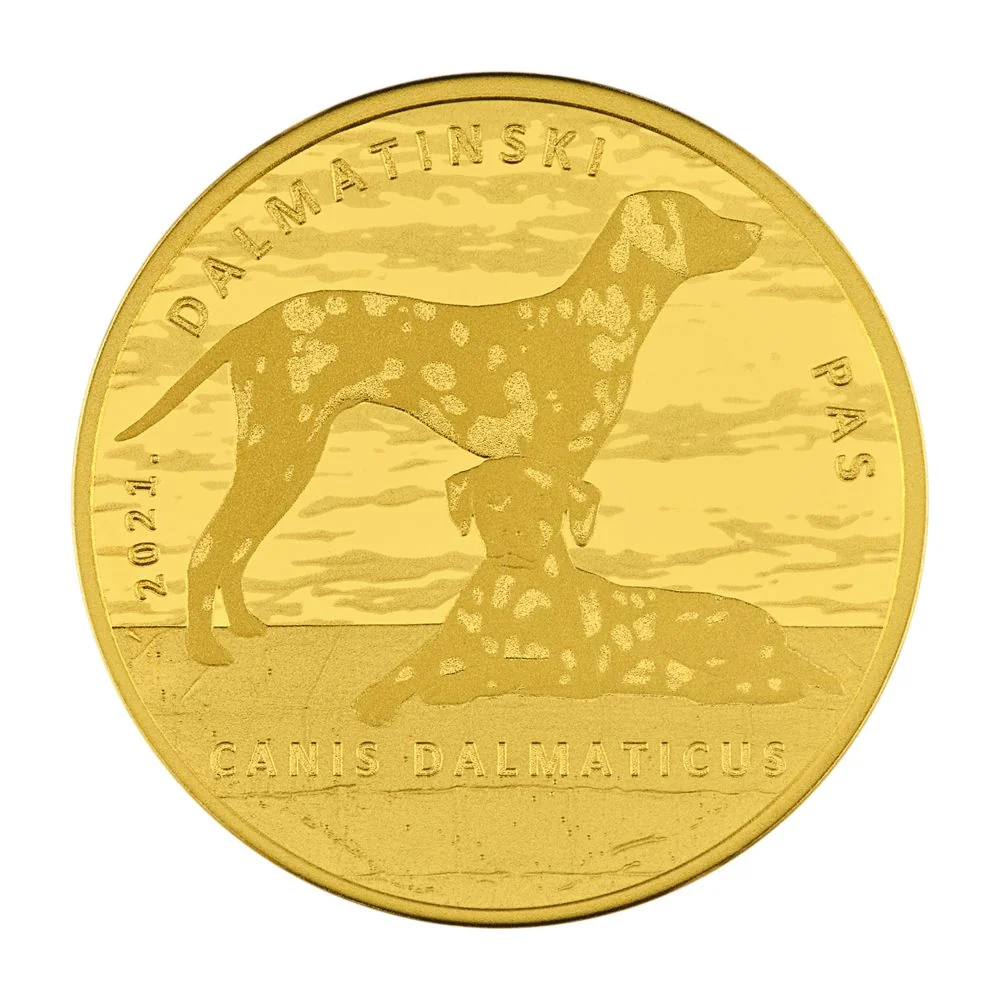
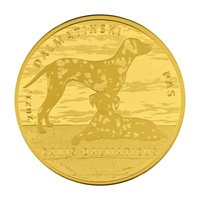
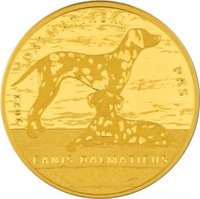
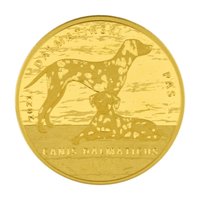
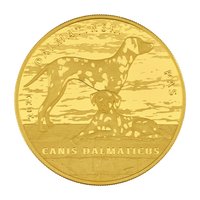
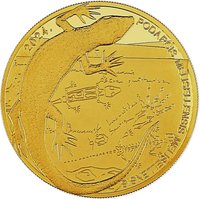
Two Dalmatians on a seaside stone wall, one standing and one lying down.
Inscription:
2021 DALMATINSKI PAS
CANIS DALMATICUS
CANIS DALMATICUS
Translation:
Dalmatian Dog
Dalmatian Dog
Dalmatian Dog
Script: Latin
Designer: Nikola Vudrag
Edge
Plain
Mints
| Name | Mark |
|---|---|
| Croatian Mint | — |
Mintings
| Year | Mint Mark | Mintage | Quality | Collection |
|---|---|---|---|---|
| 2021 | — | 2,000 |
Historical background
In 2021, Croatia was in the final phase of a long-standing monetary transition, operating with the kuna (HRK) as its national currency while being formally integrated into the European Exchange Rate Mechanism II (ERM II). This "waiting room" for Eurozone membership, which Croatia entered in July 2020, required the country to maintain a stable exchange rate against the euro within a narrow band of ±15%. Throughout 2021, the Croatian National Bank successfully maintained this stability, with the kuna trading firmly around 7.5 HRK per EUR, a level it had held for years. This stability was a key prerequisite for the upcoming adoption of the euro.
The year was characterized by active technical and legislative preparations for the historic currency switch. The government and financial institutions worked on a detailed changeover plan, including public communication campaigns, logistical preparations for the dual circulation period, and the recalibration of millions of prices and automated systems. A significant milestone was the official convergence report published by the European Commission in June 2021, which gave a positive assessment of Croatia's readiness, confirming it met all the Maastricht criteria for adoption, albeit with a high but falling public debt level.
Underlying these technical steps was a broad political and social consensus in favor of euro adoption. Key motivations included the elimination of exchange rate risk and transaction costs for the tourism-dependent economy, enhanced investment stability, and the symbolic completion of Croatia's deeper integration into the European Union's core economic and political structures. Therefore, 2021 was not a year of monetary crisis or fluctuation for the kuna, but rather one of deliberate and stable preparation, setting the stage for the planned replacement of the kuna with the euro on January 1, 2023.
The year was characterized by active technical and legislative preparations for the historic currency switch. The government and financial institutions worked on a detailed changeover plan, including public communication campaigns, logistical preparations for the dual circulation period, and the recalibration of millions of prices and automated systems. A significant milestone was the official convergence report published by the European Commission in June 2021, which gave a positive assessment of Croatia's readiness, confirming it met all the Maastricht criteria for adoption, albeit with a high but falling public debt level.
Underlying these technical steps was a broad political and social consensus in favor of euro adoption. Key motivations included the elimination of exchange rate risk and transaction costs for the tourism-dependent economy, enhanced investment stability, and the symbolic completion of Croatia's deeper integration into the European Union's core economic and political structures. Therefore, 2021 was not a year of monetary crisis or fluctuation for the kuna, but rather one of deliberate and stable preparation, setting the stage for the planned replacement of the kuna with the euro on January 1, 2023.
Series: Autochthonous Croatia
✨ Legendary