

20 centimes – Monaco
Add to wishlist
Monaco
Context
Years: 1962–1995
Issuer: Monaco
Ruler: Rainier III
Currency:
(1960—2001)
Demonetized: Yes
Total mintage: 1,768,000
Material
Diameter: 23.5 mm
Weight: 4 g
Thickness: 1.3 mm
Shape: Round
Composition: Copper-aluminium
Technique: Milled
Alignment: Coin alignment
flip
References
KM: #
Numista: #3301
Value
Exchange value: 0.20 MCF
Obverse
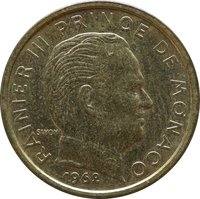
Description:
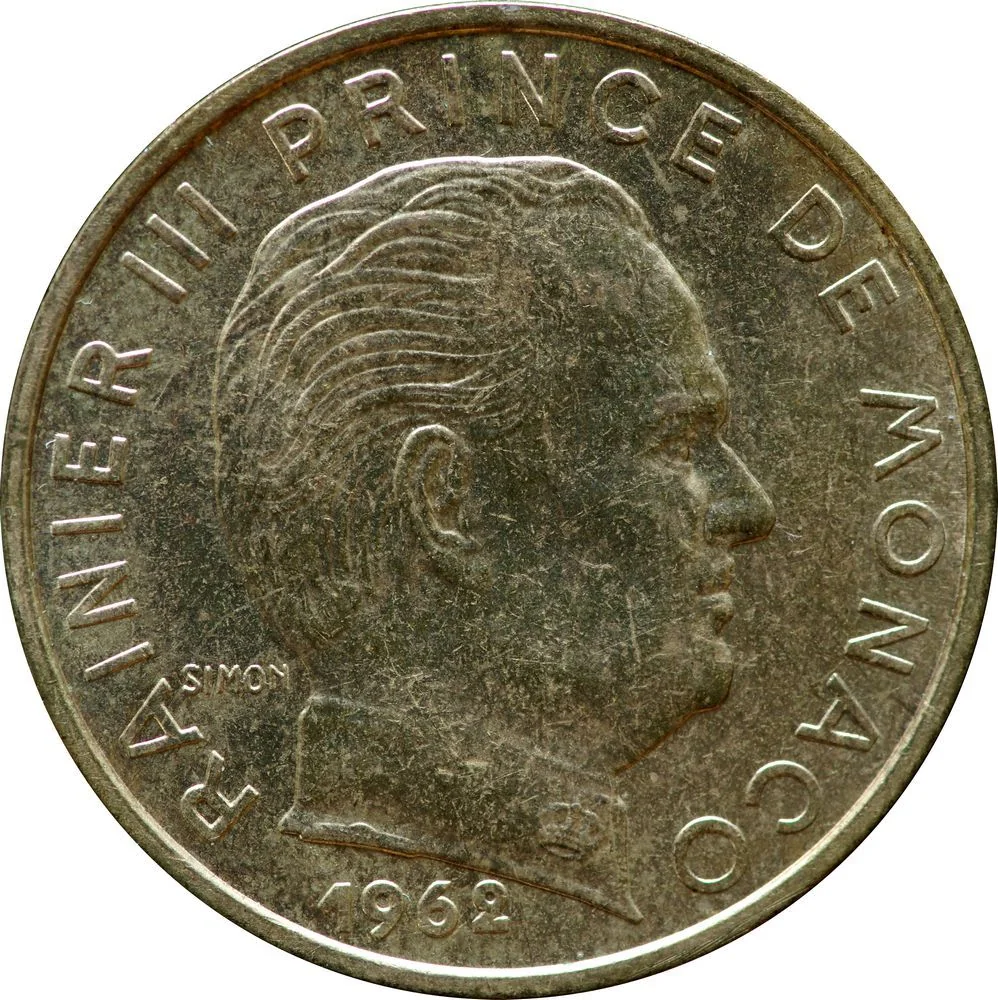
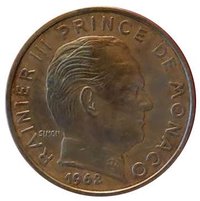
Prince Rainier III in right-facing profile.
Inscription:
RAINIER III PRINCE DE MONACO
SIMON
1962
SIMON
1962
Translation:
Rainier III Prince of Monaco
Simon
1962
Simon
1962
Script: Latin
Language: French
Engraver: Georges Simon
Reverse
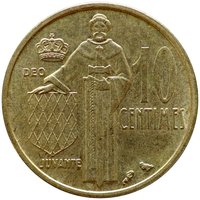
Description:
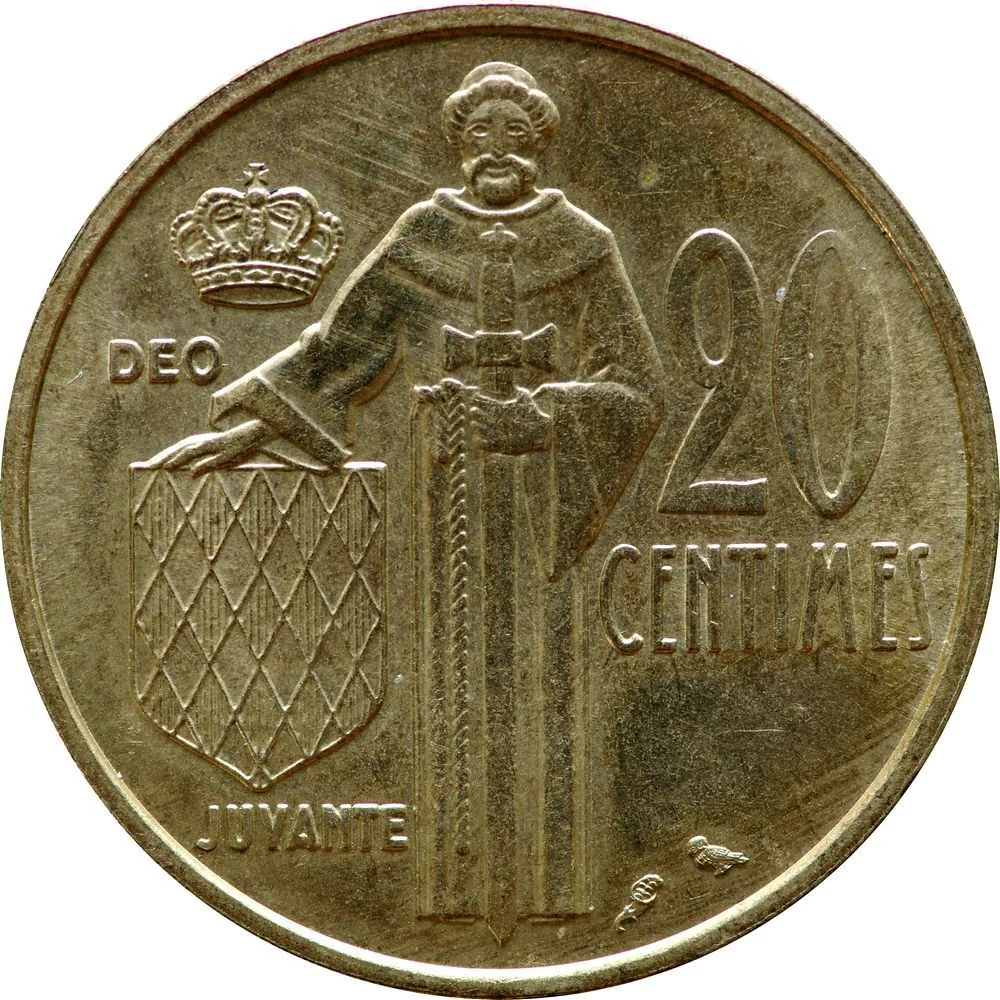
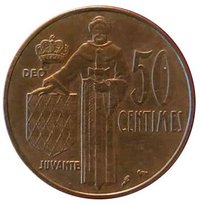
Grimaldi arms with monk soldier supporters, crowned.
Inscription:
DEO JUVANTE
20
CENTIMES
20
CENTIMES
Translation:
With God's help
20
Centimes
20
Centimes
Script: Latin
Language: Latin
Engraver: Georges Simon
Edge
Plain
Categories
| Person> Religious figure |
| Object> Cold weapons |
| Symbols> Coat of Arms |
| Mustache/Beard |
| Symbol> Crown |
| Person> Monarch |
Mints
| Name | Mark |
|---|---|
| Monnaie de Paris | — |
Mintings
| Year | Mint Mark | Mintage | Quality | Collection |
|---|---|---|---|---|
| 1962 | — | 750,000 | ||
| 1974 | — | 97,500 | ||
| 1975 | — | 97,500 | ||
| 1976 | — | 97,500 | ||
| 1977 | — | 97,500 | ||
| 1978 | — | 249,000 | ||
| 1979 | — | 249,000 | ||
| 1982 | — | 100,000 | ||
| 1995 | — | 30,000 | In sets |
Historical background
In 1962, Monaco found itself in a significant monetary and political crisis centered on its long-standing currency arrangement with France. Since 1865, as a member of the Latin Monetary Union, and later through a specific 1929 treaty, Monaco used the French franc as its official currency, minting its own Monegasque franc coins that circulated at par with their French counterparts. This system was underpinned by a fiscal convention that granted Monaco considerable autonomy, allowing it to forgo direct income taxes for its residents and businesses, a privilege that attracted substantial wealth and fueled its economic model.
The situation came to a head because France, under President Charles de Gaulle, viewed this arrangement as increasingly anachronistic and financially detrimental. The French government argued that Monaco’s tax haven status, protected by the old treaties, was causing substantial revenue loss as French citizens and businesses moved capital to the principality to avoid taxation. Furthermore, Monaco’s independent coinage rights were seen as a threat to French monetary sovereignty, especially as the French franc was under pressure. France demanded a renegotiation of the bilateral relationship to align Monaco’s fiscal policies with its own and to gain greater control over the principality’s financial affairs.
The tense negotiations culminated in the signing of a new Franco-Monegasque Treaty in May 1963. This agreement forced Monaco to introduce a direct income tax on French nationals and companies operating within its borders (unless they had been there for over five years) and tightened French oversight of Monegasque banking and finance. While Monaco retained the French franc as its currency and the right to issue coins, the 1962 crisis and its resolution marked a pivotal moment, significantly curbing its fiscal independence and solidifying its economic and monetary dependency on its powerful neighbor.
The situation came to a head because France, under President Charles de Gaulle, viewed this arrangement as increasingly anachronistic and financially detrimental. The French government argued that Monaco’s tax haven status, protected by the old treaties, was causing substantial revenue loss as French citizens and businesses moved capital to the principality to avoid taxation. Furthermore, Monaco’s independent coinage rights were seen as a threat to French monetary sovereignty, especially as the French franc was under pressure. France demanded a renegotiation of the bilateral relationship to align Monaco’s fiscal policies with its own and to gain greater control over the principality’s financial affairs.
The tense negotiations culminated in the signing of a new Franco-Monegasque Treaty in May 1963. This agreement forced Monaco to introduce a direct income tax on French nationals and companies operating within its borders (unless they had been there for over five years) and tightened French oversight of Monegasque banking and finance. While Monaco retained the French franc as its currency and the right to issue coins, the 1962 crisis and its resolution marked a pivotal moment, significantly curbing its fiscal independence and solidifying its economic and monetary dependency on its powerful neighbor.
🌱 Very Common