

5 Sovereigns (Gold Sovereign) – United Kingdom
Non-circulating coins
Commemoration: 500th anniversary of the Gold Sovereign
Series: Sovereign series
United Kingdom
Context

Material
References
KM: #Click to copy to clipboard958
Numista: #327203
Value
Exchange value: 5 GBP = $6.77
Bullion value: $6106.97
Inflation-adjusted value: 17.13 GBP
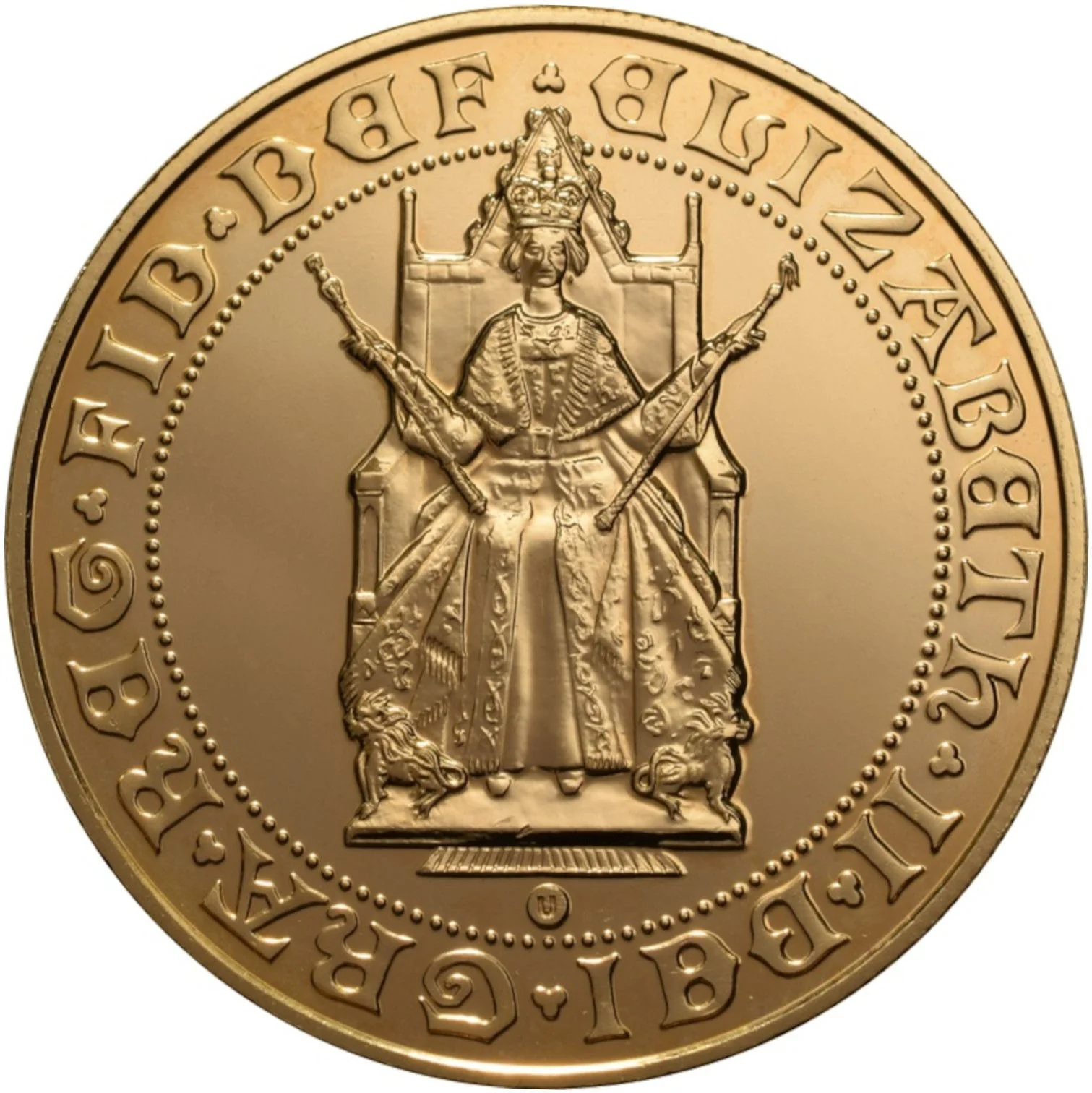
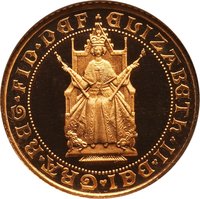
Obverse
Description:
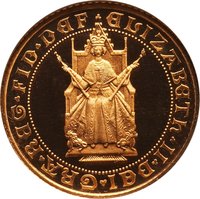
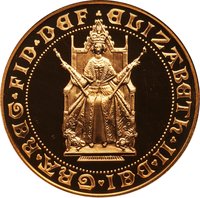
Queen Elizabeth II crowned in King Edward's Chair, holding the sceptre and rod; 'U' privy mark.
Inscription:
ELIZABETh·II·DEI·GRA·REG·FID·DEF
Translation:
Elizabeth II by the Grace of God Queen Defender of the Faith
Script: Latin (uncial)
Language: Latin
Engraver: Bernard Ralph Sindall
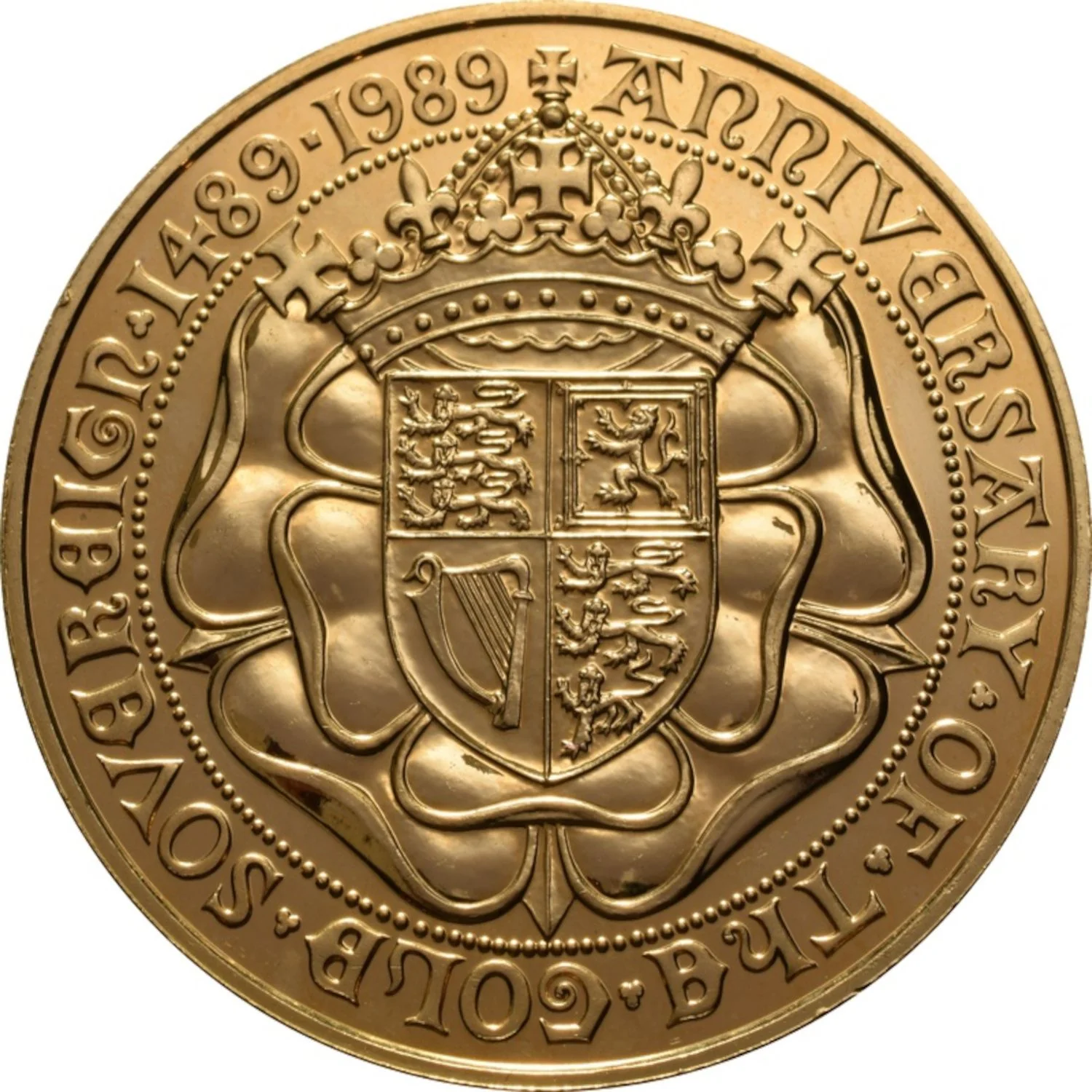
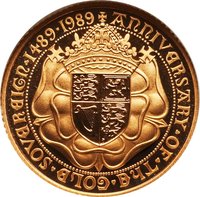
Reverse
Description:
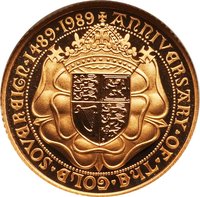
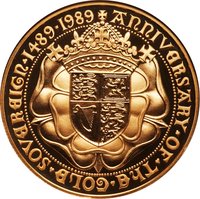
Crowned Royal Shield over a Tudor rose, encircled by legend.
Inscription:
AnnIVERSARY·OF·ThE·GOLD·SOVEREIGn·1489·1989
Script: Latin (uncial)
Engraver: Bernard Ralph Sindall
Edge
Milled
Categories
| Animal> Bird |
| Animal> Feline |
| Symbol> Crown |
| Plants> Flower |
| Symbols> Coat of Arms |
| Symbol> Cross |
Mints
| Name | Mark |
|---|---|
| Royal Mint | — |
Mintings
| Year | Mint Mark | Mintage | Quality | Collection |
|---|---|---|---|---|
| 1989 | — | 2,937 | BU |
Historical background
In 1989, the United Kingdom's currency situation was dominated by its membership in the European Exchange Rate Mechanism (ERM), a system it would formally join in October 1990. The context was Chancellor Nigel Lawson's long-standing policy of "shadowing" the Deutsche Mark, unofficially pegging sterling to the strong German currency since 1987 to combat high inflation. This policy aimed to import the anti-inflation credibility of the Bundesbank, but it created significant tension. It required maintaining high interest rates to support the pound's value, which exacerbated a domestic economic slowdown and a growing housing market crash, while also conflicting with the more expansionary desires of Prime Minister Margaret Thatcher.
The underlying economic picture was one of strain. Inflation was rising sharply, reaching 7.8% by year's end, driven by a consumer boom and high wage settlements. The government's commitment to a strong pound, however, locked it into a monetary policy that seemed increasingly inappropriate for the domestic cycle. Interest rates were raised to 15% in an attempt to cool the economy and defend the currency, but this harsh medicine deepened the looming recession and caused widespread political and public discontent. The situation highlighted a fundamental conflict: the goal of European monetary integration and low inflation versus the need for national policy flexibility to address a deteriorating domestic economy.
Ultimately, 1989 set the stage for the ERM crisis of 1992 (Black Wednesday). The decisions of this period—the commitment to a hard currency policy without full ERM discipline—created vulnerabilities. When Britain did join the ERM in 1990, it was at a arguably overvalued central rate of DM 2.95 to the pound. The high interest rates needed to maintain this parity, amid a global slowdown and with German rates rising after reunification, would prove unsustainable. Thus, the currency situation of 1989 was the prelude to a major financial and political trauma, born from the difficult reconciliation of domestic economic pressures with the rigid demands of a fixed exchange rate system.
The underlying economic picture was one of strain. Inflation was rising sharply, reaching 7.8% by year's end, driven by a consumer boom and high wage settlements. The government's commitment to a strong pound, however, locked it into a monetary policy that seemed increasingly inappropriate for the domestic cycle. Interest rates were raised to 15% in an attempt to cool the economy and defend the currency, but this harsh medicine deepened the looming recession and caused widespread political and public discontent. The situation highlighted a fundamental conflict: the goal of European monetary integration and low inflation versus the need for national policy flexibility to address a deteriorating domestic economy.
Ultimately, 1989 set the stage for the ERM crisis of 1992 (Black Wednesday). The decisions of this period—the commitment to a hard currency policy without full ERM discipline—created vulnerabilities. When Britain did join the ERM in 1990, it was at a arguably overvalued central rate of DM 2.95 to the pound. The high interest rates needed to maintain this parity, amid a global slowdown and with German rates rising after reunification, would prove unsustainable. Thus, the currency situation of 1989 was the prelude to a major financial and political trauma, born from the difficult reconciliation of domestic economic pressures with the rigid demands of a fixed exchange rate system.
Series: Sovereign series
✨ Legendary