

10 colones – Costa Rica
Add to wishlist
Costa Rica
Context
Year: 1995
Issuer: Costa Rica
Issuing organization: Central Bank of Costa Rica
Period:
(since 1948)
Currency:
(since 1896)
Total mintage: 15,000,000
Material
References
KM: #
Numista: #3269
Value
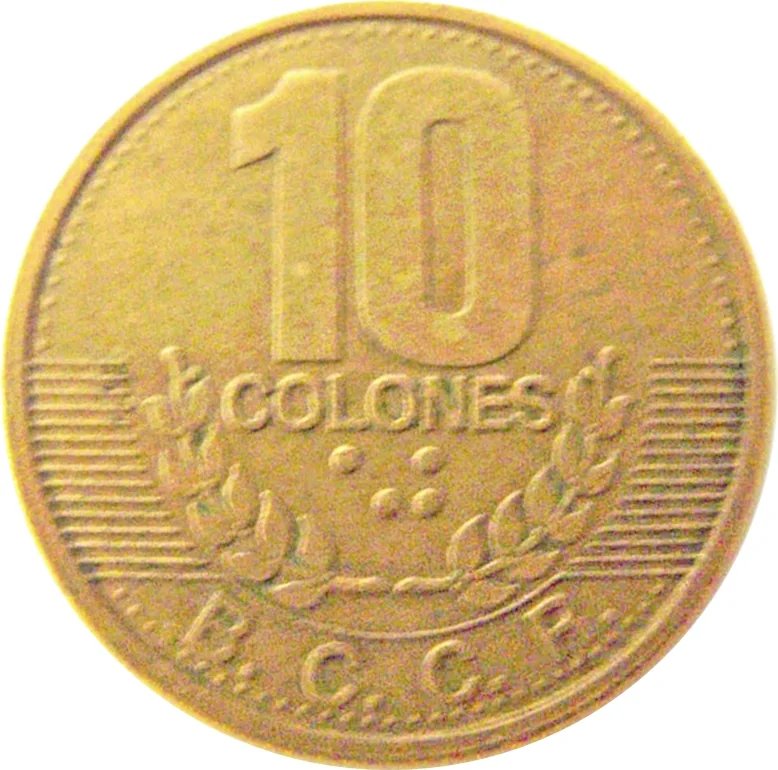
Exchange value: 10 CRC
Obverse
Description:
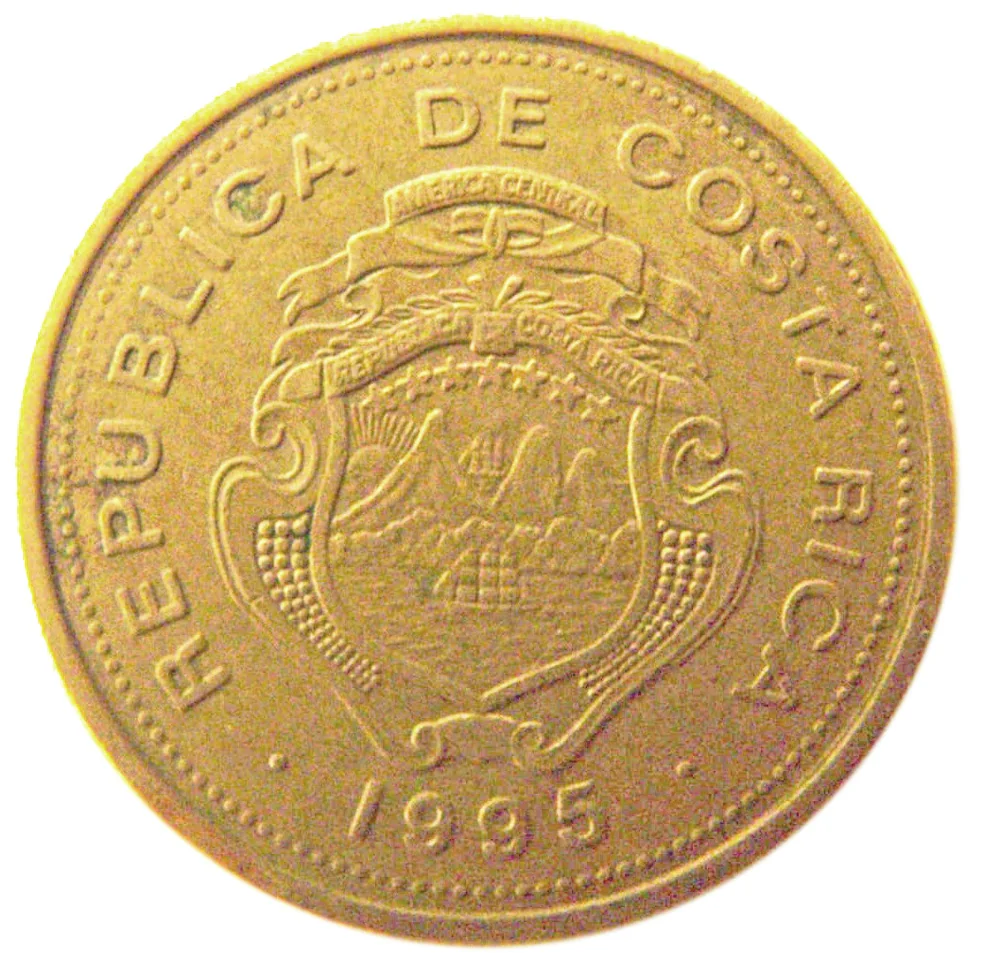
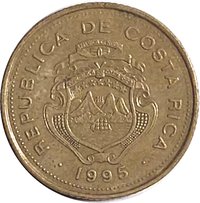
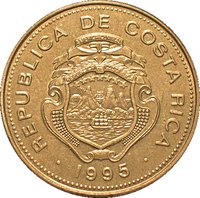
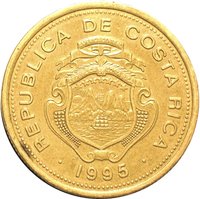
Costa Rican coat of arms featuring seven stars for its provinces, three volcanoes for its mountain ranges, two ships for its position between oceans, and a sunrise. Minting variations exist in size, letter spacing, rim design, and the presence of volcano smoke.
Inscription:
REPUBLICA DE COSTA RICA
AMERICA CENTRAL
REPUBLICA DE COSTA RICA
1995
AMERICA CENTRAL
REPUBLICA DE COSTA RICA
1995
Translation:
REPUBLIC OF COSTA RICA
CENTRAL AMERICA
REPUBLIC OF COSTA RICA
1995
CENTRAL AMERICA
REPUBLIC OF COSTA RICA
1995
Script: Latin
Language: Spanish
Reverse
Edge
Segmented (4 smooth, 4 milled with 13 reeds)
Categories
| Symbols> Coat of Arms |
| Symbol> Wreath |
Mints
| Name | Mark |
|---|---|
| Royal Canadian Mint of Ottawa | — |
Mintings
| Year | Mint Mark | Mintage | Quality | Collection |
|---|---|---|---|---|
| 1995 | — | 15,000,000 |
Historical background
In 1995, Costa Rica was navigating a complex and transitional period in its monetary policy, characterized by a managed dual exchange rate system. The country maintained a fixed official exchange rate for priority imports and debt servicing, while a parallel free market rate, known as the "mercado paralelo," determined the value of the colón for most other transactions. This system, established in the early 1980s, aimed to provide stability for essential goods and government obligations but created significant distortions, encouraging capital flight and a thriving black market for dollars.
The economic backdrop was one of stabilization following the Latin American debt crisis and structural adjustment programs of the 1980s. While inflation had been brought down from hyperinflationary levels, it remained persistently high (around 23% in 1995), eroding the value of the colón and creating constant pressure on the fixed rate. The Central Bank of Costa Rica frequently intervened to defend the official parity, leading to a steady depletion of international reserves. This environment created uncertainty for businesses and investors, who had to navigate the two-tiered system.
Consequently, 1995 was a year of mounting pressure for reform, setting the stage for a major policy shift. The inefficiencies of the dual system were widely acknowledged, and discussions were intensifying within the government and financial circles about moving toward a unified, floating exchange rate. The situation culminated in a decisive move the following year; in 1996, Costa Rica abolished the fixed official rate and implemented a crawling peg system, a crucial step in liberalizing its currency regime and integrating its economy more fully into the global market.
The economic backdrop was one of stabilization following the Latin American debt crisis and structural adjustment programs of the 1980s. While inflation had been brought down from hyperinflationary levels, it remained persistently high (around 23% in 1995), eroding the value of the colón and creating constant pressure on the fixed rate. The Central Bank of Costa Rica frequently intervened to defend the official parity, leading to a steady depletion of international reserves. This environment created uncertainty for businesses and investors, who had to navigate the two-tiered system.
Consequently, 1995 was a year of mounting pressure for reform, setting the stage for a major policy shift. The inefficiencies of the dual system were widely acknowledged, and discussions were intensifying within the government and financial circles about moving toward a unified, floating exchange rate. The situation culminated in a decisive move the following year; in 1996, Costa Rica abolished the fixed official rate and implemented a crawling peg system, a crucial step in liberalizing its currency regime and integrating its economy more fully into the global market.
🌱 Very Common