

50 toea – Papua New Guinea
Add to wishlist
Papua New Guinea
Context
Years: 2021–2023
Issuer: Papua New Guinea
Ruler: Charles III
Currency:
(since 1975)
Total mintage: 3,120,000
Material
Diameter: 30 mm
Weight: 13.35 g
Thickness: 2.55 mm
Shape: Heptagonal
Technique: Milled
Alignment: Medal alignment
flip
References
KM: #
Numista: #326542
Value
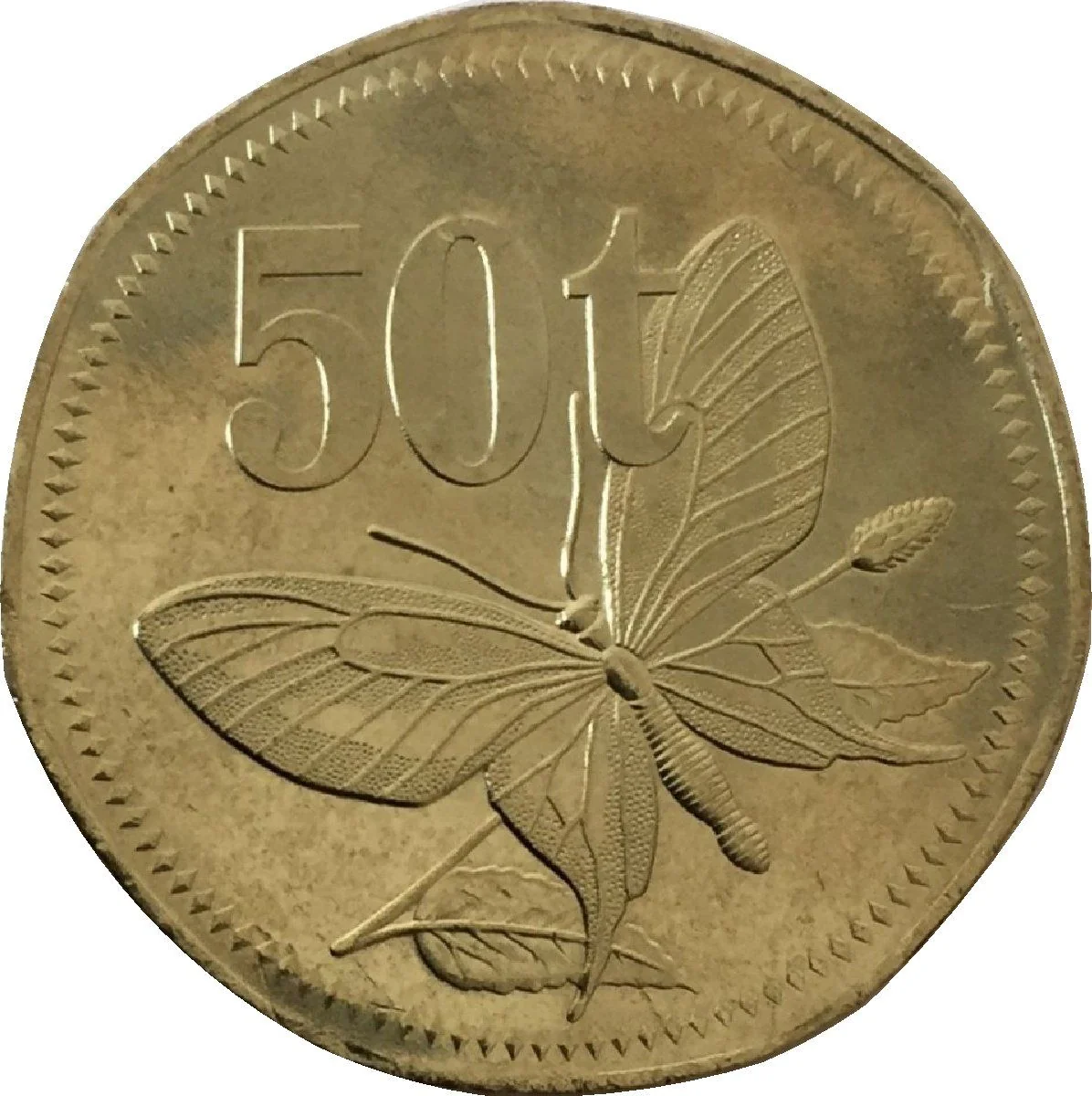
Exchange value: 0.50 PGK
Obverse
Description:
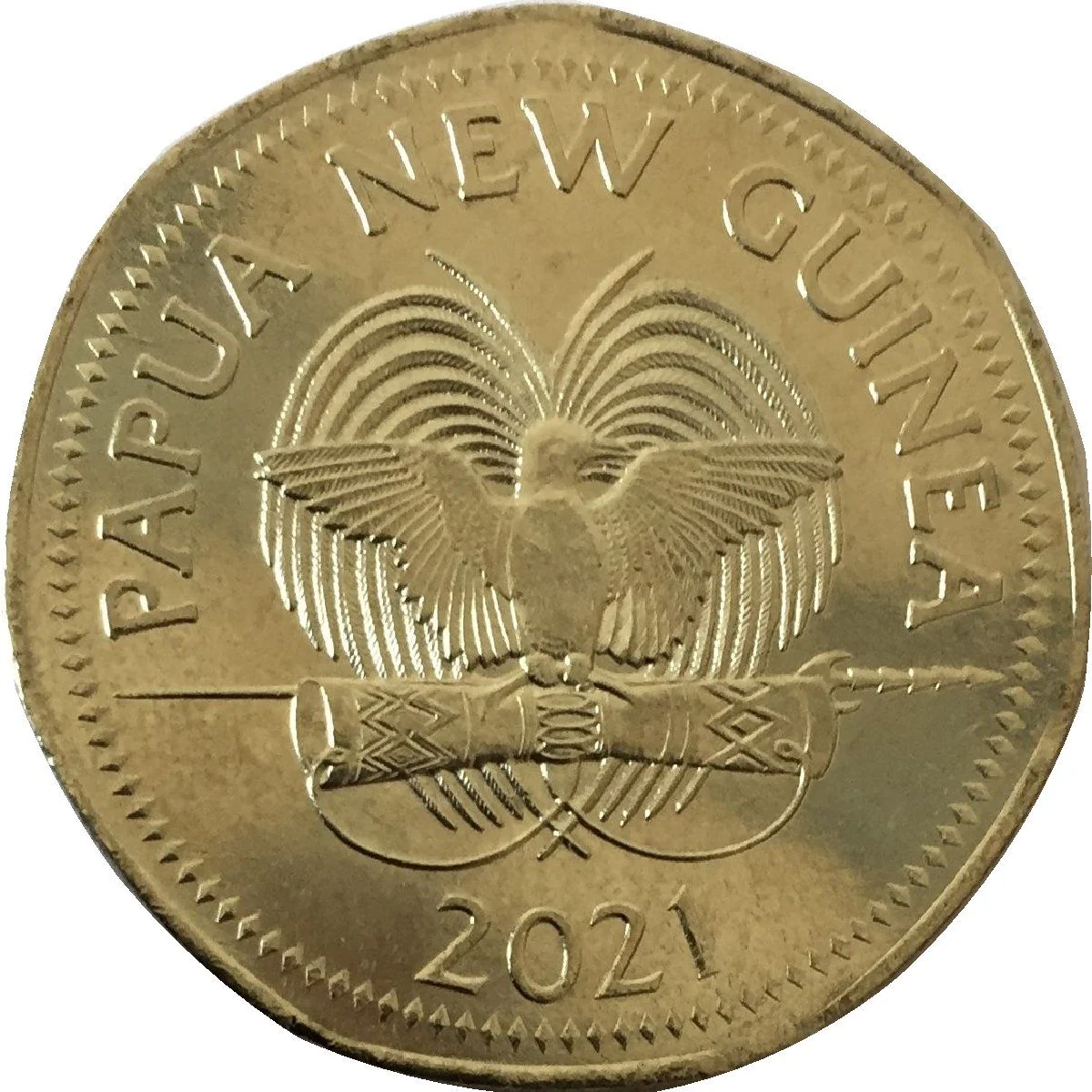
A bird-of-paradise above a spear and kundu drum.
Inscription:
PAPUA NEW GUINEA
2021
2021
Script: Latin
Reverse
Edge
Interrupted Serration
Categories
| Symbols> Coat of Arms |
| Object> Cold weapons |
| Art> Music |
| Animal> Bird |
| Animal> Insect |
Mints
| Name | Mark |
|---|---|
| Royal Australian Mint | — |
Mintings
| Year | Mint Mark | Mintage | Quality | Collection |
|---|---|---|---|---|
| 2021 | — | — | ||
| 2023 | — | 3,120,000 |
Historical background
In 2021, Papua New Guinea's currency, the kina (PGK), faced significant pressure amidst a complex economic backdrop. The country was grappling with the dual challenges of the COVID-19 pandemic, which severely disrupted key sectors like resources and tourism, and a protracted political crisis that culminated in a contested national election. These factors exacerbated longstanding issues, including a heavy reliance on imports, a narrow export base dominated by liquefied natural gas (LNG), and a substantial fiscal deficit. Consequently, foreign exchange reserves were under strain, leading to a persistent shortage of US dollars in the formal banking system.
This forex scarcity created a pronounced two-tiered currency market. While the official exchange rate was maintained by the Bank of Papua New Guinea (BPNG) within a managed float, a large and growing gap emerged with the informal market rate. Businesses and individuals faced lengthy queues and restrictions accessing foreign currency through official channels, forcing many to turn to the black market where the kina traded at a significant discount. This imbalance hampered the private sector, increasing the cost of imported goods and essential inputs, and creating uncertainty for foreign investors.
The government and the central bank responded with a series of measures aimed at stabilization. BPNG continued its intervention in the forex market, utilizing reserves to clear some of the backlog of orders, and maintained tight monetary policy. The Marape government, seeking an International Monetary Fund (IMF) program, pursued fiscal consolidation efforts. However, the structural nature of the forex constraints, coupled with low global commodity prices for much of the year, meant that the kina's pressures were a defining feature of PNG's 2021 economic landscape, underscoring the need for broader economic diversification and reform.
This forex scarcity created a pronounced two-tiered currency market. While the official exchange rate was maintained by the Bank of Papua New Guinea (BPNG) within a managed float, a large and growing gap emerged with the informal market rate. Businesses and individuals faced lengthy queues and restrictions accessing foreign currency through official channels, forcing many to turn to the black market where the kina traded at a significant discount. This imbalance hampered the private sector, increasing the cost of imported goods and essential inputs, and creating uncertainty for foreign investors.
The government and the central bank responded with a series of measures aimed at stabilization. BPNG continued its intervention in the forex market, utilizing reserves to clear some of the backlog of orders, and maintained tight monetary policy. The Marape government, seeking an International Monetary Fund (IMF) program, pursued fiscal consolidation efforts. However, the structural nature of the forex constraints, coupled with low global commodity prices for much of the year, meant that the kina's pressures were a defining feature of PNG's 2021 economic landscape, underscoring the need for broader economic diversification and reform.
🌟 Limited