

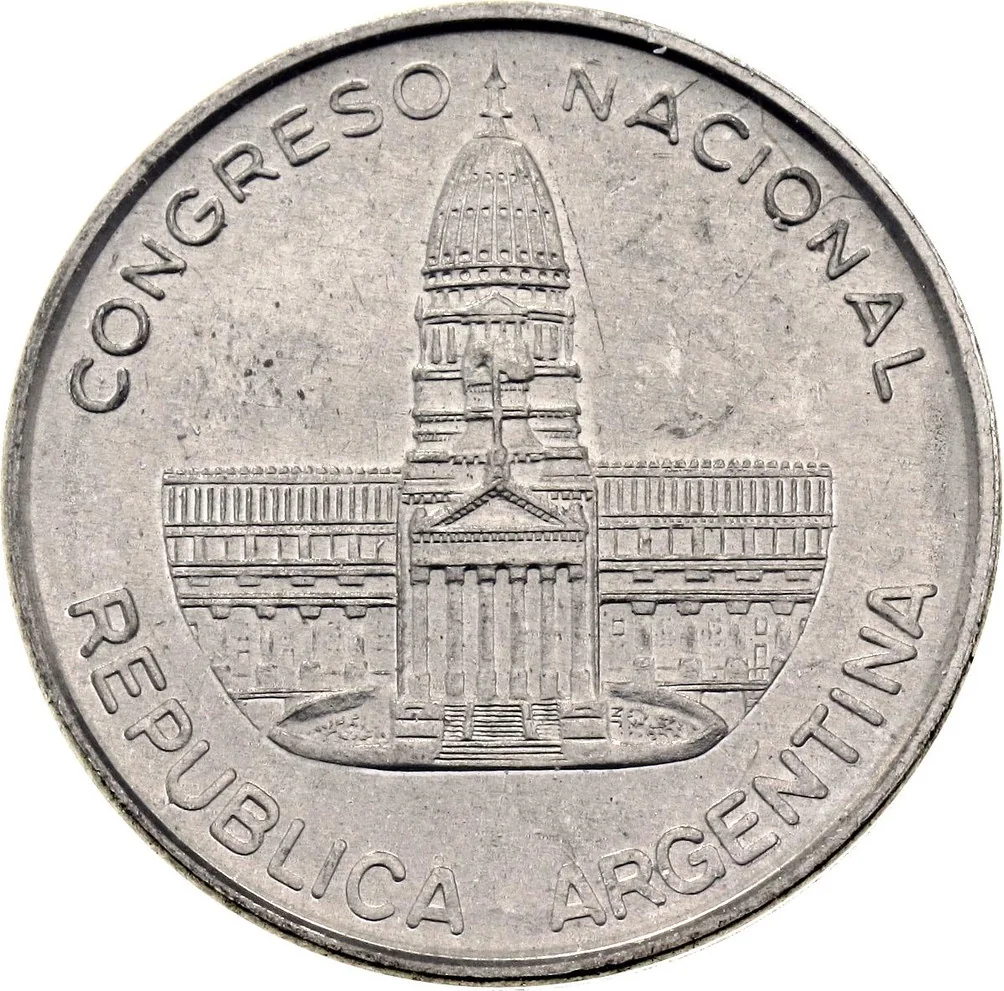
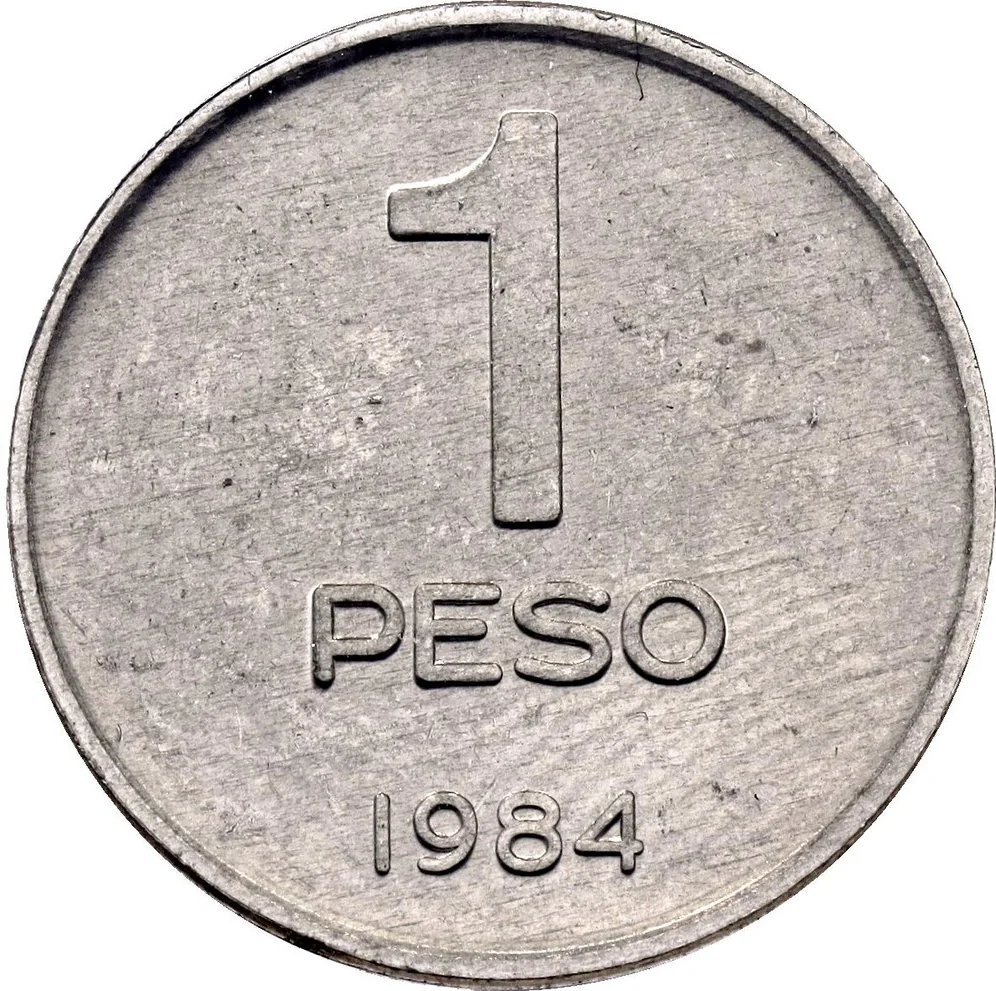
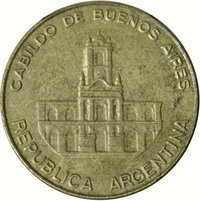
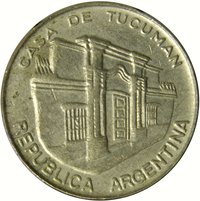
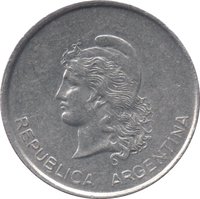
Obverse
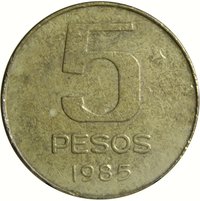
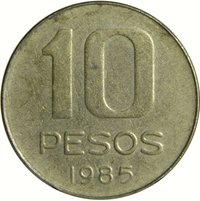
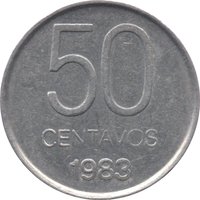
Reverse
Edge
Plain
Mints
| Name | Mark |
|---|---|
| Buenos Aires | — |
Mintings
| Year | Mint Mark | Mintage | Quality | Collection |
|---|---|---|---|---|
| 1984 | — | 184,691,379 |
Historical background
Argentina in 1984 was a fragile democracy emerging from the brutal 1976-1983 military dictatorship, inheriting an economic catastrophe. The currency, the Argentine peso, was in a state of profound crisis, characterized by hyperinflation that would soon spiral out of control. This inflationary surge was fueled by massive fiscal deficits, as the state printed money to cover its expenses, including the costs of the disastrous Falklands War and the burdens of a vast, inefficient public sector. The economy was also shackled by a colossal external debt, which further eroded confidence in the nation's financial stability.
The government of President Raúl Alfonsín attempted to address the crisis with the Austral Plan in June 1985, a heterodox shock program that introduced a new currency, the austral (replacing the peso at a rate of 1 austral = 1,000 pesos). However, in the specific context of 1984, the prelude to this plan was marked by accelerating inflation and a rapid loss of purchasing power. Prices were increasing on a daily basis, leading to widespread indexation of contracts and wages, which only created a vicious cycle. The black market for U.S. dollars flourished as citizens desperately sought a stable store of value, creating a large gap between the official and parallel exchange rates.
Thus, the currency situation in 1984 was one of accelerating decay and eroding trust, setting the stage for the desperate measures of 1985. The economic instability severely tested the new democratic government, as social unrest grew over falling real incomes. The period underscored the deep structural problems of the Argentine economy—fiscal irresponsibility, lack of central bank independence, and inertial inflation—that would define the nation's economic struggles for decades to come.
The government of President Raúl Alfonsín attempted to address the crisis with the Austral Plan in June 1985, a heterodox shock program that introduced a new currency, the austral (replacing the peso at a rate of 1 austral = 1,000 pesos). However, in the specific context of 1984, the prelude to this plan was marked by accelerating inflation and a rapid loss of purchasing power. Prices were increasing on a daily basis, leading to widespread indexation of contracts and wages, which only created a vicious cycle. The black market for U.S. dollars flourished as citizens desperately sought a stable store of value, creating a large gap between the official and parallel exchange rates.
Thus, the currency situation in 1984 was one of accelerating decay and eroding trust, setting the stage for the desperate measures of 1985. The economic instability severely tested the new democratic government, as social unrest grew over falling real incomes. The period underscored the deep structural problems of the Argentine economy—fiscal irresponsibility, lack of central bank independence, and inertial inflation—that would define the nation's economic struggles for decades to come.
🌱 Very Common