

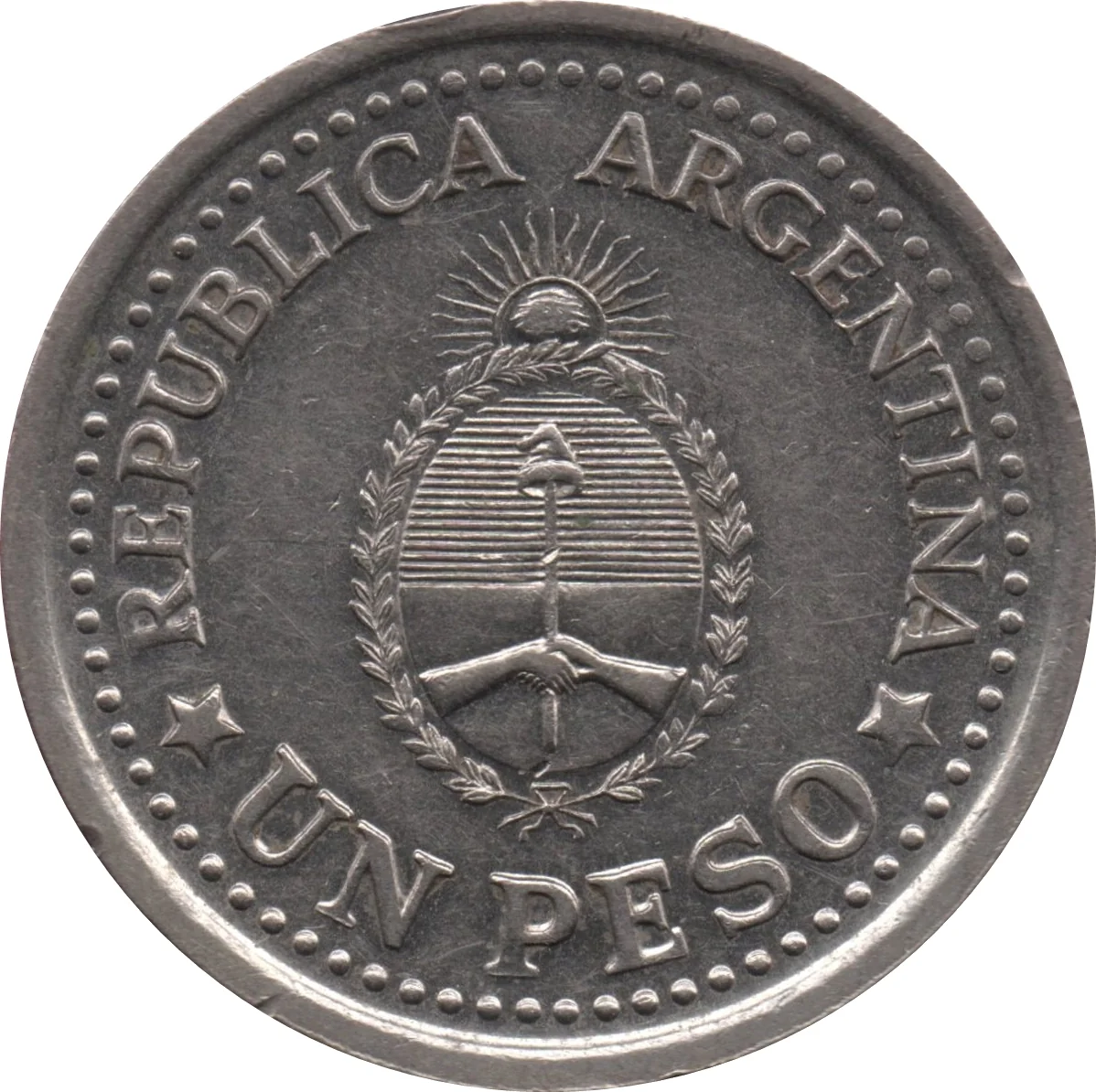
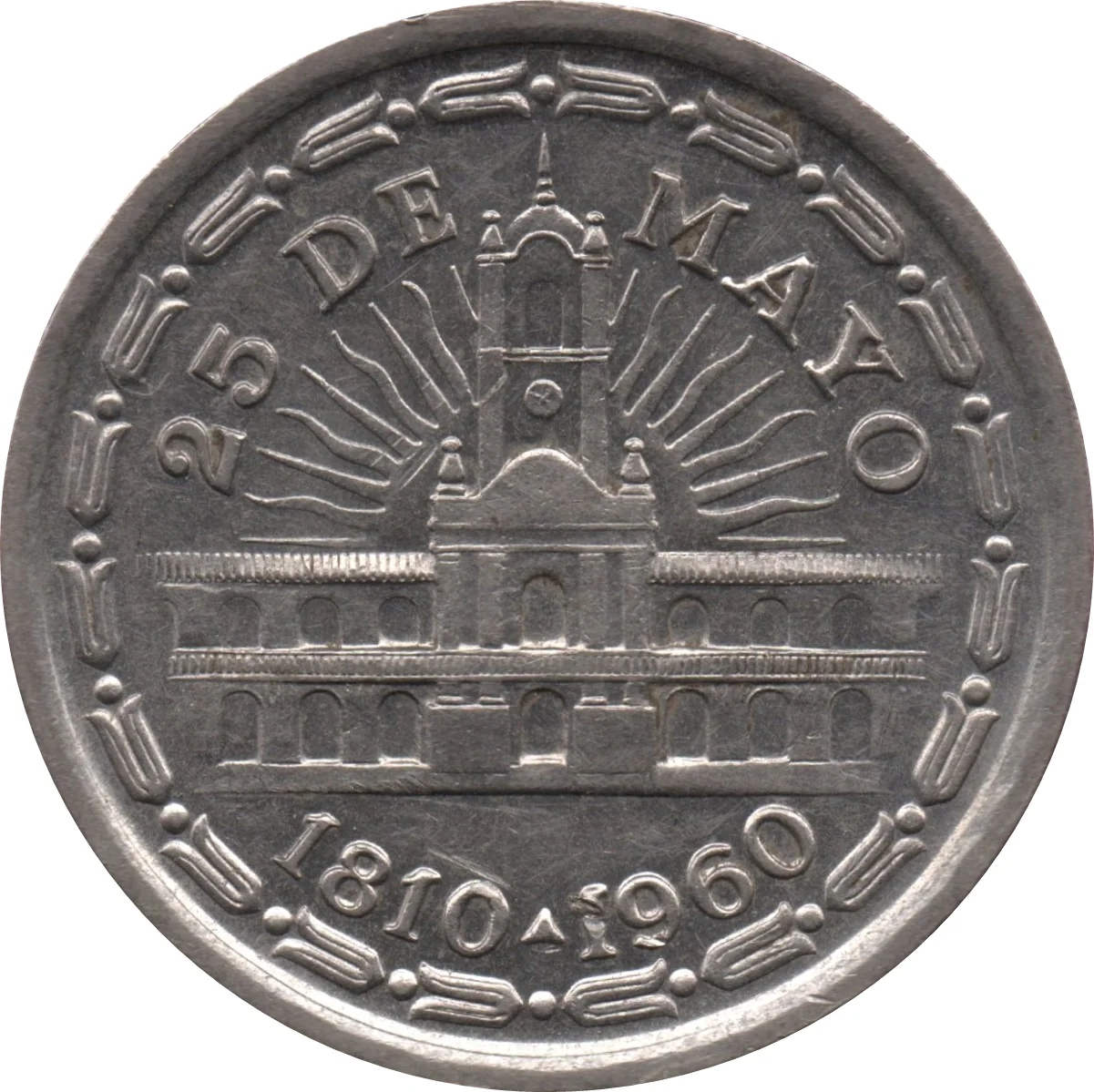
1 peso (May Revolution) – Argentina
Add to wishlist
Circulating commemorative coins
Commemoration: 150th Anniversary of the May Revolution (25th May, 1810)
Argentina
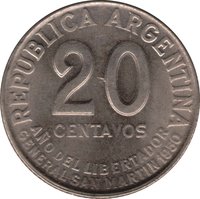
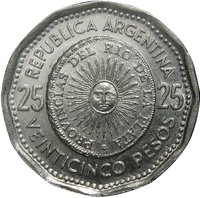
Obverse
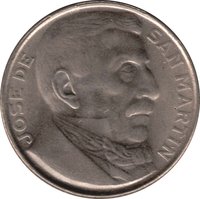
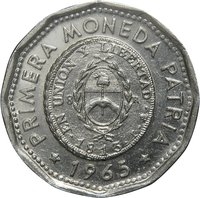
Reverse
Edge
Reeded
Categories
| Symbols> Coat of Arms |
| Symbol> Phrygian cap |
| Symbol> Sun |
| Building> Governmental building |
| Building> Museum |
| Building> Tower |
| Event> Revolution |
Mints
| Name | Mark |
|---|---|
| Buenos Aires | — |
Mintings
| Year | Mint Mark | Mintage | Quality | Collection |
|---|---|---|---|---|
| 1960 | — | 98,751,080 |
Historical background
Argentina entered the 1960s under the shadow of chronic economic instability, a legacy of the populist Perón era and subsequent political turmoil. The decade began with President Arturo Frondizi (1958-1962) attempting a dramatic shift toward economic liberalization and development, heavily reliant on foreign investment. A central pillar of this strategy was the establishment of a dual exchange rate system in 1959. This consisted of a fixed, overvalued official rate for essential imports and debt servicing, and a free, depreciated market rate (the libre) for most other transactions, including exports and capital flows. The goal was to curb inflation, attract capital, and modernize industry, but it created immediate distortions and opportunities for arbitrage.
The currency regime proved unsustainable. The overvalued official peso acted as a disincentive for crucial agricultural exports, while the free market rate experienced persistent devaluation pressure due to high inflation and lack of confidence. This period was characterized by frequent devaluations, rampant inflation, and recurring balance of payments crises. Despite initial inflows, foreign capital remained skittish, and the government was forced to seek repeated stabilization loans from the International Monetary Fund, which came with strict austerity conditions that stifled growth and increased social unrest.
By the mid-1960s, following Frondizi's overthrow in 1962, the currency situation had deteriorated further. The dual system failed to provide stability, and successive governments vacillated between orthodox shock treatments and brief periods of controlled prices and wages. The fundamental cycle of fiscal deficits financed by money printing, leading to inflation and currency depreciation, was deeply entrenched. Thus, the 1960s set a precedent of failed exchange rate experiments and stop-go economic policies, establishing a painful pattern of monetary instability that would plague Argentina for decades to come.
The currency regime proved unsustainable. The overvalued official peso acted as a disincentive for crucial agricultural exports, while the free market rate experienced persistent devaluation pressure due to high inflation and lack of confidence. This period was characterized by frequent devaluations, rampant inflation, and recurring balance of payments crises. Despite initial inflows, foreign capital remained skittish, and the government was forced to seek repeated stabilization loans from the International Monetary Fund, which came with strict austerity conditions that stifled growth and increased social unrest.
By the mid-1960s, following Frondizi's overthrow in 1962, the currency situation had deteriorated further. The dual system failed to provide stability, and successive governments vacillated between orthodox shock treatments and brief periods of controlled prices and wages. The fundamental cycle of fiscal deficits financed by money printing, leading to inflation and currency depreciation, was deeply entrenched. Thus, the 1960s set a precedent of failed exchange rate experiments and stop-go economic policies, establishing a painful pattern of monetary instability that would plague Argentina for decades to come.
🌱 Very Common