

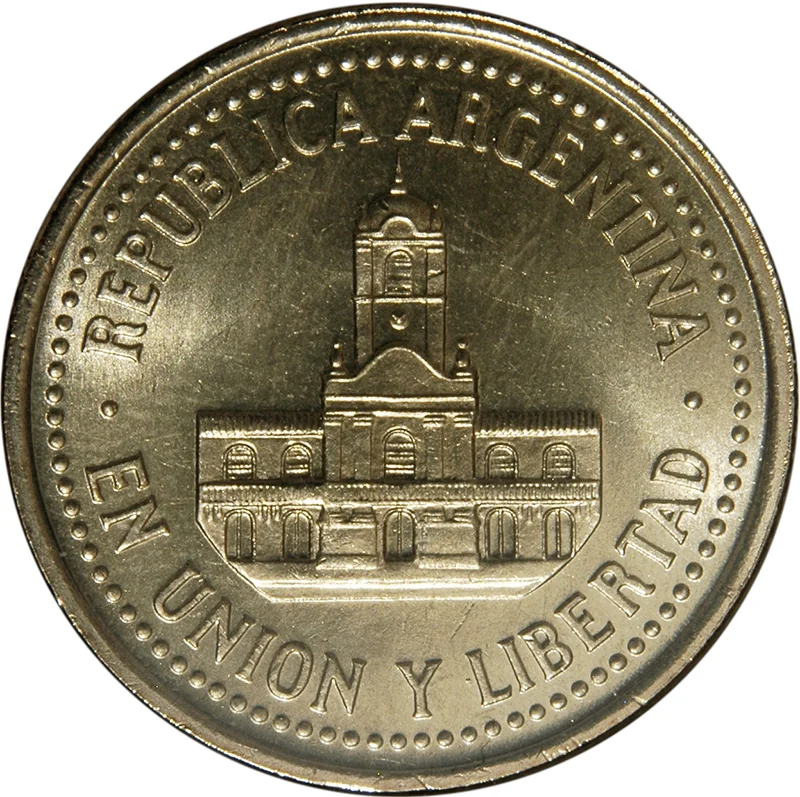
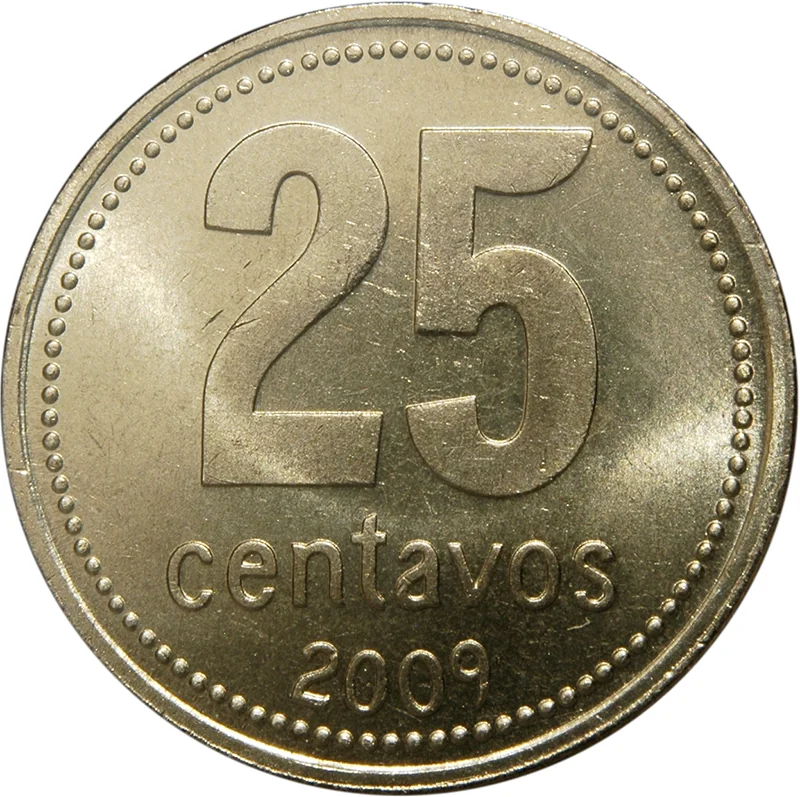
25 centavos – Argentina
Add to wishlist
Argentina
Context
Years: 1992–2010
Issuer: Argentina
Period:
(since 1861)
Currency:
(since 1992)
Total mintage: 285,155,160
Material
Diameter: 24.2 mm
Weight: 5.4 g
Thickness: 1.74 mm
Shape: Round
Composition: Aluminium bronze
Magnetic: No
Technique: Milled
Alignment: Coin alignment
flip
References
KM: #
Numista: #3256
Value
Exchange value: 0.25 ARS
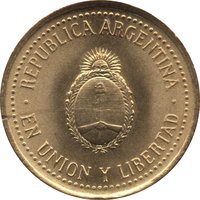
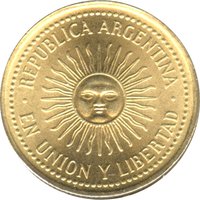
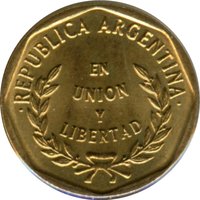
Obverse
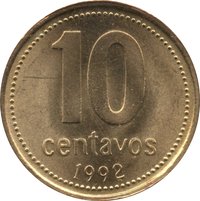
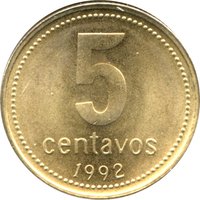
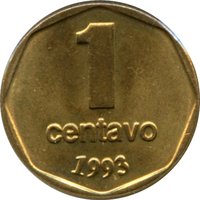
Reverse
Edge
Reeded
Mints
| Name | Mark |
|---|---|
| Buenos Aires | — |
| Casa de Moneda de Chile | — |
| Kremnica | — |
| South African Mint | — |
Mintings
| Year | Mint Mark | Mintage | Quality | Collection |
|---|---|---|---|---|
| 1992 | — | 48,364,000 | ||
| 1993 | — | 80,000,000 | ||
| 2009 | — | 129,800,000 | ||
| 2010 | — | 26,991,160 |
Historical background
In 1992, Argentina was in the final stages of implementing a radical and desperate solution to end a decades-long cycle of hyperinflation and economic instability. The cornerstone of this plan, known as the Convertibility Plan, was established in April 1991 under Economy Minister Domingo Cavallo. Its central pillar was Law No. 23,928, which created a new currency, the peso convertible, and fixed its value by law at an absolute parity of one peso to one U.S. dollar. Furthermore, the law required the Central Bank to hold foreign currency reserves backing the entire monetary base, effectively ceding control over monetary policy to maintain this rigid peg.
This currency board-like system was a profound shock treatment. It immediately halted hyperinflation, which had reached an annual rate of over 2,300% in 1990, by imposing an external discipline the Central Bank could not break. The public's return of confidence was swift, as the guarantee of convertibility ended the practice of dollarization for savings and transactions. The period following the plan's implementation saw a dramatic drop in inflation to single digits, a flood of foreign investment, and strong initial economic growth, creating a sense of "financial normality" that had been absent for generations.
However, the 1992 context also contained the seeds of future vulnerability. The fixed exchange rate eliminated a key tool for adjusting competitiveness, meaning Argentina could not devalue its currency in response to external shocks. When the U.S. dollar strengthened globally in the mid-to-late 1990s, the Argentine peso became severely overvalued, hurting exports and leading to large trade deficits. The rigidity of the system, while its initial strength, ultimately locked the economy into a straitjacket, making it dependent on continuous capital inflows and setting the stage for the profound crisis that would erupt a decade later.
This currency board-like system was a profound shock treatment. It immediately halted hyperinflation, which had reached an annual rate of over 2,300% in 1990, by imposing an external discipline the Central Bank could not break. The public's return of confidence was swift, as the guarantee of convertibility ended the practice of dollarization for savings and transactions. The period following the plan's implementation saw a dramatic drop in inflation to single digits, a flood of foreign investment, and strong initial economic growth, creating a sense of "financial normality" that had been absent for generations.
However, the 1992 context also contained the seeds of future vulnerability. The fixed exchange rate eliminated a key tool for adjusting competitiveness, meaning Argentina could not devalue its currency in response to external shocks. When the U.S. dollar strengthened globally in the mid-to-late 1990s, the Argentine peso became severely overvalued, hurting exports and leading to large trade deficits. The rigidity of the system, while its initial strength, ultimately locked the economy into a straitjacket, making it dependent on continuous capital inflows and setting the stage for the profound crisis that would erupt a decade later.
Series: 1992 Argentina circulation coins
🌱 Very Common