

10 centavos – Argentina
Add to wishlist
Argentina
Context
Years: 1951–1952
Issuer: Argentina
Period:
(since 1861)
Currency:
(1881—1969)
Demonetization: 1 January 1970
Total mintage: 165,848,760
Material
Diameter: 19 mm
Weight: 3 g
Thickness: 1.5 mm
Shape: Round
Composition: Copper-nickel
Technique: Milled
Alignment: Coin alignment
flip
References
KM: #
Numista: #3250
Value
Exchange value: 0.10 ARM
Obverse
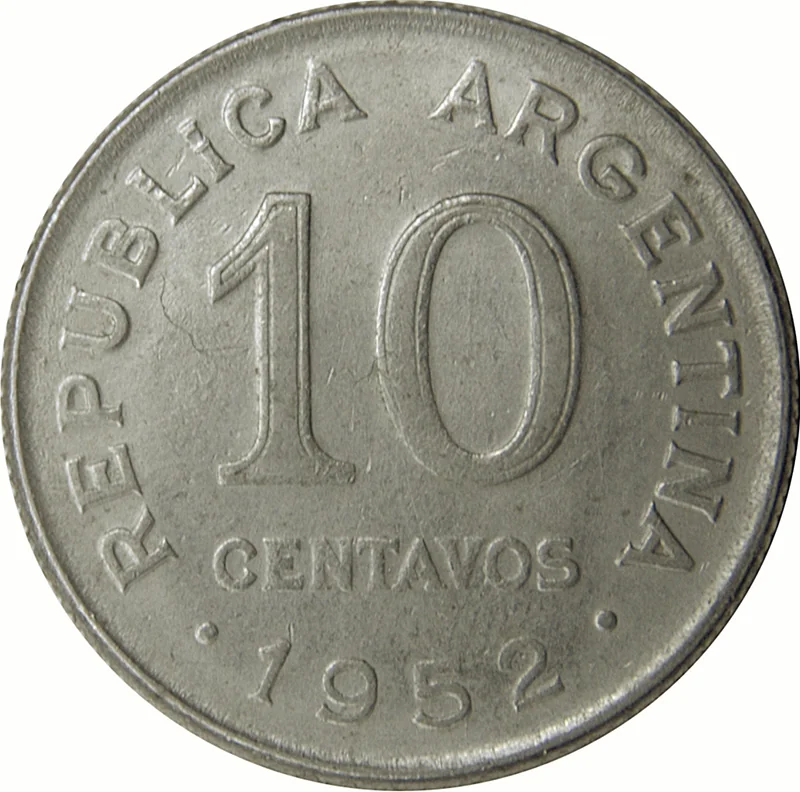
Description:
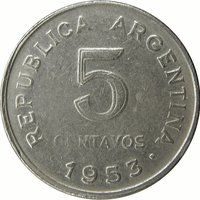
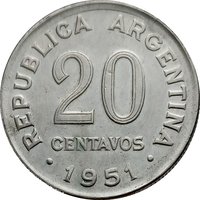
Date value above, country name on rim.
Inscription:
REPUBLICA ARGENTINA
10
CENTAVOS
1952
10
CENTAVOS
1952
Translation:
REPUBLIC OF ARGENTINA
10
CENTS
1952
10
CENTS
1952
Script: Latin
Language: Spanish
Engraver: Mario Baiardi
Reverse
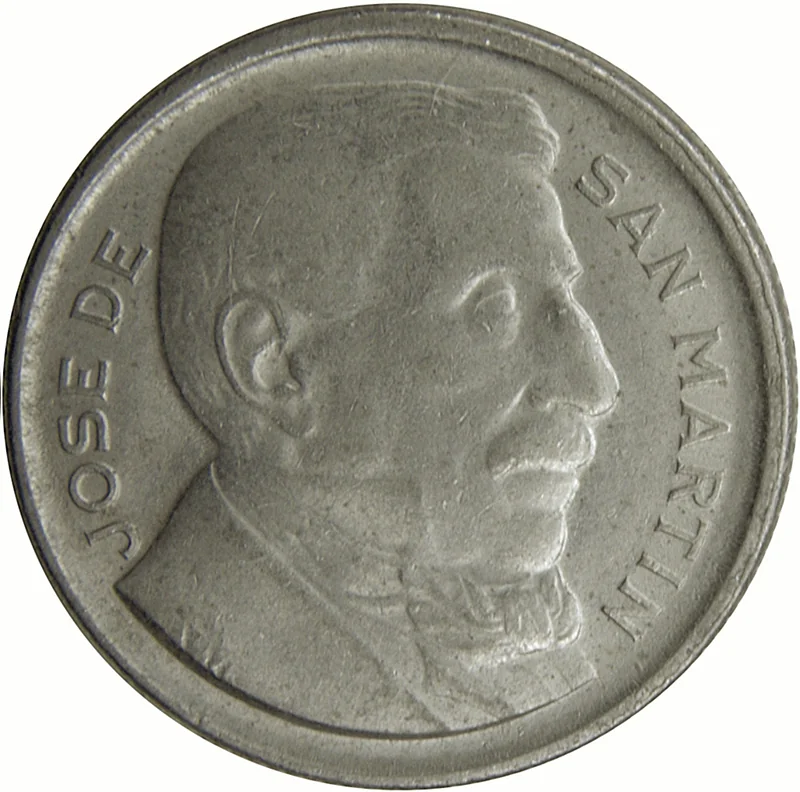
Description:
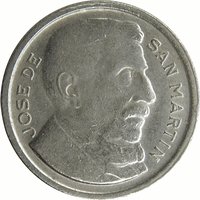
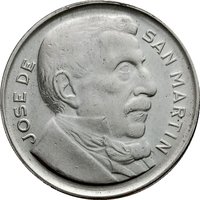
Portrait of General José de San Martín facing right.
Inscription:
JOSE DE SAN MARTIN
Script: Latin
Edge
Reeded
Categories
| Person> Military leader |
| Person> Politician |
Mints
| Name | Mark |
|---|---|
| Buenos Aires | — |
Mintings
| Year | Mint Mark | Mintage | Quality | Collection |
|---|---|---|---|---|
| 1951 | — | 98,520,760 | ||
| 1952 | — | 67,328,000 |
Historical background
In 1951, Argentina's currency situation was characterized by the complex and strained economic policies of President Juan Perón's first administration, which had begun in 1946. The country operated under a system of multiple exchange rates, a cornerstone of Perón's economic nationalism. The Central Bank tightly controlled the official peso rate, artificially overvaluing it to subsidize imports of industrial machinery and raw materials for the state-led industrialization program (known as import substitution industrialization). However, this strong official peso stifled agricultural exports, the traditional backbone of the Argentine economy, by reducing the pesos farmers received for their dollar-earning commodities.
Beneath the controlled official market, a thriving black market for U.S. dollars existed, where the peso traded at a significantly devalued rate. This disparity created a dual economy: favored industries and government projects accessed cheap dollars through the official system, while ordinary citizens and businesses faced scarcity and turned to the illegal market. The overvalued official currency, combined with expansive government spending on social programs and nationalizations, fueled persistent inflation, which eroded purchasing power and created constant pressure on the peso's value.
The year 1951 itself was a turning point, marking the beginning of the end of the post-war economic boom. A severe drought devastated agricultural production, slashing export earnings and draining the country's gold and dollar reserves that backed the peso. This external shock exposed the fundamental weaknesses of Perón's economic model—the neglect of the export sector and unsustainable fiscal policies. Consequently, the currency controls became even more restrictive, and the gap between the official and black-market exchange rates widened significantly, setting the stage for a profound economic crisis that would unfold in the subsequent years.
Beneath the controlled official market, a thriving black market for U.S. dollars existed, where the peso traded at a significantly devalued rate. This disparity created a dual economy: favored industries and government projects accessed cheap dollars through the official system, while ordinary citizens and businesses faced scarcity and turned to the illegal market. The overvalued official currency, combined with expansive government spending on social programs and nationalizations, fueled persistent inflation, which eroded purchasing power and created constant pressure on the peso's value.
The year 1951 itself was a turning point, marking the beginning of the end of the post-war economic boom. A severe drought devastated agricultural production, slashing export earnings and draining the country's gold and dollar reserves that backed the peso. This external shock exposed the fundamental weaknesses of Perón's economic model—the neglect of the export sector and unsustainable fiscal policies. Consequently, the currency controls became even more restrictive, and the gap between the official and black-market exchange rates widened significantly, setting the stage for a profound economic crisis that would unfold in the subsequent years.
Series: 1951 Argentina circulation coins
🌱 Very Common