

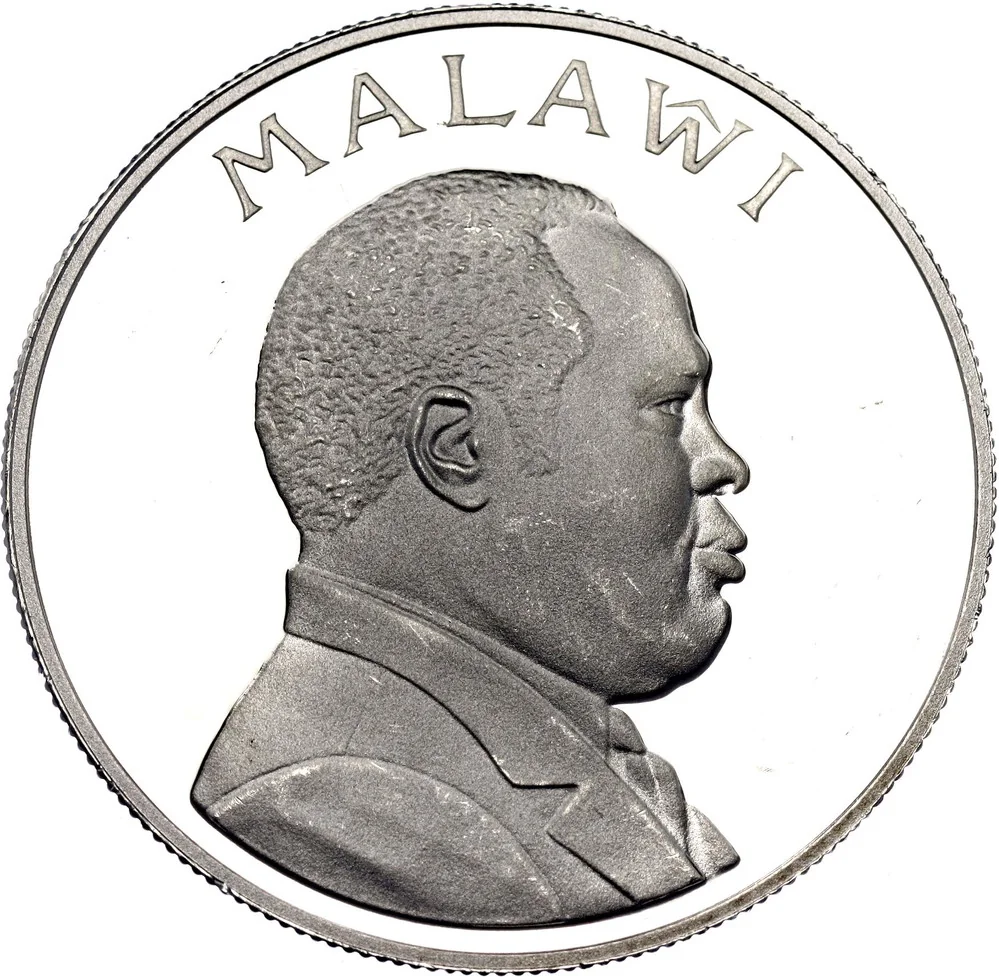
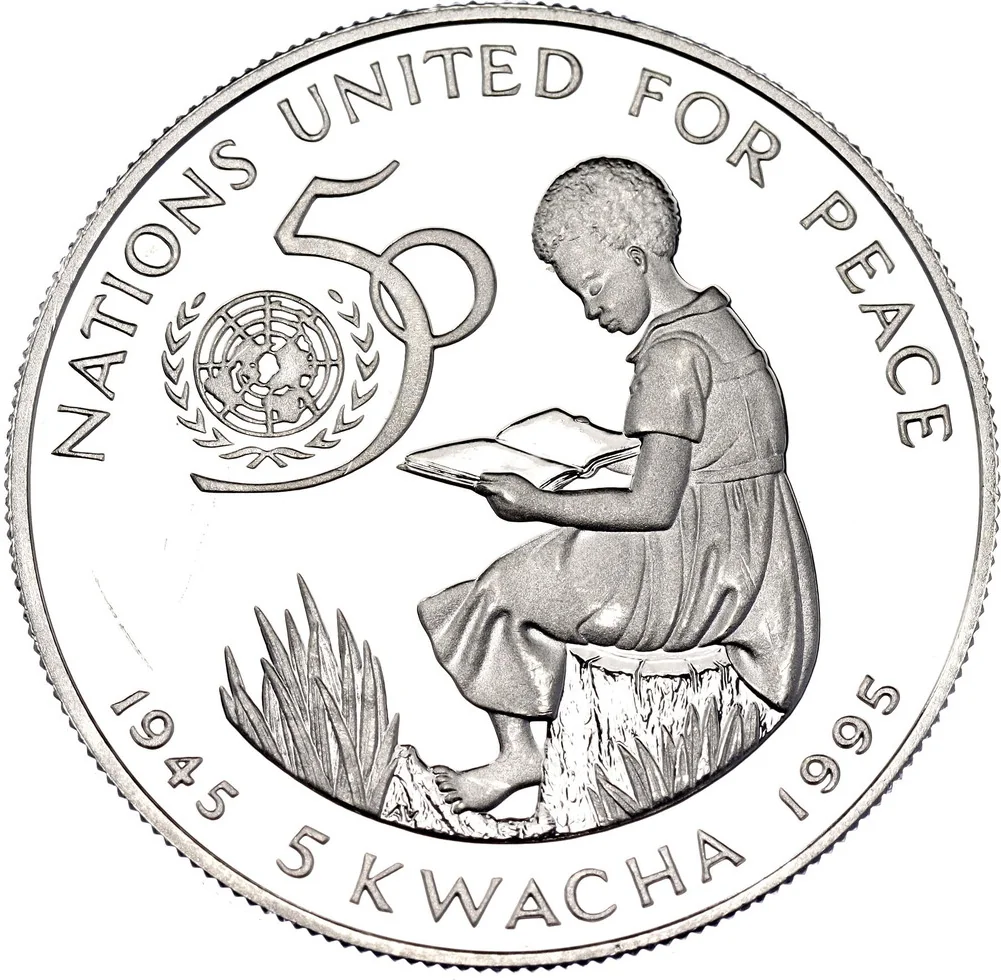
5 kwacha (United Nations) – Malawi
Add to wishlist
Non-circulating coins
Commemoration: 50th Anniversary of the United Nations
Malawi
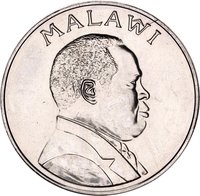
Obverse
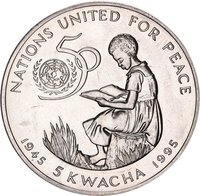
Reverse
Description:
Girl reading a book on a stump with the UN logo.
Inscription:
NATIONS UNITED FOR PEACE
50
1945 5 KWACHA 1995
50
1945 5 KWACHA 1995
Script: Latin
Engraver: Avril Vaughan
Edge
Reeded
Categories
| Person> Politician |
| Organization> United Nations |
Mintings
| Year | Mint Mark | Mintage | Quality | Collection |
|---|---|---|---|---|
| 1995 | — | — | Proof |
Historical background
In 1995, Malawi's currency situation was defined by its recent and challenging transition from a fixed to a floating exchange rate regime. For decades, the Malawian Kwacha (MWK) had been pegged to a basket of currencies, a policy maintained by the long-running regime of President Hastings Kamuzu Banda. This overvalued official rate created a thriving black market for foreign exchange, severe shortages of essential imports, and stifled economic growth by discouraging agricultural exports, the country's main economic driver.
The pivotal change occurred in early 1994, following a national referendum and multi-party elections that brought Bakili Muluzi to power. Under pressure from the International Monetary Fund (IMF) and World Bank as part of structural adjustment programmes, the new government liberalised the exchange rate in February 1994. By 1995, the kwacha was fully floating, leading to an immediate and sharp devaluation—it fell from an official rate of about MK 4 to the US dollar to over MK 15. This was a painful but intended correction to align the currency with market realities and eliminate the parallel market.
Consequently, the economic landscape in 1995 was one of adjustment to this new monetary reality. The devaluation aimed to boost Malawi's key export, tobacco, by making it more competitive, and to attract foreign investment. However, in the short term, it significantly increased the cost of imported goods and services, fueling inflation and placing considerable strain on the population's purchasing power. Thus, 1995 represented a year of enduring the difficult short-term consequences of liberalisation, with the hope of laying the foundation for longer-term export-led growth and economic stability.
The pivotal change occurred in early 1994, following a national referendum and multi-party elections that brought Bakili Muluzi to power. Under pressure from the International Monetary Fund (IMF) and World Bank as part of structural adjustment programmes, the new government liberalised the exchange rate in February 1994. By 1995, the kwacha was fully floating, leading to an immediate and sharp devaluation—it fell from an official rate of about MK 4 to the US dollar to over MK 15. This was a painful but intended correction to align the currency with market realities and eliminate the parallel market.
Consequently, the economic landscape in 1995 was one of adjustment to this new monetary reality. The devaluation aimed to boost Malawi's key export, tobacco, by making it more competitive, and to attract foreign investment. However, in the short term, it significantly increased the cost of imported goods and services, fueling inflation and placing considerable strain on the population's purchasing power. Thus, 1995 represented a year of enduring the difficult short-term consequences of liberalisation, with the hope of laying the foundation for longer-term export-led growth and economic stability.

💎 Very Rare