

5 Pounds – Gibraltar
United Kingdom
Context
Material
References
KM: #Click to copy to clipboard1427
Numista: #323958
Value
Exchange value: 5 GIP
Bullion value: $74.28
Inflation-adjusted value: 8.52 GIP
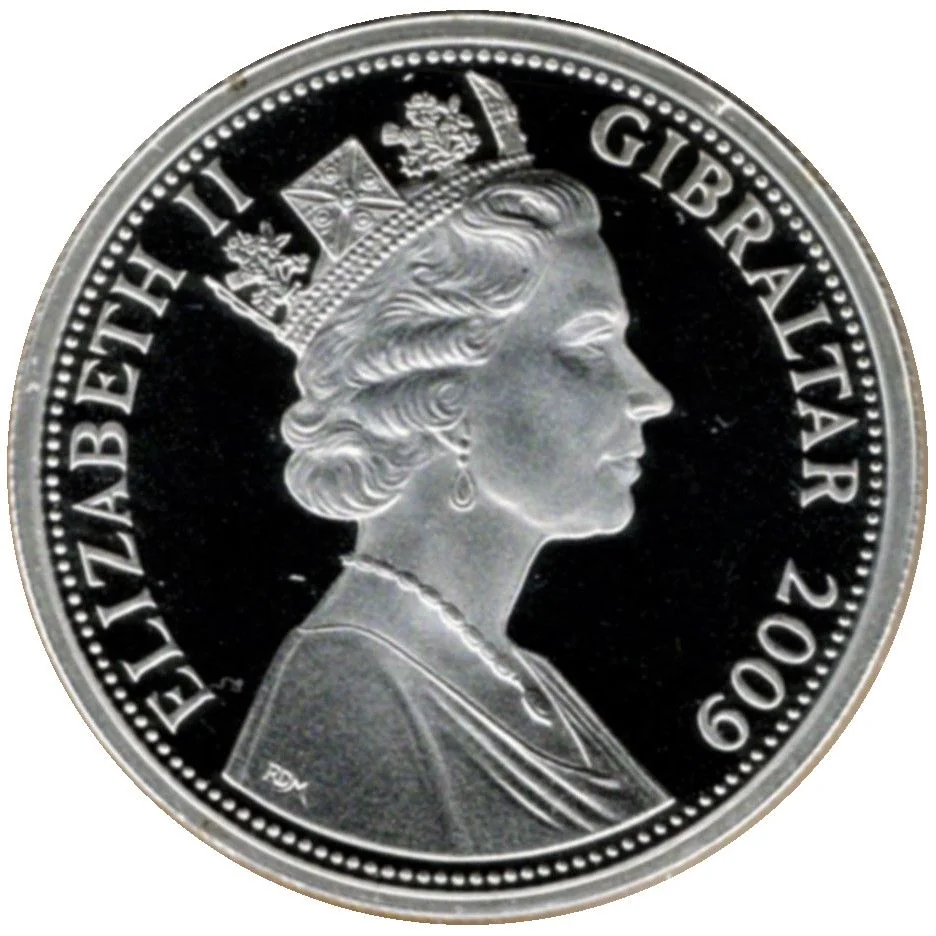
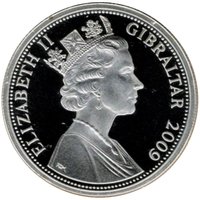
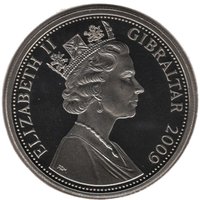
Obverse
Description:
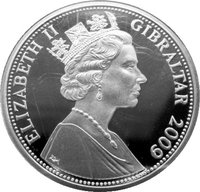
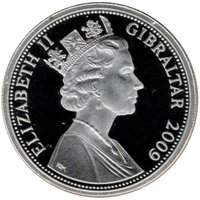
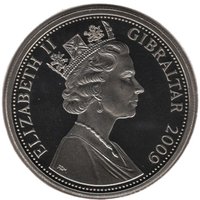
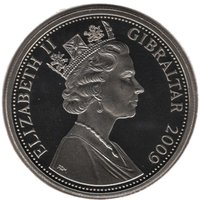
Bust of Elizabeth II
Inscription:
ELIZABETH II
GIBRALTAR 2009
RDM
GIBRALTAR 2009
RDM
Script: Latin
Engraver: Raphael David Maklouf
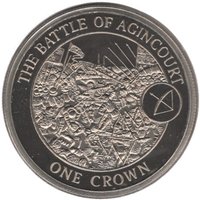
Reverse
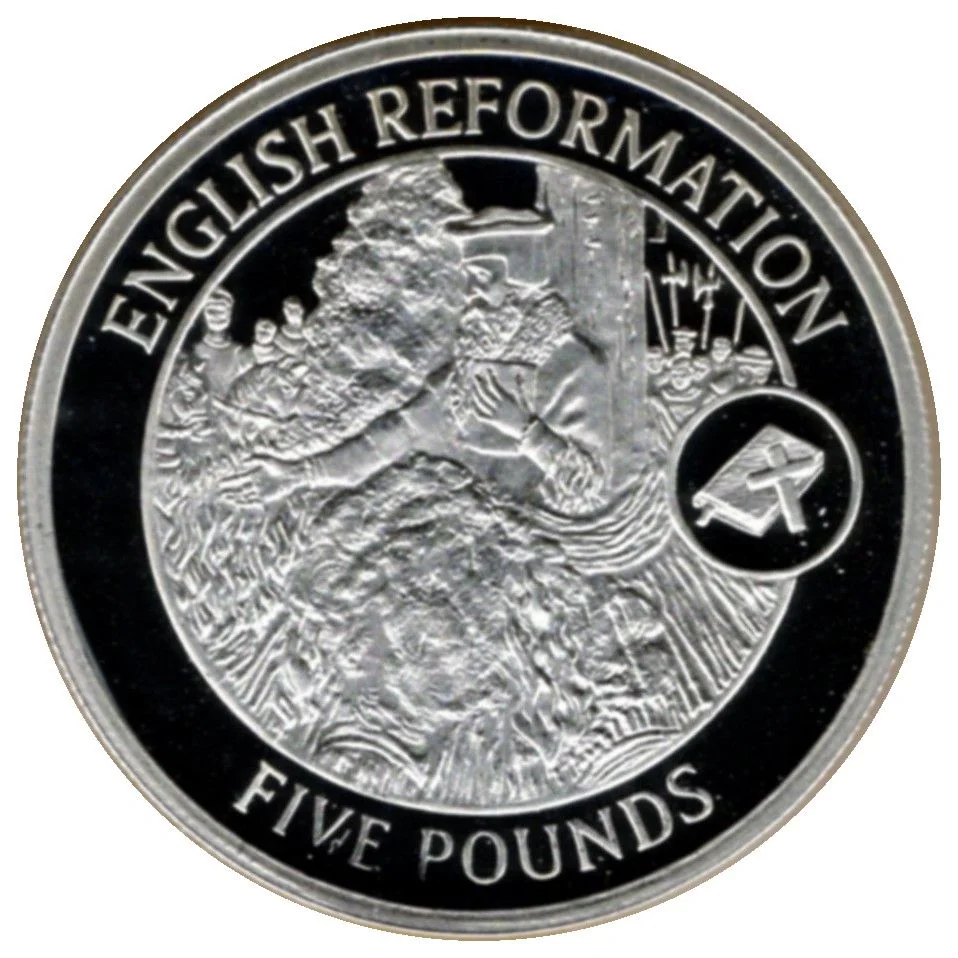
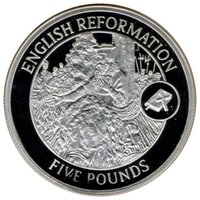
Description:
Thomas Cranmer, Archbishop of Canterbury from 1533, led the English Reformation.
Inscription:
ENGLISH REFORMATION
5 POUNDS
5 POUNDS
Script: Latin
Edge
Milled
Mintings
| Year | Mint Mark | Mintage | Quality | Collection |
|---|---|---|---|---|
| 2009 | — | — | Proof |
Historical background
In 2009, Gibraltar’s currency situation was defined by its unique political status and its close economic ties to the United Kingdom. As a British Overseas Territory, its official currency was (and remains) the Gibraltar pound (GIP), issued by the Government of Gibraltar and pegged at par with the British pound sterling (GBP). While Sterling circulated widely and was accepted interchangeably, the locally issued notes and coins were not legal tender in the UK, creating a practical one-way fungibility. This system provided monetary stability and was a key symbol of Gibraltar’s constitutional link to Britain, especially important amidst ongoing sovereignty tensions with Spain.
The global financial crisis of 2008-2009 presented significant challenges, testing Gibraltar’s financial sector and currency arrangement. As an economy heavily reliant on tourism, online gambling, and financial services, Gibraltar felt the ripple effects of the recession, particularly through reduced economic activity. However, its prudent regulatory framework and the stability afforded by the Sterling peg helped it avoid the banking crises seen elsewhere. Notably, Gibraltar’s government maintained a substantial reserve backing for its issued currency, a requirement that bolstered confidence in the GIP during a period of global monetary uncertainty.
Furthermore, the currency situation on the ground reflected Gibraltar’s practical realities. While the Gibraltar pound was the official currency, Spanish euros were also widely accepted in many retail establishments due to the daily influx of cross-border workers and tourists from Spain. This de facto dual-currency environment facilitated commerce but also underscored Gibraltar’s economic interdependence with its neighbour, despite political disputes. Thus, in 2009, Gibraltar’s monetary landscape was a balancing act: firmly anchored to Sterling for stability and identity, while pragmatically accommodating the euro to serve its local economy.
The global financial crisis of 2008-2009 presented significant challenges, testing Gibraltar’s financial sector and currency arrangement. As an economy heavily reliant on tourism, online gambling, and financial services, Gibraltar felt the ripple effects of the recession, particularly through reduced economic activity. However, its prudent regulatory framework and the stability afforded by the Sterling peg helped it avoid the banking crises seen elsewhere. Notably, Gibraltar’s government maintained a substantial reserve backing for its issued currency, a requirement that bolstered confidence in the GIP during a period of global monetary uncertainty.
Furthermore, the currency situation on the ground reflected Gibraltar’s practical realities. While the Gibraltar pound was the official currency, Spanish euros were also widely accepted in many retail establishments due to the daily influx of cross-border workers and tourists from Spain. This de facto dual-currency environment facilitated commerce but also underscored Gibraltar’s economic interdependence with its neighbour, despite political disputes. Thus, in 2009, Gibraltar’s monetary landscape was a balancing act: firmly anchored to Sterling for stability and identity, while pragmatically accommodating the euro to serve its local economy.
Series: History of Britain
✨ Legendary