

2 centavos – Argentina
Add to wishlist
Argentina
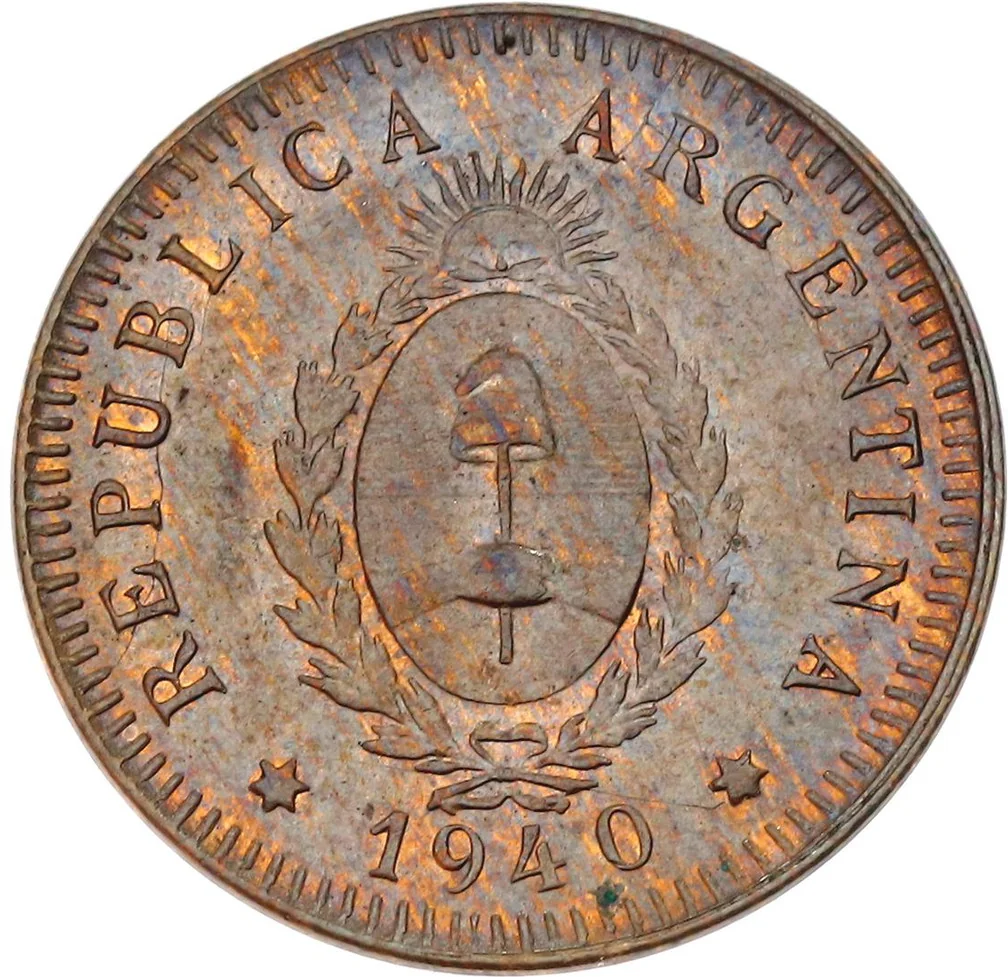
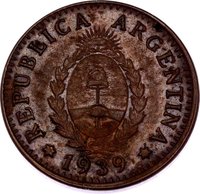
Obverse
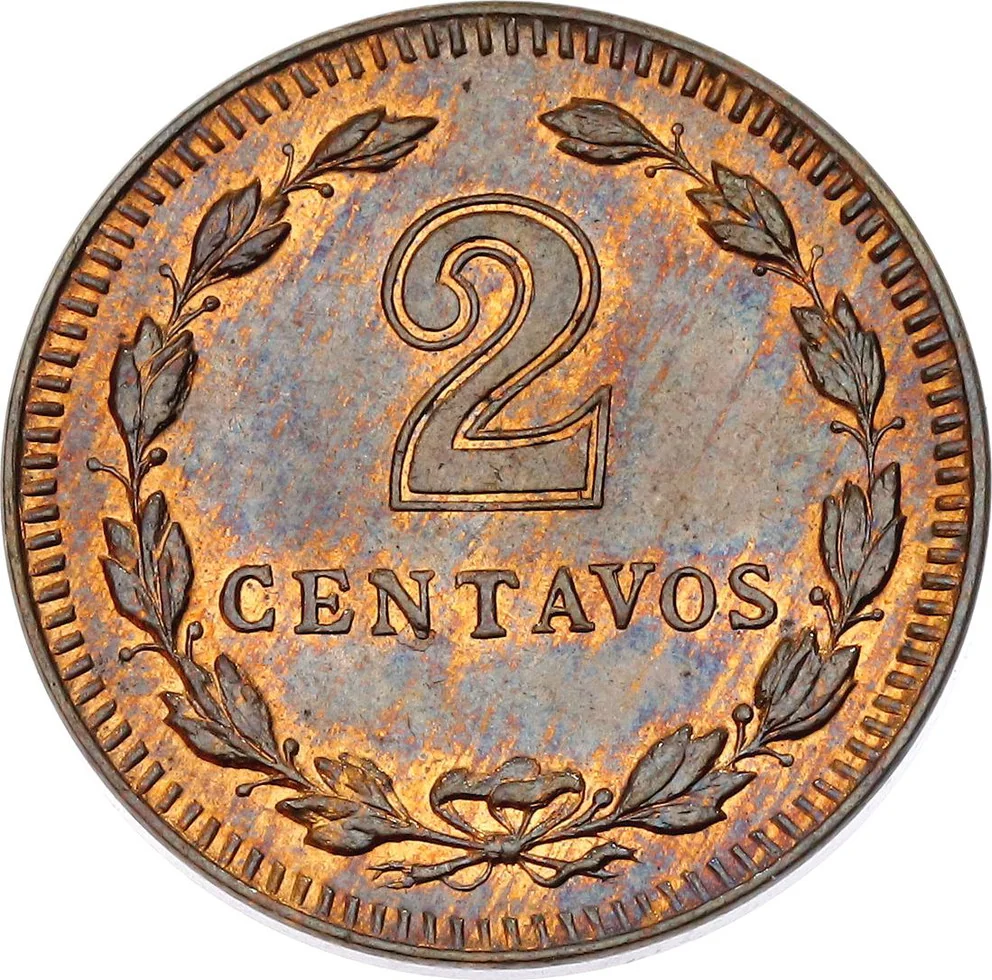
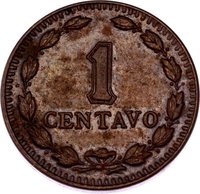
Reverse
Edge
Plain
Categories
| Symbols> Coat of Arms |
| Symbol> Phrygian cap |
| Symbol> Sun |
Mintings
| Year | Mint Mark | Mintage | Quality | Collection |
|---|---|---|---|---|
| 1939 | — | 5,490,000 | ||
| 1940 | — | 4,625,000 | ||
| 1941 | — | 4,566,805 | ||
| 1942 | — | 2,082,492 | ||
| 1944 | — | 387,072 | ||
| 1945 | — | 4,585,000 | ||
| 1946 | — | 3,395,000 | ||
| 1947 | — | 4,395,000 |
Historical background
In 1939, Argentina's currency situation was defined by the legacy of the Great Depression and the establishment of a complex, state-controlled exchange regime. Following the global economic crisis, Argentina abandoned the gold standard in 1929 and, by 1933, had implemented a system of multiple exchange rates through the creation of the Exchange Control Commission. This body centralized all foreign currency transactions, setting different peso values for different types of trade. The primary goal was to protect the country's gold and foreign exchange reserves, manage debt payments, and favor key agricultural exports—like beef and grains—which were the backbone of the economy and generated vital British pounds and US dollars.
This multi-tiered system created a stark divide between a preferential "official" rate for essential imports and debt servicing, and a less favorable "free" or financial rate for other transactions. While effective in shielding the trade surplus and ensuring the servicing of external debt, particularly to British creditors, the mechanism introduced significant distortions. It fostered a bureaucratic apparatus for allocating foreign currency, which often led to inefficiencies and opportunities for arbitrage. The system inherently subsidized the powerful agrarian export sector and linked Argentina's financial stability to the continued strength of its agricultural commodity prices on the world market.
The outbreak of World War II in September 1939 immediately exacerbated existing pressures. Traditional European markets were disrupted, threatening the flow of export earnings that underpinned the peso's managed values. While initial wartime demand for Argentine foodstuffs provided a temporary boost, the longer-term outlook was one of profound uncertainty. The currency controls of 1939, therefore, represented a fragile fortress—a necessary intervention for its time but one that was highly vulnerable to the global shocks that the new war would inevitably deliver, setting the stage for the economic nationalism and instability that would characterize the coming decade.
This multi-tiered system created a stark divide between a preferential "official" rate for essential imports and debt servicing, and a less favorable "free" or financial rate for other transactions. While effective in shielding the trade surplus and ensuring the servicing of external debt, particularly to British creditors, the mechanism introduced significant distortions. It fostered a bureaucratic apparatus for allocating foreign currency, which often led to inefficiencies and opportunities for arbitrage. The system inherently subsidized the powerful agrarian export sector and linked Argentina's financial stability to the continued strength of its agricultural commodity prices on the world market.
The outbreak of World War II in September 1939 immediately exacerbated existing pressures. Traditional European markets were disrupted, threatening the flow of export earnings that underpinned the peso's managed values. While initial wartime demand for Argentine foodstuffs provided a temporary boost, the longer-term outlook was one of profound uncertainty. The currency controls of 1939, therefore, represented a fragile fortress—a necessary intervention for its time but one that was highly vulnerable to the global shocks that the new war would inevitably deliver, setting the stage for the economic nationalism and instability that would characterize the coming decade.
🌱 Very Common