

1 cash – Lê Văn Khôi Rebellion
Add to wishlist
Vietnam
Context
Years: 1833–1834
Country: Vietnam
Issuer: Lê Văn Khôi Rebellion
Period:
(1833—1835)
Demonetized: Yes
Material
Diameter: 23 mm
Weight: 1.87 g
Shape: Round with a square hole
Composition: Zinc
Magnetic: No
Technique: Cast
Alignment: Medal alignment
flip
References
Numista: #323781
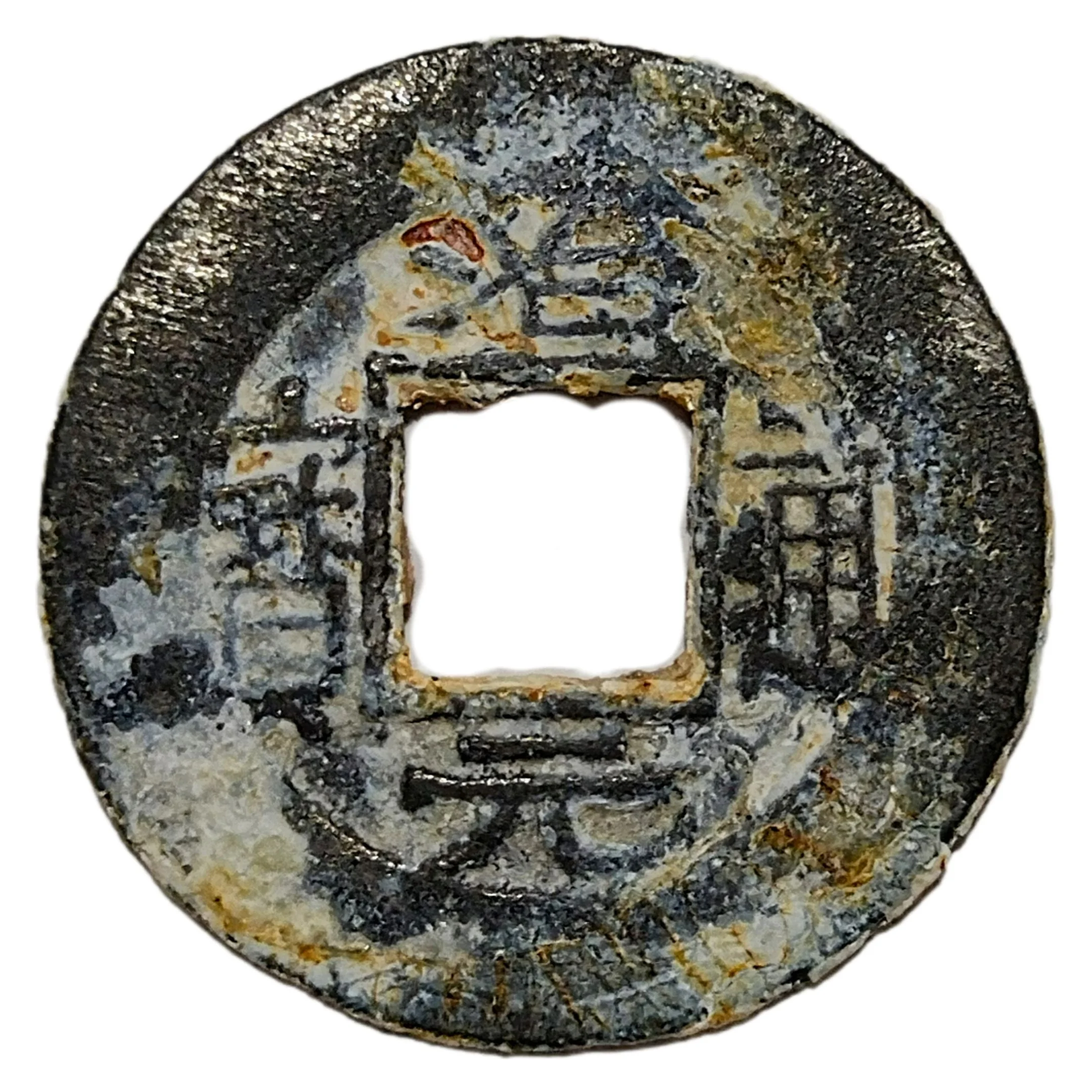
Obverse
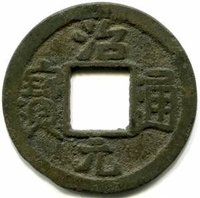
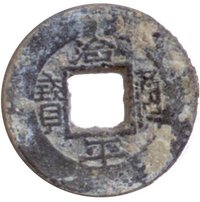
Description:
Four Chinese characters read vertically, right to left.
Inscription:
治
寶 通
元
寶 通
元
Translation:
Zhi Bao
Tong Yuan
Tong Yuan
Scripts: Chinese (traditional, regular script)
Language: Classical Chinese
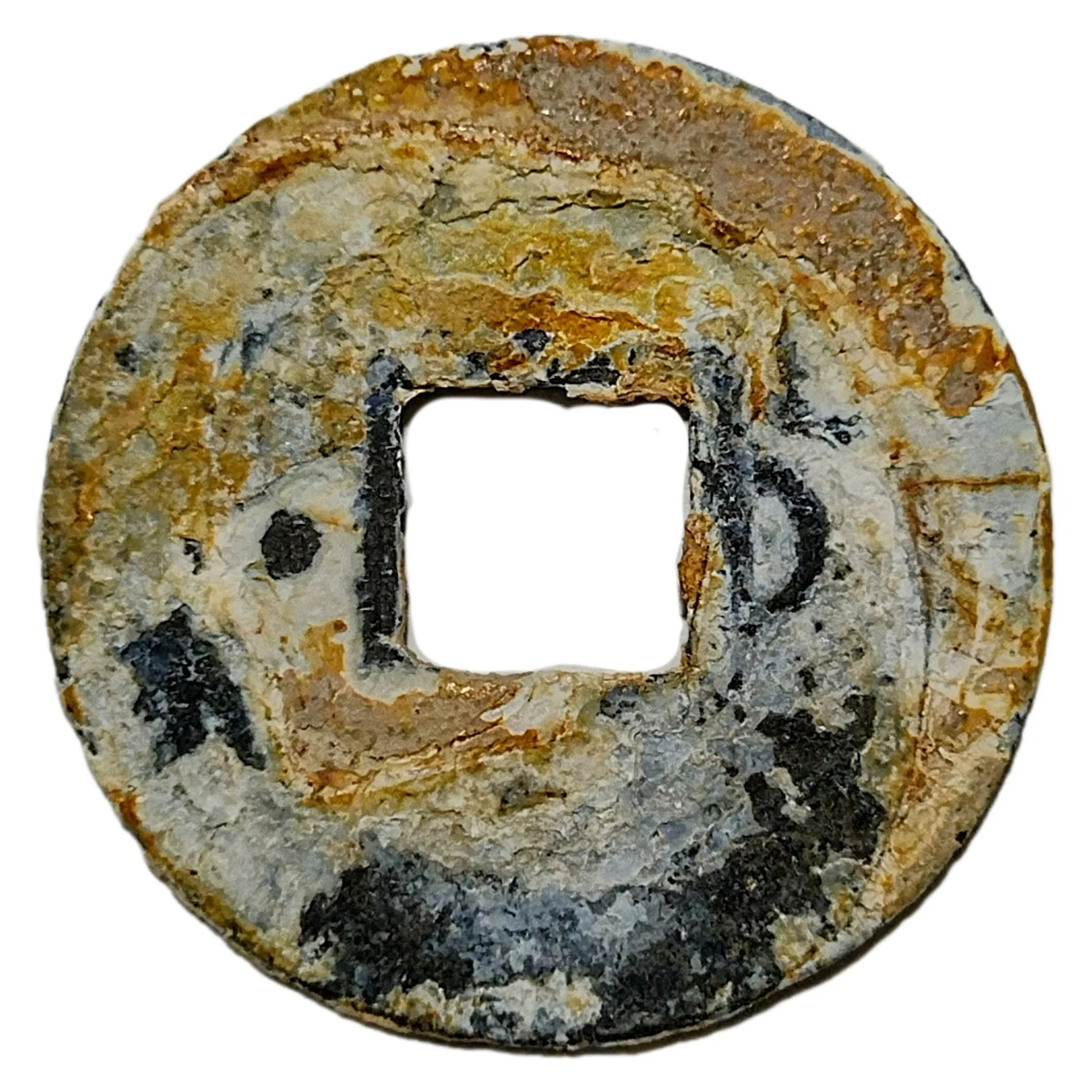
Reverse
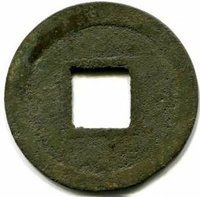
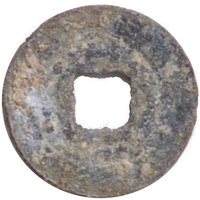
Description:
Crescent right, dot left.
Edge
Plain
Mintings
| Year | Mint Mark | Mintage | Quality | Collection |
|---|---|---|---|---|
| — | — | — |
Historical background
The Lê Văn Khôi Rebellion (1833-1835) erupted within a complex monetary environment shaped by Emperor Minh Mạng's centralizing reforms. A key grievance was the 1832 abolition of the copper mining and minting monopoly in Khôi's power base of Gia Định (Saigon), which stripped local elites of a major source of wealth and autonomy. This was part of a broader state policy to standardize currency, replacing regional zinc and copper coinage with centrally issued coins, thereby consolidating economic control in Huế and disrupting southern networks.
The rebellion's currency situation was defined by scarcity and necessity. With the imperial mint in Huế controlling legitimate coinage, the rebels in the besieged Citadel of Saigon faced a critical shortage of money to pay troops and administer their territory. In response, they resorted to minting their own emergency coinage, likely using melted-down utensils, temple bells, or captured metal. These crude, locally produced coins, often bearing the reign title of the rebel's figurehead claimant to the throne, Lê Duy Khiêm, were a stark symbol of defiance and a practical tool for survival.
Ultimately, the currency dimension of the rebellion underscored the broader conflict between central authority and regional power. The Nguyễn dynasty's victory in 1835 not only crushed the revolt but also reinforced its monetary sovereignty. The rebel minting was suppressed, and Minh Mạng accelerated his national currency system, culminating in the introduction of machine-struck silver and copper coins in the 1830s-40s. Thus, the rebellion highlighted how control over money was inseparable from control over the kingdom itself.
The rebellion's currency situation was defined by scarcity and necessity. With the imperial mint in Huế controlling legitimate coinage, the rebels in the besieged Citadel of Saigon faced a critical shortage of money to pay troops and administer their territory. In response, they resorted to minting their own emergency coinage, likely using melted-down utensils, temple bells, or captured metal. These crude, locally produced coins, often bearing the reign title of the rebel's figurehead claimant to the throne, Lê Duy Khiêm, were a stark symbol of defiance and a practical tool for survival.
Ultimately, the currency dimension of the rebellion underscored the broader conflict between central authority and regional power. The Nguyễn dynasty's victory in 1835 not only crushed the revolt but also reinforced its monetary sovereignty. The rebel minting was suppressed, and Minh Mạng accelerated his national currency system, culminating in the introduction of machine-struck silver and copper coins in the 1830s-40s. Thus, the rebellion highlighted how control over money was inseparable from control over the kingdom itself.
✨ Legendary