

½ penny – British West Africa
Add to wishlist
Context
Year: 1952
Country: Western African States
Issuer: British West Africa
Ruler: George VI
Currency:
(1907—1968)
Demonetized: Yes
Total mintage: 43,735,000
Material
References
KM: #
Numista: #3234
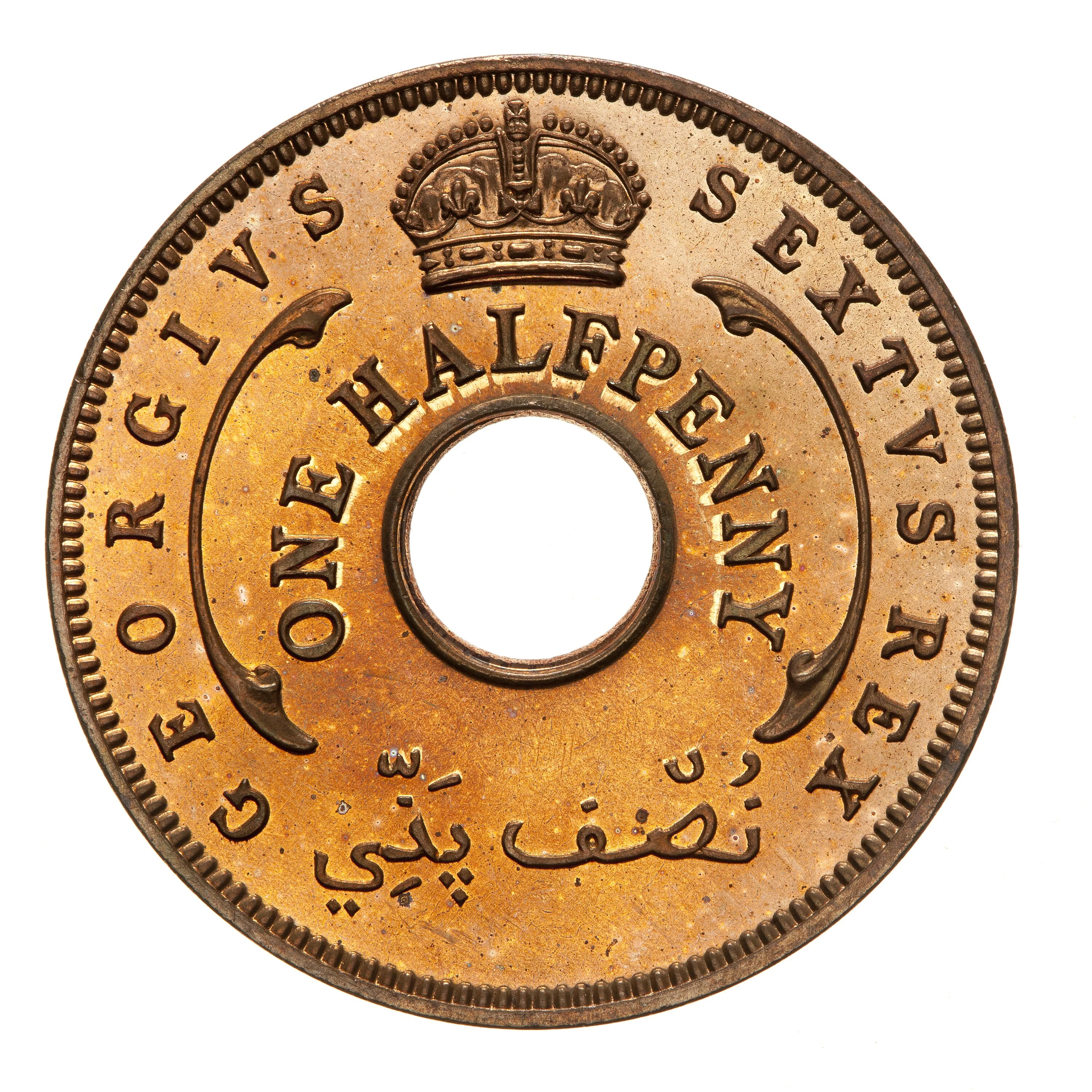
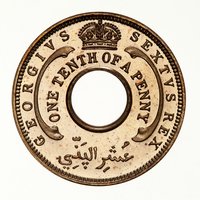
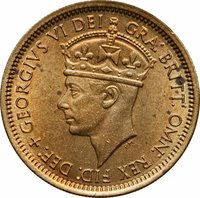
Obverse
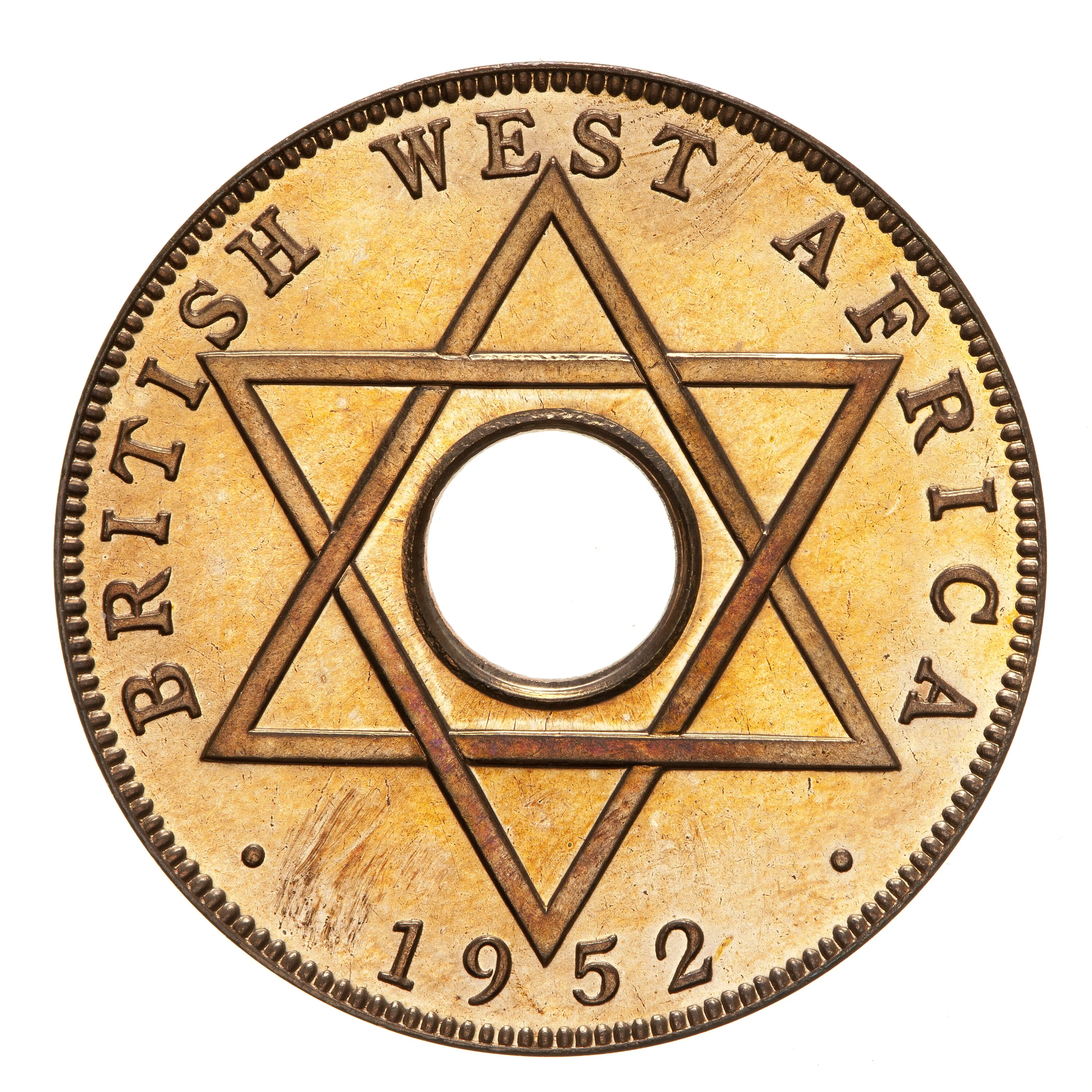
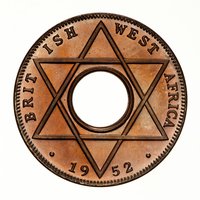
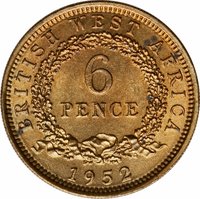
Reverse
Edge
Plain
Mints
| Name | Mark |
|---|---|
| Royal Mint (Tower Hill) | — |
| Heaton and Sons / The Mint Birmingham | H |
| Kings Norton Metal Company | KN |
Historical background
In 1952, the currency situation in British West Africa was defined by the operations of the West African Currency Board (WACC), established in 1912. This system was not a central bank but a sterling-exchange standard, designed to ensure full convertibility between West African currency and British pounds sterling. The Board issued a distinct currency—the West African pound—for the four territories of Nigeria, the Gold Coast (Ghana), Sierra Leone, and The Gambia. These notes and coins were physically different from sterling but were pegged at par, meaning one West African pound equaled one British pound, with reserves held entirely in London.
This arrangement guaranteed monetary stability and facilitated colonial trade, ensuring that exports like cocoa, palm oil, and minerals were seamlessly financed in sterling. However, it was a fundamentally colonial instrument, prioritizing the interests of British commerce and the metropolitan economy. The system offered no scope for independent monetary policy; the money supply was passively determined by the territory's balance of payments with Britain. There was no mechanism for credit control, economic management, or lending for local development, as all surplus reserves were invested in British government securities.
By the early 1950s, this rigid currency board system was increasingly seen as inadequate for territories moving toward self-government. Nationalist politicians and emerging economists criticized it for stifling indigenous financial development and perpetuating economic dependency. The period around 1952 thus represented the late, stable phase of a colonial monetary order, but one under growing pressure for change. This would lead, within a few years, to the dissolution of the WACC and the establishment of separate central banks for the newly independent nations.
This arrangement guaranteed monetary stability and facilitated colonial trade, ensuring that exports like cocoa, palm oil, and minerals were seamlessly financed in sterling. However, it was a fundamentally colonial instrument, prioritizing the interests of British commerce and the metropolitan economy. The system offered no scope for independent monetary policy; the money supply was passively determined by the territory's balance of payments with Britain. There was no mechanism for credit control, economic management, or lending for local development, as all surplus reserves were invested in British government securities.
By the early 1950s, this rigid currency board system was increasingly seen as inadequate for territories moving toward self-government. Nationalist politicians and emerging economists criticized it for stifling indigenous financial development and perpetuating economic dependency. The period around 1952 thus represented the late, stable phase of a colonial monetary order, but one under growing pressure for change. This would lead, within a few years, to the dissolution of the WACC and the establishment of separate central banks for the newly independent nations.
🌱 Common