

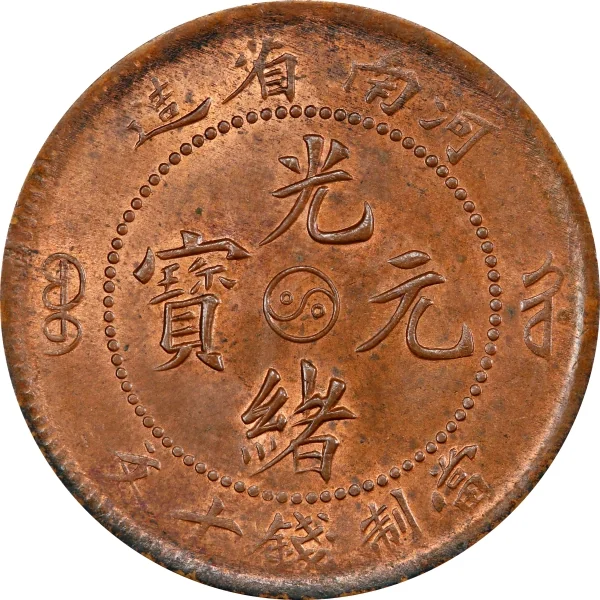
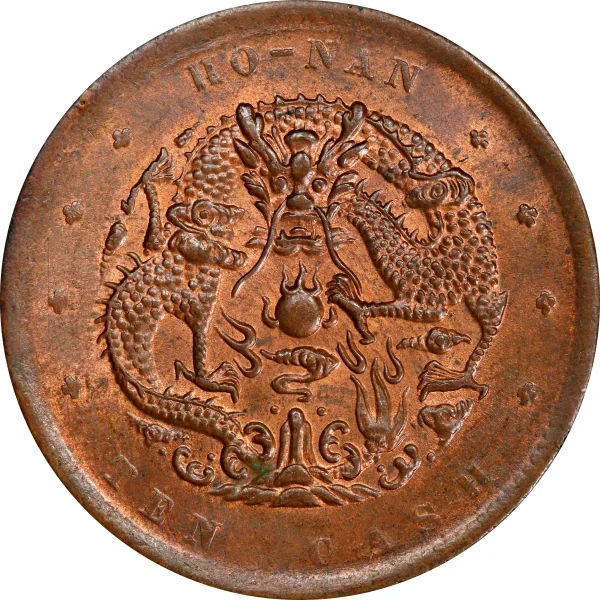
10 Cash – Honan Province
China
Context
Year: 1905
Country: China 
Issuer: Honan Province
Ruler: Guangxu
Currency:
(1905—1949)
Demonetized: Yes
Material
References
Y: #Click to copy to clipboard108a.1-4
Numista: #32330
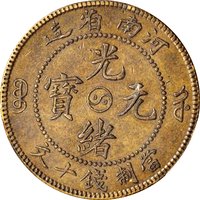
Obverse
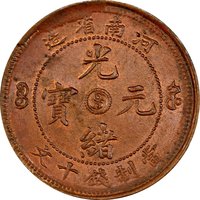
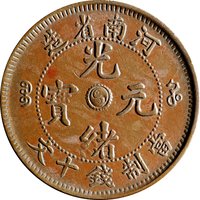
Description:
A yin-yang symbol encircled by Chinese and Manchu text, arranged vertically and horizontally.
Inscription:
造省南河
ᠪᠣᠣ ᡥᠣ᠋
光
寶元
緒
文十錢制當
ᠪᠣᠣ ᡥᠣ᠋
光
寶元
緒
文十錢制當
Translation:
Made at the Southern River Bureau
Boo ho
Guang
Xu
Yuan Bao
Wen
Ten Cash
Equivalent to the Standard Coin
Boo ho
Guang
Xu
Yuan Bao
Wen
Ten Cash
Equivalent to the Standard Coin
Scripts: Chinese, Mongolian / Manchu
Languages: Manchu, Classical Chinese
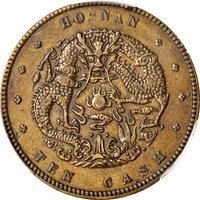
Reverse
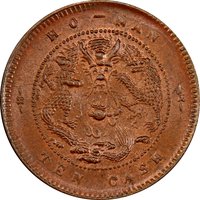
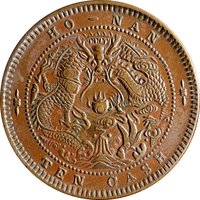
Description:
Dragon and pearl above a mountain, encircled by English text.
Inscription:
HO-NAN
TEN CASH
TEN CASH
Script: Latin
Edge
Plain
Categories
| Mythology> Fantastic animal |
Mintings
| Year | Mint Mark | Mintage | Quality | Collection |
|---|---|---|---|---|
| 1905 | — | — |
Historical background
In 1905, Honan Province, like much of late Qing China, operated within a complex and chaotic multi-currency system. The official currency was the silver tael (liang), a unit of weight rather than a coin, which made transactions cumbersome and variable by locale. However, the province was also flooded with a myriad of physical mediums: foreign-minted silver dollars (like Mexican Eagles), Chinese silver yuan, copper cash coins (tongqian), and privately issued banknotes from native banks (qianzhuang) and even larger merchants. This lack of standardization created significant friction for trade and taxation, as constant conversion was required and values fluctuated.
The central monetary crisis of the era—the severe depreciation of copper cash—hit Honan's peasant majority particularly hard. While taxes were assessed and large transactions conducted in silver, daily wages and market purchases used copper coins. In the preceding decades, due to debasement, mismanagement, and inflation, the exchange rate of copper cash to silver had deteriorated dramatically, meaning peasants needed vastly more copper coins to meet their silver-denominated tax obligations. This created an unbearable financial squeeze, exacerbating rural poverty and fueling widespread discontent that made the province a tinderbox for unrest.
While imperial reforms were underway nationally, including attempts to create a unified silver yuan, their impact in inland Honan by 1905 remained limited. The province's economy was still defined by this dysfunctional duality: a silver standard for official and large-scale commerce and a devalued copper currency for the masses. This monetary instability was a critical symptom of the Qing state's weakening fiscal control and a direct contributor to the growing social tensions that would culminate in significant upheaval in the years immediately following 1905.
The central monetary crisis of the era—the severe depreciation of copper cash—hit Honan's peasant majority particularly hard. While taxes were assessed and large transactions conducted in silver, daily wages and market purchases used copper coins. In the preceding decades, due to debasement, mismanagement, and inflation, the exchange rate of copper cash to silver had deteriorated dramatically, meaning peasants needed vastly more copper coins to meet their silver-denominated tax obligations. This created an unbearable financial squeeze, exacerbating rural poverty and fueling widespread discontent that made the province a tinderbox for unrest.
While imperial reforms were underway nationally, including attempts to create a unified silver yuan, their impact in inland Honan by 1905 remained limited. The province's economy was still defined by this dysfunctional duality: a silver standard for official and large-scale commerce and a devalued copper currency for the masses. This monetary instability was a critical symptom of the Qing state's weakening fiscal control and a direct contributor to the growing social tensions that would culminate in significant upheaval in the years immediately following 1905.

🌟 Limited