

1 peso boliviano – Bolivia
Add to wishlist
Bolivia
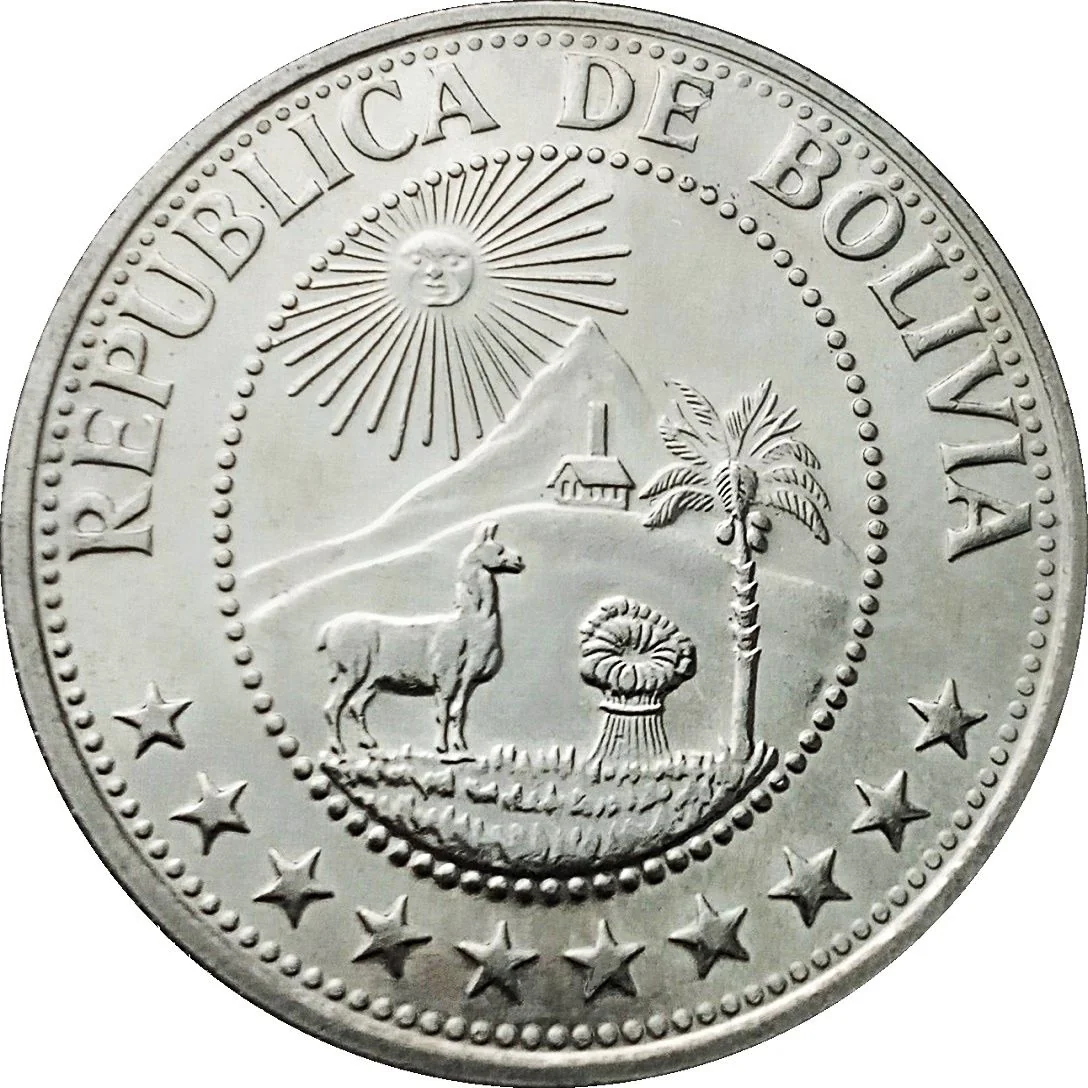
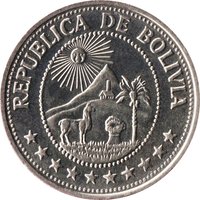
Obverse
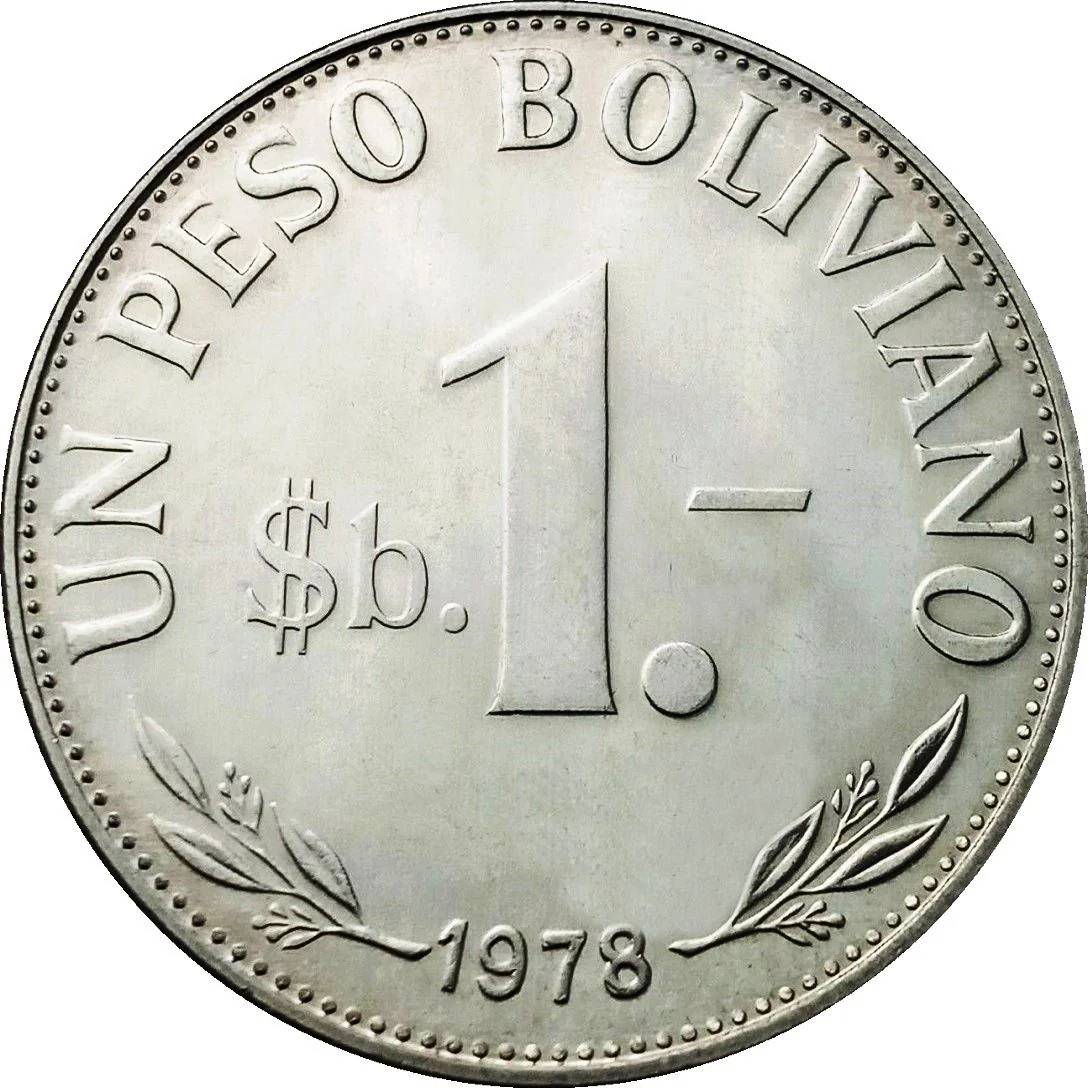
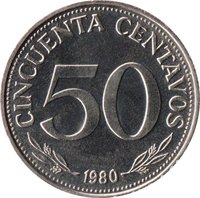
Reverse
Edge
Reeded
Mints
| Name | Mark |
|---|---|
| VDM Metals / Vereinigte Deutsche Metallwerke | — |
Mintings
| Year | Mint Mark | Mintage | Quality | Collection |
|---|---|---|---|---|
| 1968 | — | 10,000,000 | ||
| 1969 | — | — | ||
| 1970 | — | 10,000,000 | ||
| 1972 | — | — | ||
| 1973 | — | 5,000,000 | ||
| 1974 | — | 15,000,000 | ||
| 1978 | — | 10,000,000 | ||
| 1980 | — | 2,993,000 |
Historical background
In 1968, Bolivia's currency situation was characterized by chronic instability and inflationary pressures, a legacy of the economic turmoil following the 1952 National Revolution. The official currency, the Bolivian peso (boliviano), was severely weakened by decades of budget deficits financed by the central bank, a dependence on volatile tin exports, and structural economic weaknesses. While the hyperinflation of the 1950s had been stabilized under President Víctor Paz Estenssoro with a stringent program backed by the IMF and the U.S., the underlying vulnerabilities persisted, leaving the peso fragile and prone to devaluation.
The government of President René Barrientos Ortuño (1966-1969) maintained a fixed exchange rate regime, pegging the peso to the U.S. dollar. However, this peg was artificial and unsustainable without strict fiscal discipline. The state-owned mining corporation, COMIBOL, was a persistent drain on public finances, and government spending often outpaced revenues. Consequently, a parallel black market for dollars flourished, where the peso traded at a significant discount, revealing a lack of confidence in the official parity and creating a dual exchange rate system that distorted the economy.
By the end of 1968, pressures on the currency were mounting. While not in acute crisis that year, the fixed exchange rate masked deeper economic problems, including low foreign reserves and persistent trade deficits. The situation demanded continual external borrowing and set the stage for future devaluations. The currency's stability was thus precarious, heavily reliant on political will for austerity and on favorable international prices for Bolivia's mineral exports, making the economy highly susceptible to external shocks.
The government of President René Barrientos Ortuño (1966-1969) maintained a fixed exchange rate regime, pegging the peso to the U.S. dollar. However, this peg was artificial and unsustainable without strict fiscal discipline. The state-owned mining corporation, COMIBOL, was a persistent drain on public finances, and government spending often outpaced revenues. Consequently, a parallel black market for dollars flourished, where the peso traded at a significant discount, revealing a lack of confidence in the official parity and creating a dual exchange rate system that distorted the economy.
By the end of 1968, pressures on the currency were mounting. While not in acute crisis that year, the fixed exchange rate masked deeper economic problems, including low foreign reserves and persistent trade deficits. The situation demanded continual external borrowing and set the stage for future devaluations. The currency's stability was thus precarious, heavily reliant on political will for austerity and on favorable international prices for Bolivia's mineral exports, making the economy highly susceptible to external shocks.
🌱 Very Common