

20 lire – San Marino
Add to wishlist
San Marino
Context
Years: 1935–1938
Issuer: San Marino
Period:
(since 301)
Currency:
(1864—2001)
Demonetized: Yes
Total mintage: 7,602
Material
References
KM: #
Numista: #32254
Value
Exchange value: 20 SML
Bullion value: $30.66
Obverse
Description:
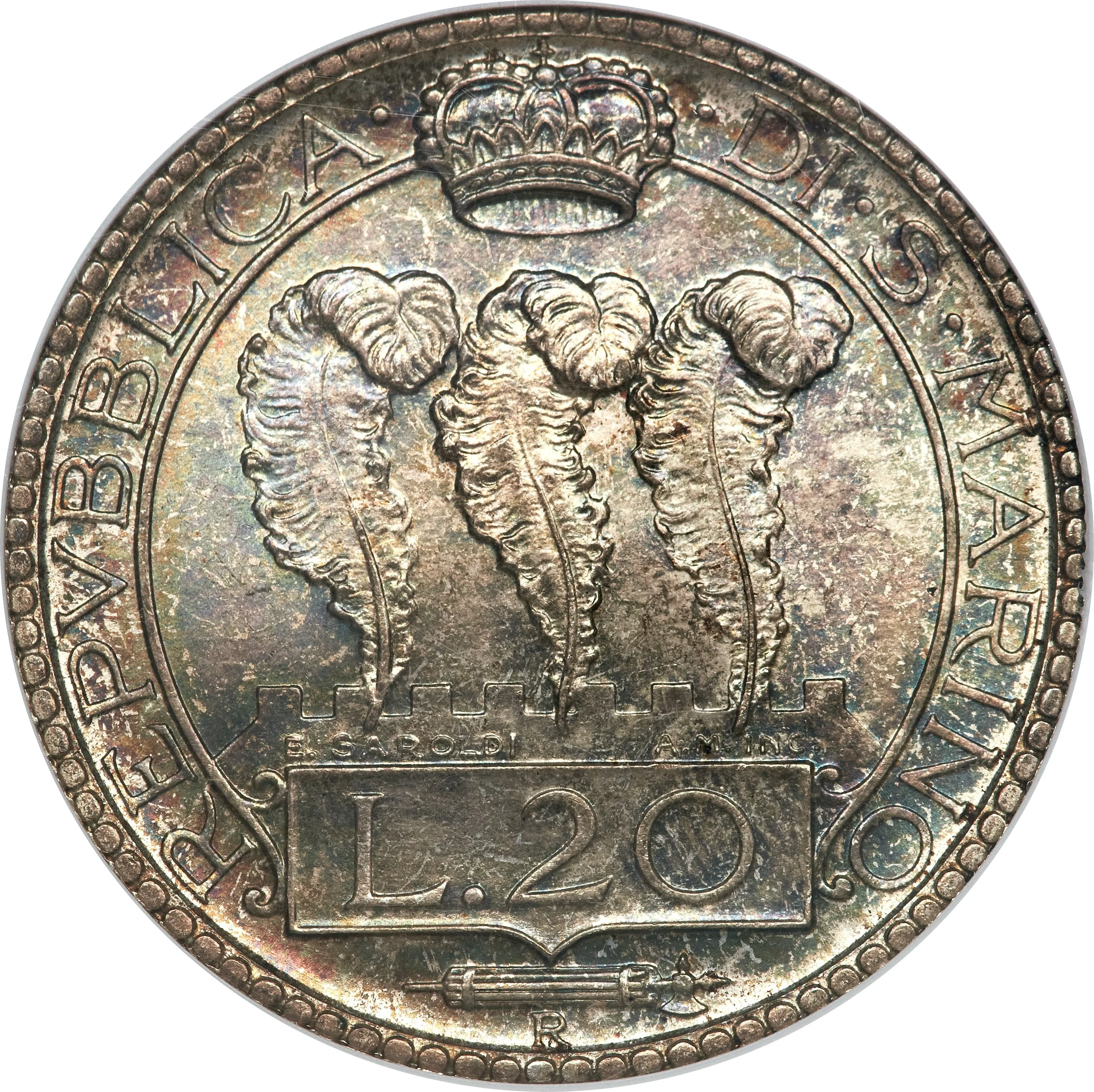
Crowned ostrich feathers with value beneath.
Inscription:
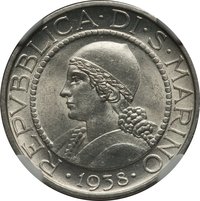
REPVBBLICA DI S.MARINO
L 20
R
L 20
R
Script: Latin
Engraver: Enrico Saroldi
Reverse
Description:
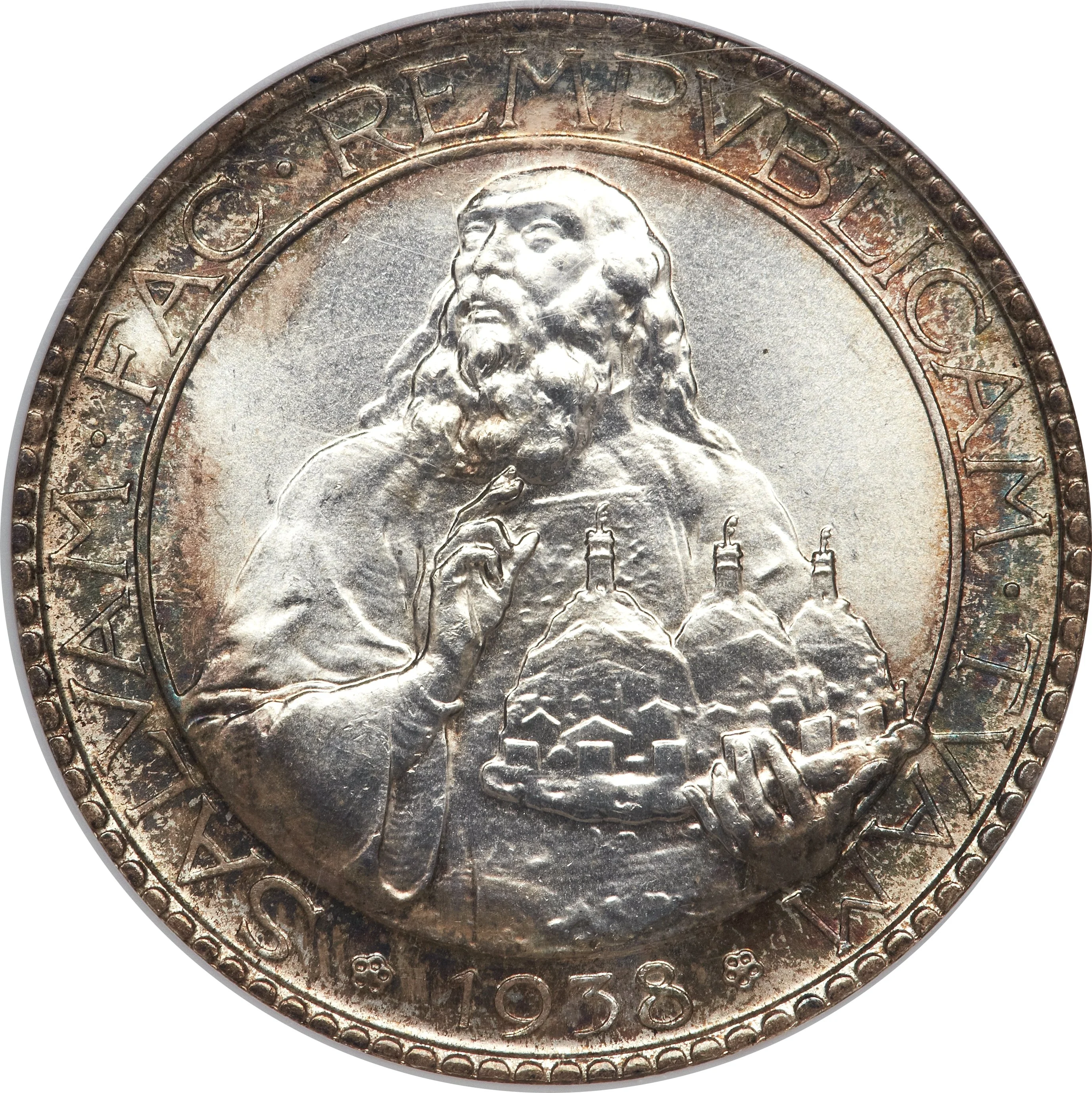
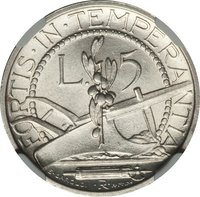
Smoke-stack figure.
Inscription:
SALVAM . FAC. REMPVBLICA . TVAM
1938
1938
Script: Latin
Engraver: Enrico Saroldi
Edge
Mints
| Name | Mark |
|---|---|
| Rome | R |
Historical background
In 1935, San Marino’s currency situation was intrinsically tied to that of Italy, operating under a de facto monetary union without formal treaty. The republic had ceded its right of coinage to Italy in 1862, and the Italian lira was the sole legal tender and circulating medium of exchange. Sammarinese authorities issued their own low-denomination coinage, but these were minted in Rome, had limited circulation, and were designed to be strictly complementary to the Italian system, circulating at par with the lira.
This dependency meant San Marino was directly impacted by the economic policies and pressures of Fascist Italy. The early 1930s saw Italy grappling with the Great Depression, leading to deflation and a banking crisis. By 1935, Mussolini’s regime was aggressively preparing for the invasion of Ethiopia, a campaign that demanded massive state expenditure and would soon lead to international sanctions. Consequently, San Marino, though neutral, felt the indirect strain of Italy’s militarization and autarkic economic policies, which aimed at self-sufficiency and strict currency controls.
Despite its political sovereignty, San Marino had no independent monetary policy to buffer such external shocks. Its economy, heavily reliant on agriculture, tourism, and the sale of postage stamps to collectors, was vulnerable to fluctuations in the Italian lira and the broader economic climate of the peninsula. Thus, in 1935, the currency situation was one of passive integration, with the Sammarinese economy and its circulating money entirely subject to the stability and fortunes of its much larger neighbor as Italy marched toward war.
This dependency meant San Marino was directly impacted by the economic policies and pressures of Fascist Italy. The early 1930s saw Italy grappling with the Great Depression, leading to deflation and a banking crisis. By 1935, Mussolini’s regime was aggressively preparing for the invasion of Ethiopia, a campaign that demanded massive state expenditure and would soon lead to international sanctions. Consequently, San Marino, though neutral, felt the indirect strain of Italy’s militarization and autarkic economic policies, which aimed at self-sufficiency and strict currency controls.
Despite its political sovereignty, San Marino had no independent monetary policy to buffer such external shocks. Its economy, heavily reliant on agriculture, tourism, and the sale of postage stamps to collectors, was vulnerable to fluctuations in the Italian lira and the broader economic climate of the peninsula. Thus, in 1935, the currency situation was one of passive integration, with the Sammarinese economy and its circulating money entirely subject to the stability and fortunes of its much larger neighbor as Italy marched toward war.
💎 Very Rare