

50 stotinki – Bulgaria
Add to wishlist
Bulgaria
Context
Year: 1891
Issuer: Bulgaria
Ruler: Ferdinand I
Currency:
(1881—1952)
Demonetized: Yes
Total mintage: 2,000,000
Material
References
KM: #
Numista: #32251
Value
Bullion value: $5.29
Obverse
Description:
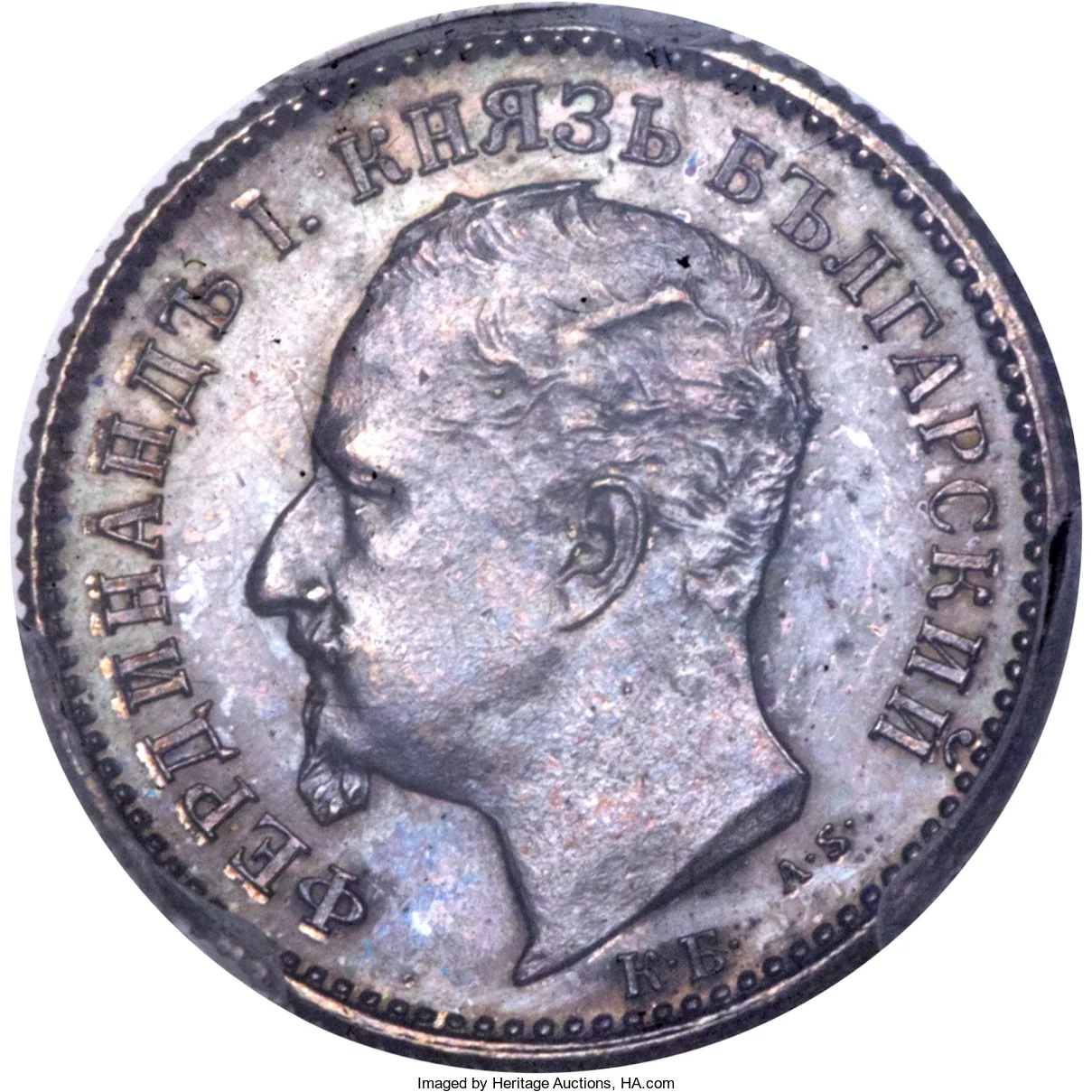
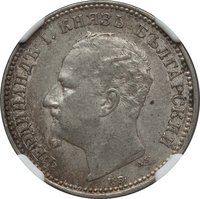
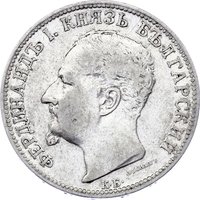
Ferdinand I bust right, surrounded by lettering.
Inscription:
ФЕРДИНАНДЪ I. КНЯЗЬ БЪЛГАРСКИЙ
A∙S∙
К∙Б∙
A∙S∙
К∙Б∙
Translation:
FERDINAND I PRINCE OF BULGARIA
A.S.
K.B.
A.S.
K.B.
Script: Cyrillic
Engraver: Anton Scharff
Reverse
Description:
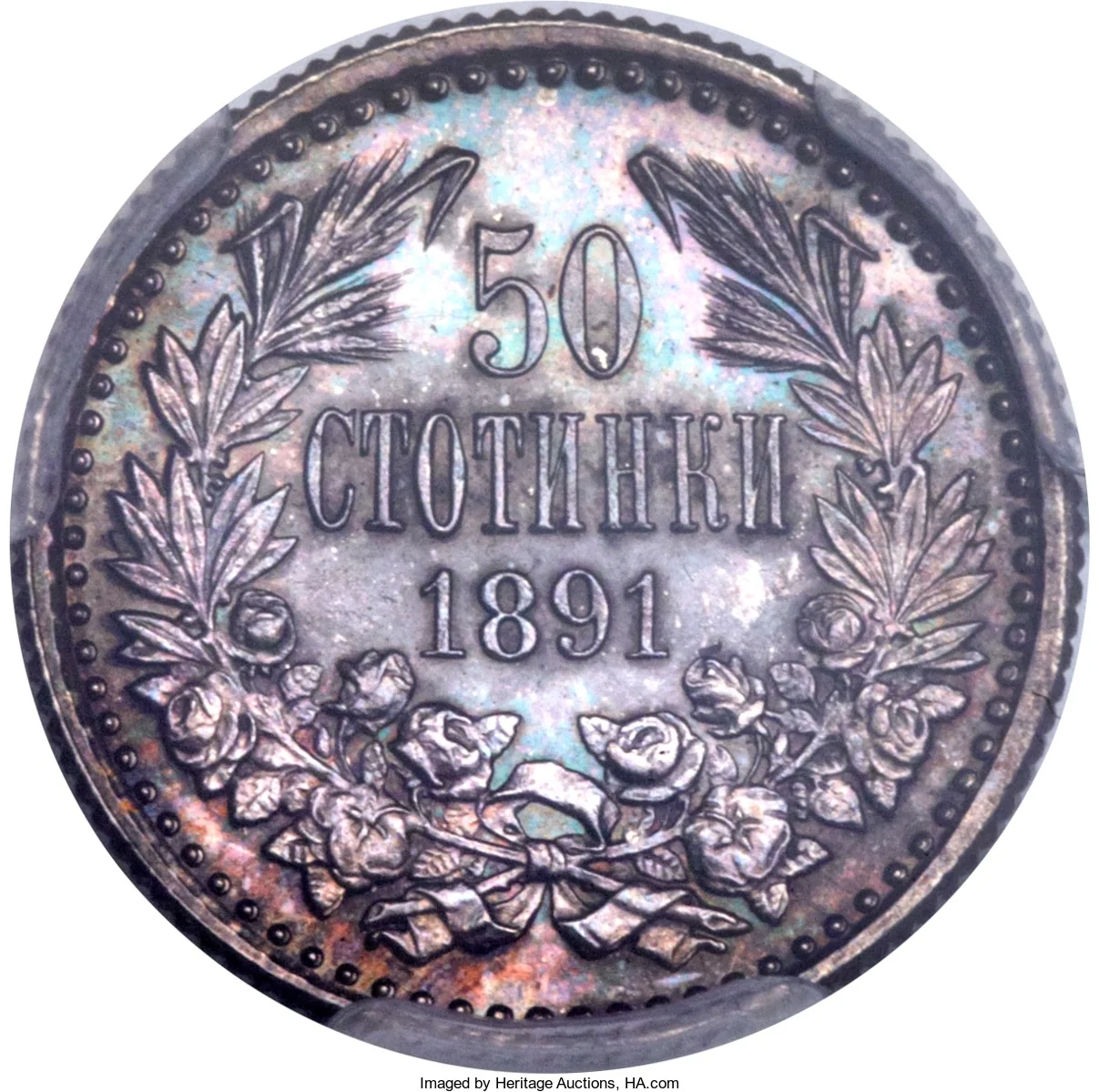
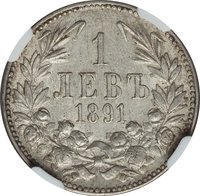
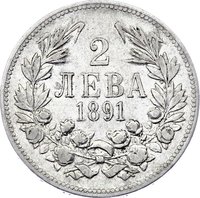
Denomination above date in wreath.
Inscription:
50
СТОТИНКИ
1891
СТОТИНКИ
1891
Translation:
Fifty Stotinki
1891
1891
Script: Cyrillic
Language: Bulgarian
Engraver: Anton Scharff
Edge
Reeded
Mints
| Name | Mark |
|---|---|
| Kremnica | — |
Mintings
| Year | Mint Mark | Mintage | Quality | Collection |
|---|---|---|---|---|
| 1891 | КБ | 2,000,000 |
Historical background
In 1891, Bulgaria's currency situation was defined by its complex position within the Ottoman monetary legacy and the broader European scramble for economic influence. Following its liberation in 1878, the new principality inherited a chaotic circulation of multiple currencies, primarily the Ottoman lira (gold), kuruş (silver), and para (copper), alongside various European gold coins like the French franc and Russian ruble. This lack of a unified national currency hampered trade and state administration, creating an urgent need for monetary reform and stability.
The key development of the period was the preparation for the introduction of Bulgaria's own national currency, the lev (plural: leva), which was pegged to and equal in value to the French franc. This was a strategic move to align the country with the Latin Monetary Union, a system based on bimetallism (gold and silver), which would facilitate international trade and investment, primarily from Western Europe. The necessary legislation, the Law on the Right to Mint Coins, had been passed in 1880, but the actual minting of the first Bulgarian coins—in denominations of 2, 5, and 10 stotinki—only commenced in 1881 and they were slowly entering circulation throughout the decade.
Therefore, by 1891, Bulgaria was in a transitional phase. The old Ottoman and foreign coins remained in widespread use alongside the new, but still limited, Bulgarian coinage. The state was actively working to consolidate its monetary system, seeing a stable, internationally recognized currency as essential for its sovereignty and modern economic development. This process was a clear reflection of Prince Ferdinand's government seeking to anchor Bulgaria firmly within the European financial and political sphere, moving away from its Ottoman past.
The key development of the period was the preparation for the introduction of Bulgaria's own national currency, the lev (plural: leva), which was pegged to and equal in value to the French franc. This was a strategic move to align the country with the Latin Monetary Union, a system based on bimetallism (gold and silver), which would facilitate international trade and investment, primarily from Western Europe. The necessary legislation, the Law on the Right to Mint Coins, had been passed in 1880, but the actual minting of the first Bulgarian coins—in denominations of 2, 5, and 10 stotinki—only commenced in 1881 and they were slowly entering circulation throughout the decade.
Therefore, by 1891, Bulgaria was in a transitional phase. The old Ottoman and foreign coins remained in widespread use alongside the new, but still limited, Bulgarian coinage. The state was actively working to consolidate its monetary system, seeing a stable, internationally recognized currency as essential for its sovereignty and modern economic development. This process was a clear reflection of Prince Ferdinand's government seeking to anchor Bulgaria firmly within the European financial and political sphere, moving away from its Ottoman past.
🌱 Fairly Common