

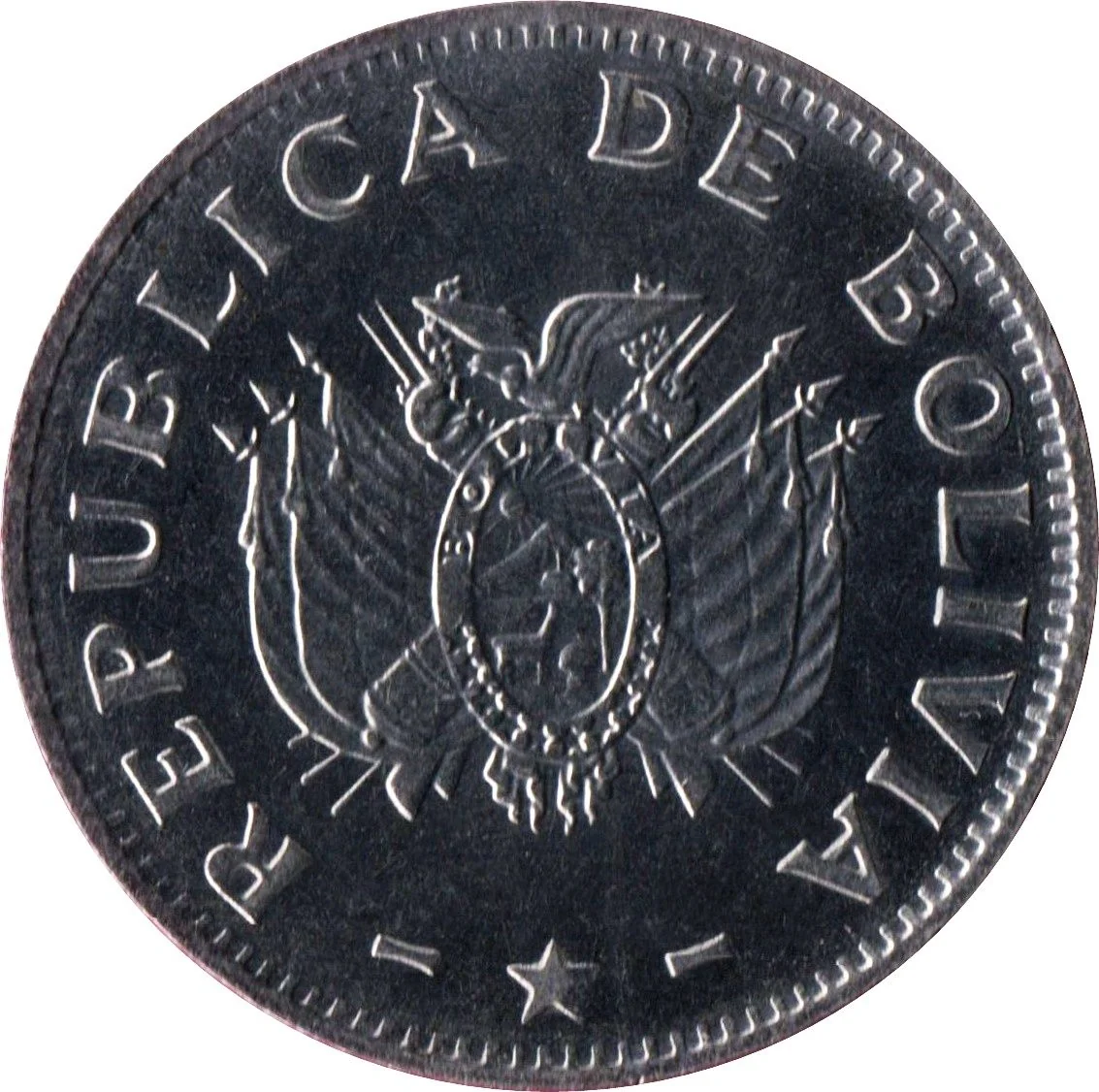
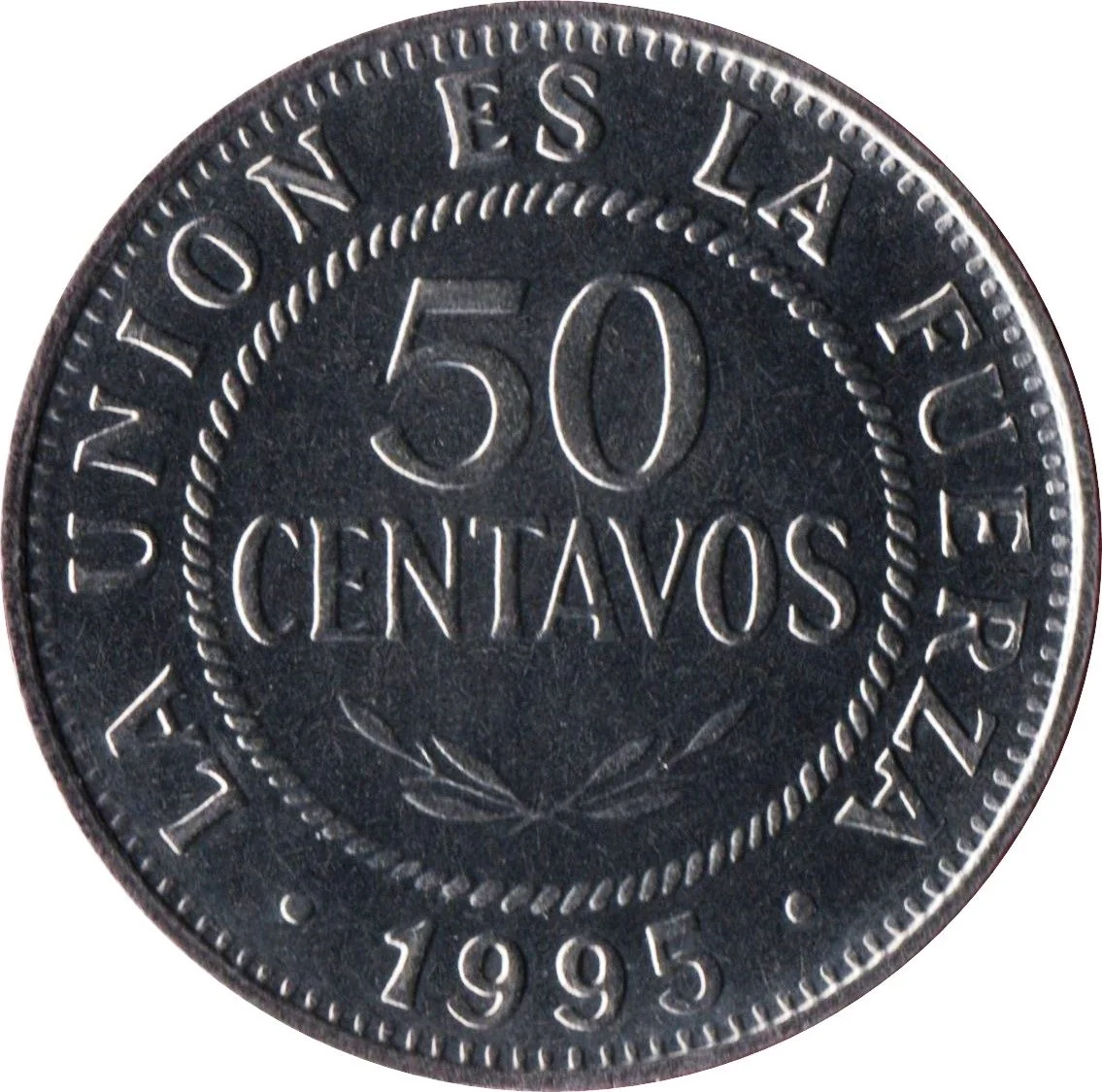
50 Centavos – Bolivia
Bolivia
Context
Years: 1987–2008
Issuer: Bolivia 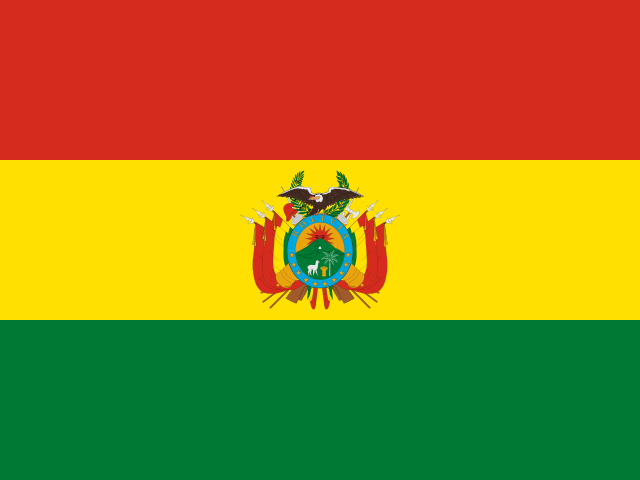
Period:
(1825—2009)
Currency:
(since 1986)
Total mintage: 109,900,000
Material
Diameter: 24 mm
Weight: 3.8 g
Thickness: 1.24 mm
Shape: Round
Composition: Stainless steel
Technique: Milled
Alignment: Coin alignment
flip
References
KM: #Click to copy to clipboard204
Numista: #3225
Value
Exchange value: 0.50 BOB
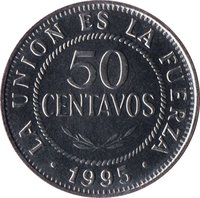
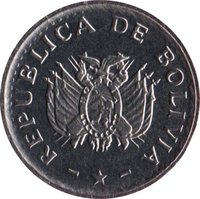
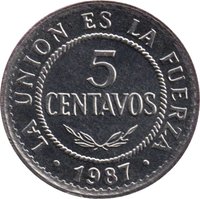
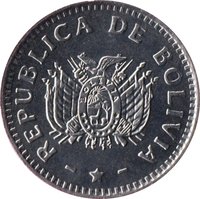
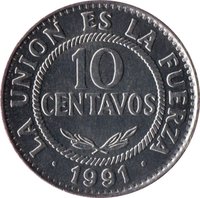
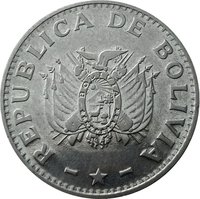
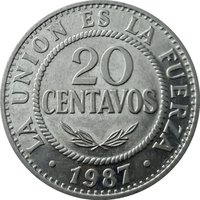
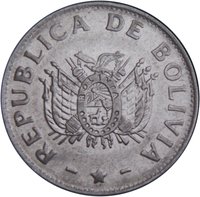
Obverse
Reverse
Edge
Plain
Mints
| Name | Mark |
|---|---|
| Casa de Moneda de Chile | — |
| Royal Canadian Mint of Ottawa | — |
| Vereinigte Deutsche Nickelwerke | — |
Mintings
| Year | Mint Mark | Mintage | Quality | Collection |
|---|---|---|---|---|
| 1987 | — | 15,000,000 | ||
| 1991 | — | 20,000,000 | ||
| 1995 | — | 14,000,000 | ||
| 1997 | — | 15,000,000 | ||
| 2001 | — | 25,900,000 | ||
| 2006 | — | — | ||
| 2008 | — | 20,000,000 |
Historical background
In 1987, Bolivia was emerging from one of the most severe hyperinflation episodes in modern Latin American history. The crisis, which peaked in 1985 with an annual inflation rate exceeding 24,000%, had devastated the economy, eroded savings, and caused widespread social unrest. The government of President Víctor Paz Estenssoro, inaugurated in 1985, had already implemented the landmark Decree 21060, a radical neoliberal stabilization plan designed by Minister of Planning Gonzalo Sánchez de Lozada. This plan dismantled price controls, liberalized trade, and dramatically cut public sector spending, successfully curbing hyperinflation by 1986.
The currency situation in 1987 was defined by a fragile stabilization and the ongoing process of de-dollarization. During the hyperinflation, the Bolivian peso had become virtually worthless, and the US dollar had become the de facto currency for savings and large transactions. A key achievement by 1987 was the successful introduction of a new currency, the boliviano, in January of that year, which replaced the peso at a rate of 1,000,000:1. This redenomination was a critical psychological and practical step to restore confidence in the national monetary system. The Central Bank maintained a crawling peg exchange rate regime, allowing the boliviano to depreciate slowly and predictably against the US dollar to maintain export competitiveness without reigniting inflationary panic.
Thus, 1987 represented a year of cautious consolidation. The immediate fire of hyperinflation was extinguished, with inflation falling to around 10-15% annually. The new boliviano was gaining acceptance, but the economy remained in a deep recession with high unemployment, a legacy of the stabilization shock. The fundamental currency challenge had shifted from stopping hyperinflation to rebuilding trust in a national currency within a dollarized mindset and managing a stable yet adjustable exchange rate to foster growth, a delicate balancing act for the besieged government.
The currency situation in 1987 was defined by a fragile stabilization and the ongoing process of de-dollarization. During the hyperinflation, the Bolivian peso had become virtually worthless, and the US dollar had become the de facto currency for savings and large transactions. A key achievement by 1987 was the successful introduction of a new currency, the boliviano, in January of that year, which replaced the peso at a rate of 1,000,000:1. This redenomination was a critical psychological and practical step to restore confidence in the national monetary system. The Central Bank maintained a crawling peg exchange rate regime, allowing the boliviano to depreciate slowly and predictably against the US dollar to maintain export competitiveness without reigniting inflationary panic.
Thus, 1987 represented a year of cautious consolidation. The immediate fire of hyperinflation was extinguished, with inflation falling to around 10-15% annually. The new boliviano was gaining acceptance, but the economy remained in a deep recession with high unemployment, a legacy of the stabilization shock. The fundamental currency challenge had shifted from stopping hyperinflation to rebuilding trust in a national currency within a dollarized mindset and managing a stable yet adjustable exchange rate to foster growth, a delicate balancing act for the besieged government.
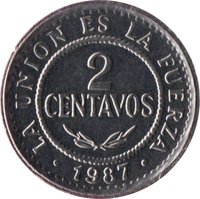
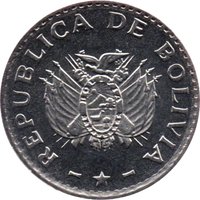
Series: 1987 Bolivia circulation coins
🌱 Very Common