

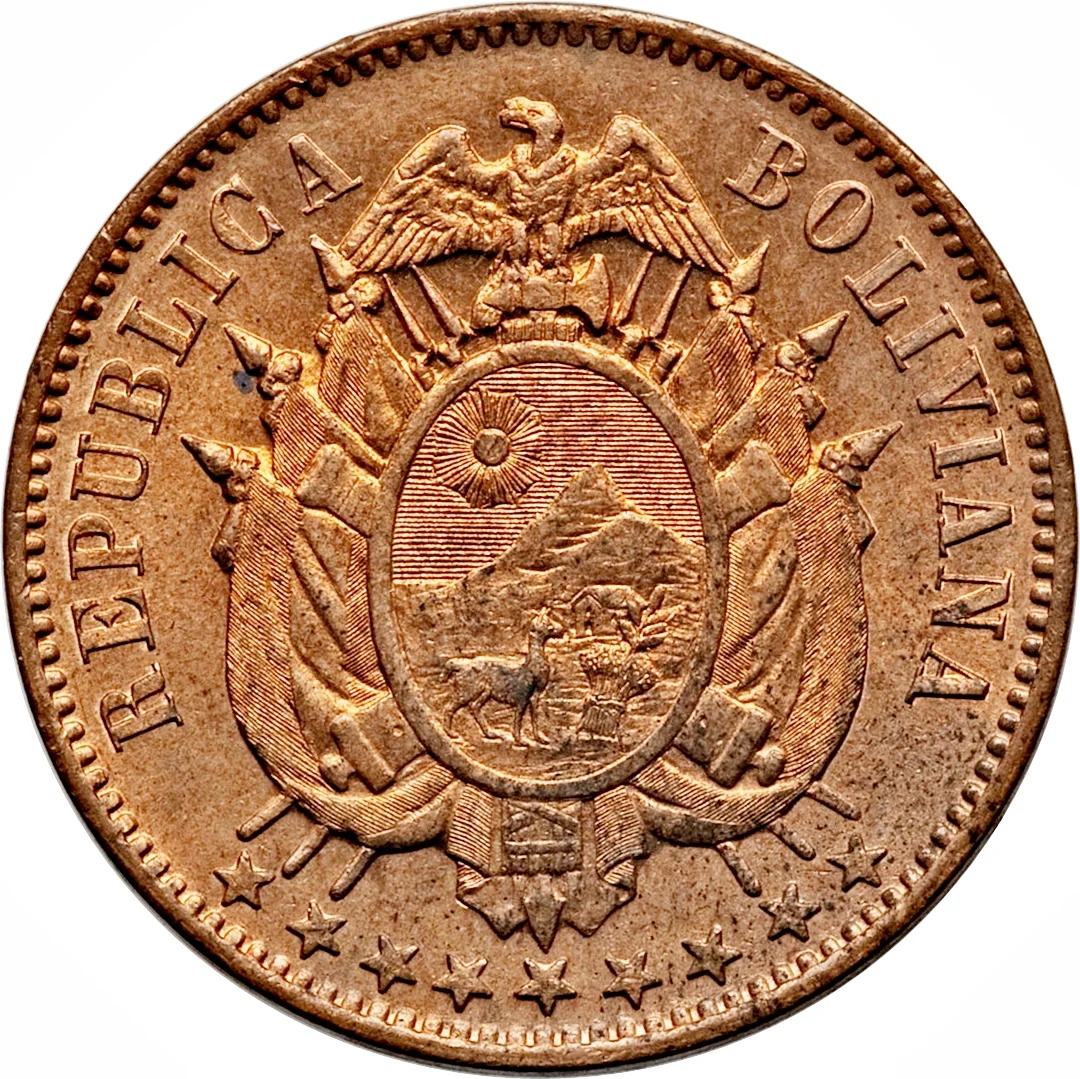
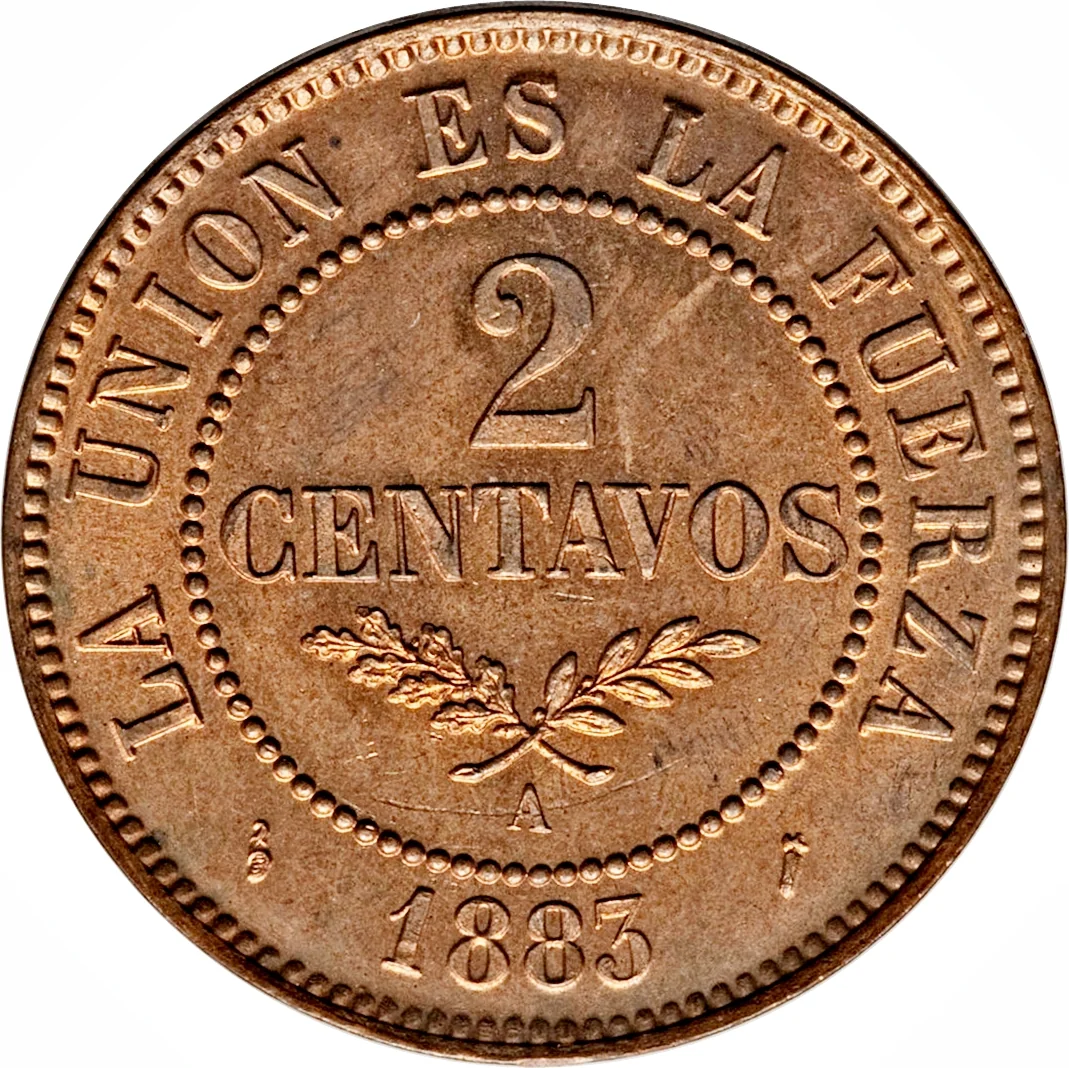
2 centavos – Bolivia
Add to wishlist
Bolivia
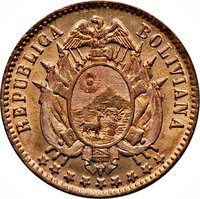
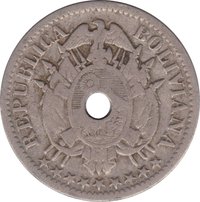
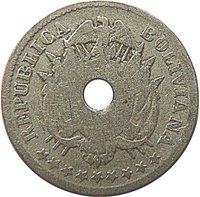
Obverse
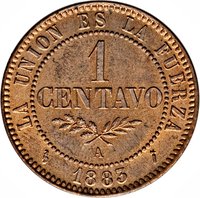
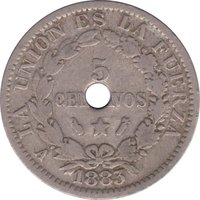
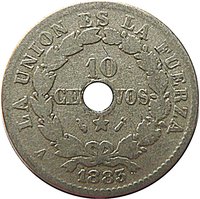
Reverse
Edge
Mints
| Name | Mark |
|---|---|
| Monnaie de Paris | (A) |
Mintings
| Year | Mint Mark | Mintage | Quality | Collection |
|---|---|---|---|---|
| 1883 | — | — | ||
| 1883 | A | 250,000 |
Historical background
In 1883, Bolivia was emerging from the devastating War of the Pacific (1879-1883), a conflict that had profound economic and territorial consequences. The nation's defeat resulted in the loss of its entire coastal territory, the vital nitrate-rich region of Antofagasta, and the collapse of its primary export economy. This national catastrophe left the government in La Paz bankrupt, deeply indebted, and stripped of the mineral revenues that had previously underpinned its currency. The fiscal base was shattered, and the state lacked the specie (hard metal) reserves necessary to maintain a stable monetary system, leading to a period of severe monetary disorder.
The currency situation was characterized by the chaotic circulation of multiple, depreciating forms of money. The official silver boliviano was scarce, as silver coinage was often hoarded or exported. To fill the void, the government increasingly relied on issuing inconvertible paper money (billetes fiscales) to finance its deficits, leading to rapid inflation. Furthermore, Peruvian and Chilean currencies, along with privately issued tokens and scrip from mining companies and merchants, circulated widely, creating a confusing and unreliable monetary environment. The value of these mediums fluctuated wildly, and public trust in the government's paper money was extremely low.
This monetary instability of 1883 was a direct symptom of the broader national crisis. The lack of a unified, trusted currency hampered domestic commerce and complicated recovery efforts. It set the stage for subsequent decades of economic policy debates, focusing on currency stabilization, the establishment of a national bank, and the search for a new export commodity—which would soon be found in tin—to replace the lost nitrate wealth and restore fiscal and monetary order.
The currency situation was characterized by the chaotic circulation of multiple, depreciating forms of money. The official silver boliviano was scarce, as silver coinage was often hoarded or exported. To fill the void, the government increasingly relied on issuing inconvertible paper money (billetes fiscales) to finance its deficits, leading to rapid inflation. Furthermore, Peruvian and Chilean currencies, along with privately issued tokens and scrip from mining companies and merchants, circulated widely, creating a confusing and unreliable monetary environment. The value of these mediums fluctuated wildly, and public trust in the government's paper money was extremely low.
This monetary instability of 1883 was a direct symptom of the broader national crisis. The lack of a unified, trusted currency hampered domestic commerce and complicated recovery efforts. It set the stage for subsequent decades of economic policy debates, focusing on currency stabilization, the establishment of a national bank, and the search for a new export commodity—which would soon be found in tin—to replace the lost nitrate wealth and restore fiscal and monetary order.
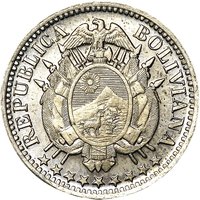
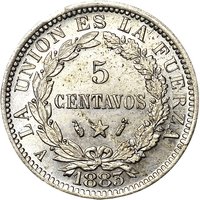
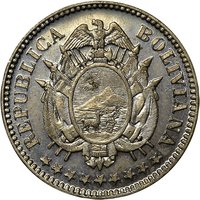
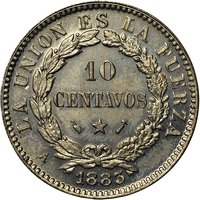
Series: 1883 Bolivia circulation coins
⭐ Somewhat Rare