

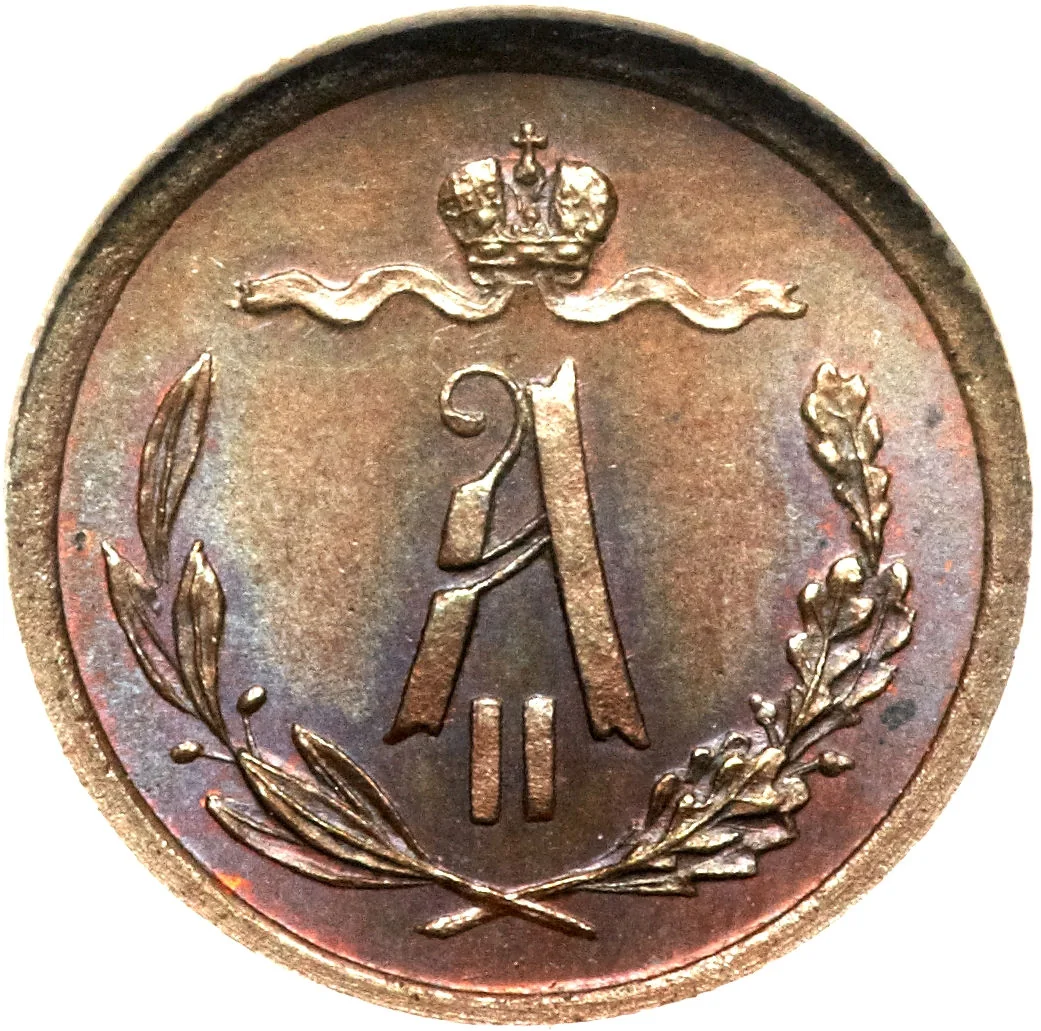
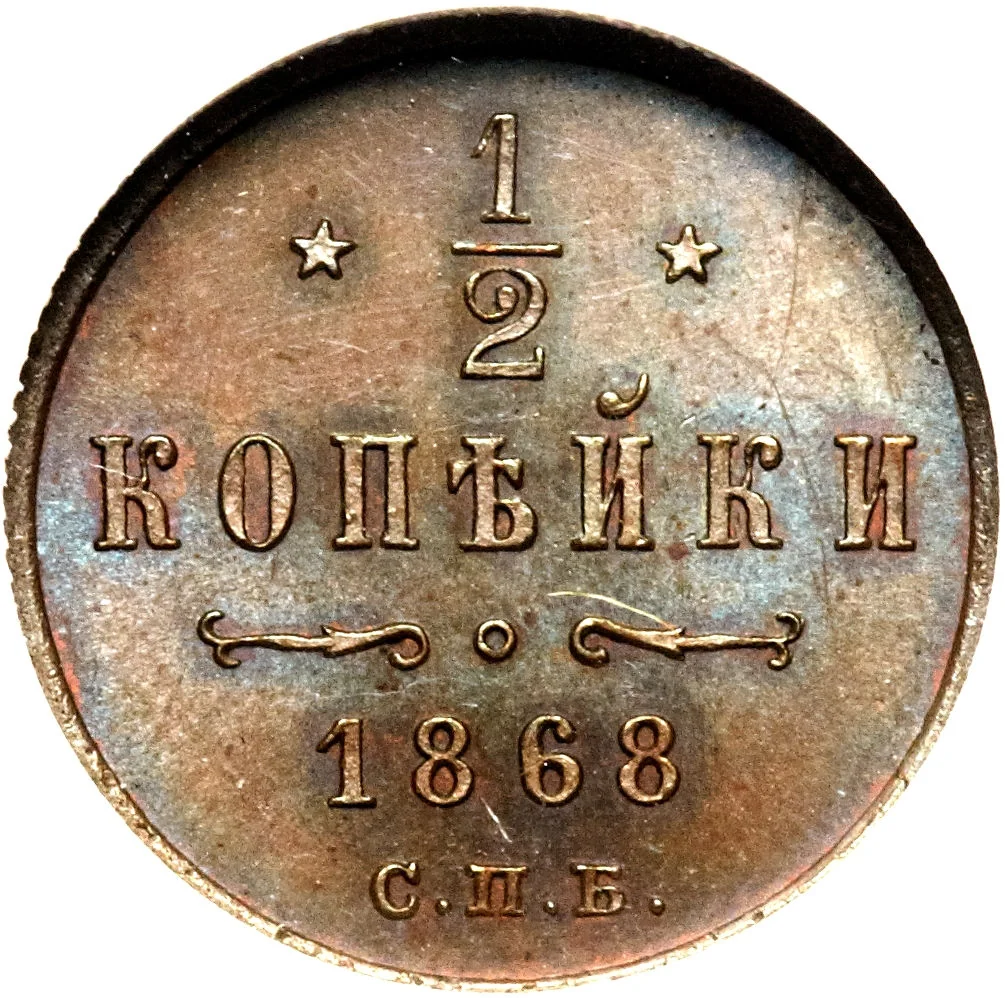
½ kopeck – Russian Empire
Add to wishlist
Russia
Context
Years: 1867–1881
Country: Russia
Issuer: Russian Empire
Ruler: Alexander II
Currency:
(1700—1917)
Demonetized: Yes
Total mintage: 5,830,000
Material
References
Y: #
Numista: #32211
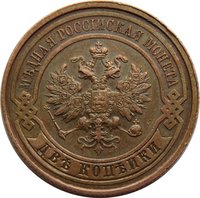
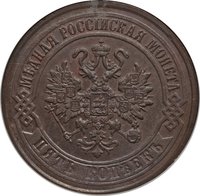
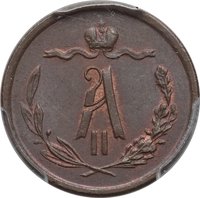
Obverse
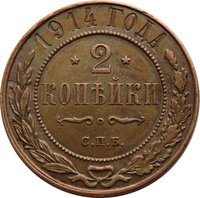
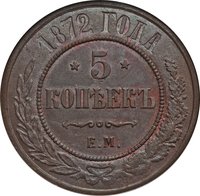
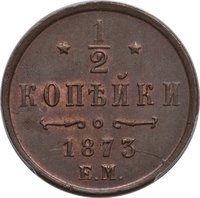
Reverse
Edge
Reeded
Mintings
| Year | Mint Mark | Mintage | Quality | Collection |
|---|---|---|---|---|
| 1867 | С.П.Б. | — | BU | |
| 1868 | С.П.Б. | 60,000 | BU | |
| 1869 | С.П.Б. | 145,000 | BU | |
| 1870 | С.П.Б. | 25,000 | BU | |
| 1871 | С.П.Б. | — | BU | |
| 1876 | С.П.Б. | 770,000 | BU | |
| 1877 | С.П.Б. | 1,290,000 | BU | |
| 1878 | С.П.Б. | 1,120,000 | BU | |
| 1879 | С.П.Б. | 740,000 | BU | |
| 1880 | С.П.Б. | 1,260,000 | BU | |
| 1881 | С.П.Б. | 420,000 | BU |
Historical background
In 1867, the Russian Empire's currency system was in a state of transition, still grappling with the aftermath of the costly Crimean War (1853-1856). The foundation was the silver-based ruble, established by the monetary reform of Count E.F. Kankrin in 1839-1843, which had replaced the depreciated paper assignats. However, the financial strain of the war had forced the government to resort to extensive printing of credit notes (kreditnye bilety), which were not fully backed by silver. Consequently, while the silver ruble remained the official standard, a dual system existed in practice: payments were often made in these paper credit notes, which circulated at a fluctuating and slightly discounted rate against silver coin.
This period was one of cautious stabilization under the Minister of Finance, Mikhail von Reutern. A primary goal was to restore public confidence in paper currency and accumulate a sufficient silver reserve to eventually guarantee convertibility. The government pursued policies of budgetary austerity, encouraged foreign investment, and promoted exports, notably grain, to generate a positive trade balance and attract precious metal. The sale of Alaska to the United States in 1867 for $7.2 million (approximately 11 million rubles) was, in this context, a minor but symbolically significant influx of foreign currency, though its immediate financial impact was limited as much of the payment was directed to covering debts and infrastructure projects like railways.
Thus, the currency situation in 1867 was characterized by a fragile paper credit ruble circulating at a variable market discount, underpinned by a silver standard that was not yet fully functional. The state was actively working to strengthen its finances, but the definitive move to a stable gold-based currency, achieved by the reform of Sergei Witte in 1897, still lay three decades in the future. The economy's growth and modernization efforts were therefore conducted within a monetary environment that was gradually improving but still posed challenges for both domestic and international commerce.
This period was one of cautious stabilization under the Minister of Finance, Mikhail von Reutern. A primary goal was to restore public confidence in paper currency and accumulate a sufficient silver reserve to eventually guarantee convertibility. The government pursued policies of budgetary austerity, encouraged foreign investment, and promoted exports, notably grain, to generate a positive trade balance and attract precious metal. The sale of Alaska to the United States in 1867 for $7.2 million (approximately 11 million rubles) was, in this context, a minor but symbolically significant influx of foreign currency, though its immediate financial impact was limited as much of the payment was directed to covering debts and infrastructure projects like railways.
Thus, the currency situation in 1867 was characterized by a fragile paper credit ruble circulating at a variable market discount, underpinned by a silver standard that was not yet fully functional. The state was actively working to strengthen its finances, but the definitive move to a stable gold-based currency, achieved by the reform of Sergei Witte in 1897, still lay three decades in the future. The economy's growth and modernization efforts were therefore conducted within a monetary environment that was gradually improving but still posed challenges for both domestic and international commerce.
⭐ Somewhat Rare