

25 Cents – Bermuda
United Kingdom
Context
Years: 1986–1998
Country: United Kingdom 
Issuer: Bermuda 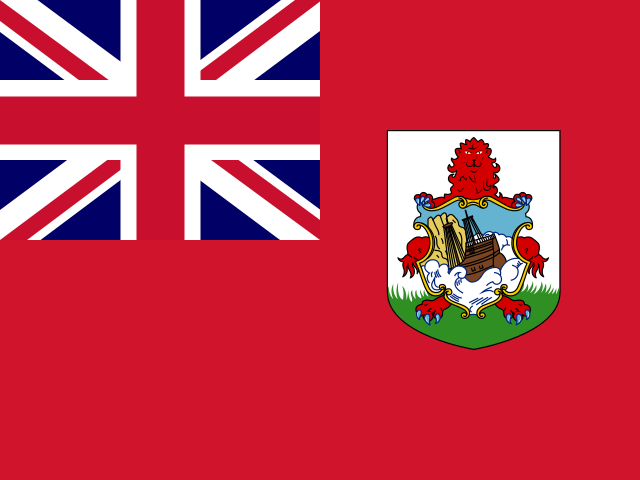
Ruler: Elizabeth II
Currency:
(since 1970)
Total mintage: 7,342,500
Material
Diameter: 24.21 mm
Weight: 5.95 g
Thickness: 1.74 mm
Shape: Round
Composition: Copper-nickel
Technique: Milled
Alignment: Medal alignment
flip
References
KM: #Click to copy to clipboard47
Numista: #3216
Value
Exchange value: 0.25 BMD
Inflation-adjusted value: 0.97 BMD
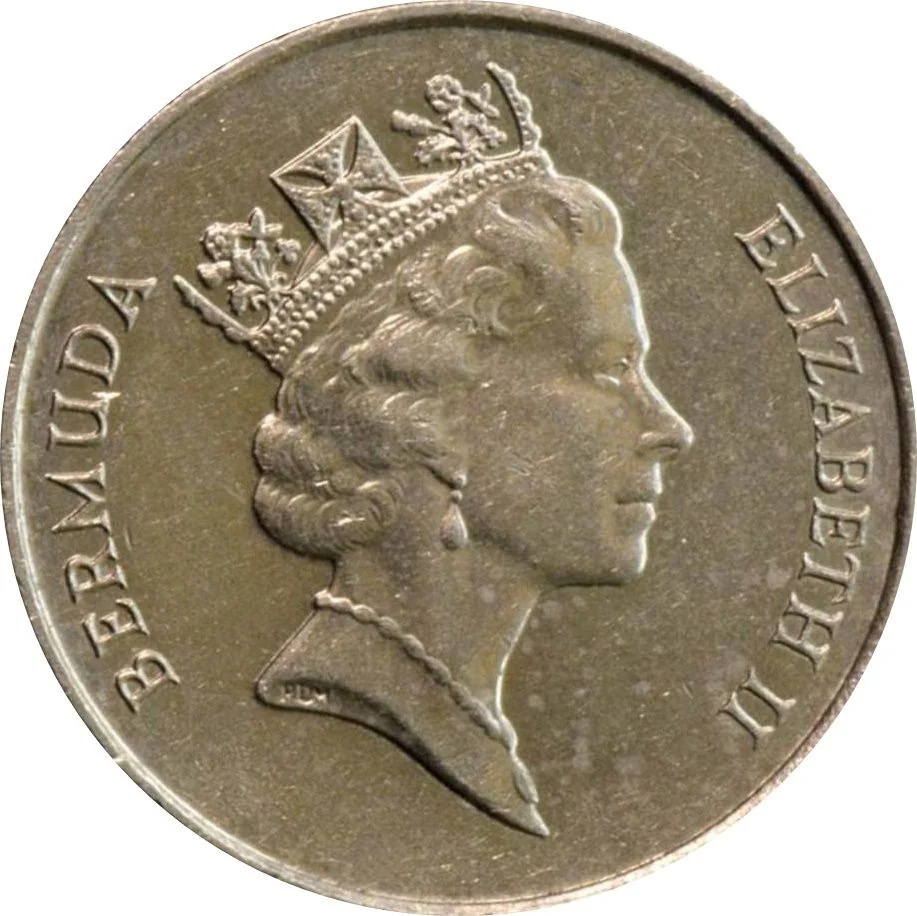
Obverse
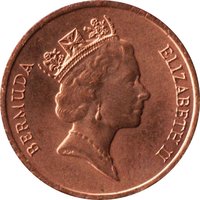
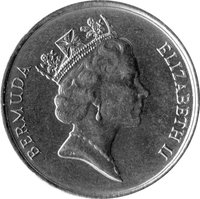
Description:
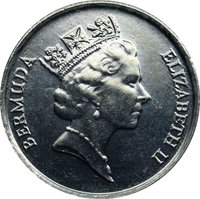
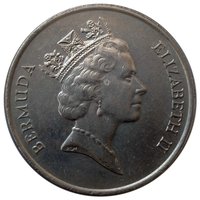
Queen Elizabeth II facing right, country name left.
Inscription:
BERMUDA ELIZABETH II
RDM
RDM
Translation:
BERMUDA ELIZABETH II
QUEEN
QUEEN
Script: Latin
Engraver: Raphael David Maklouf
Reverse
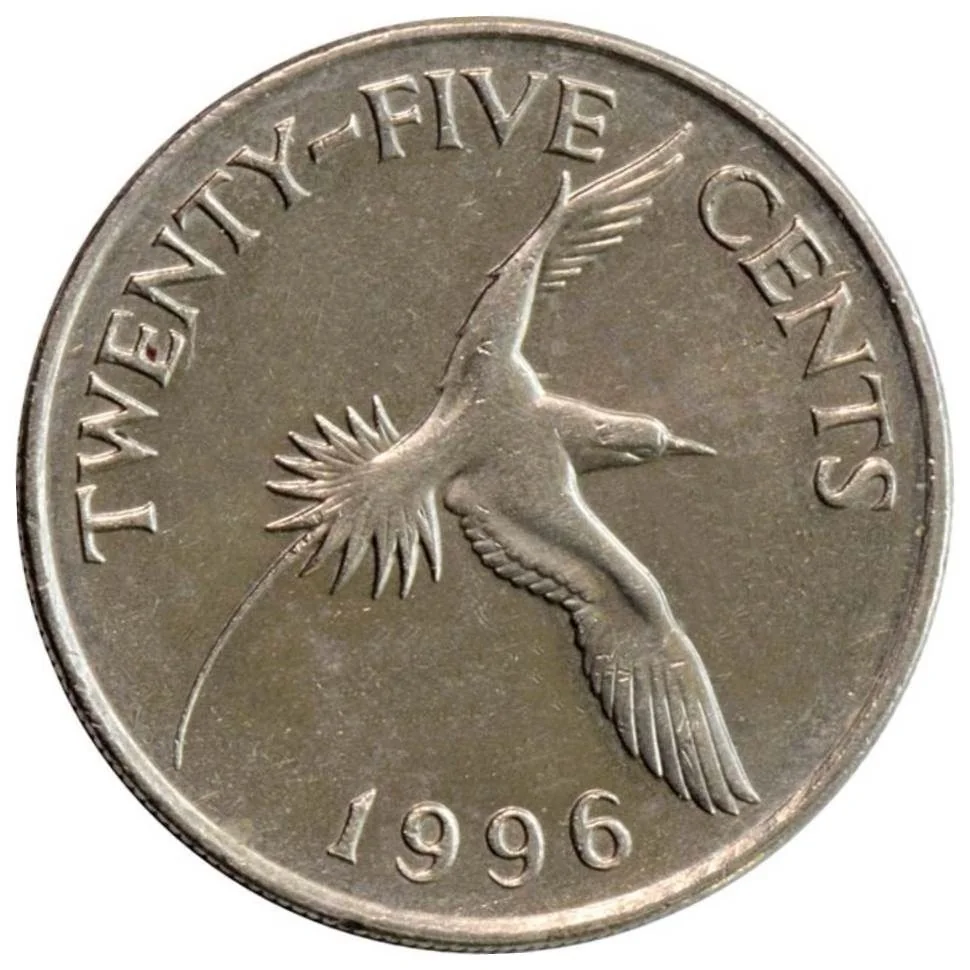
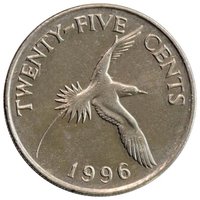
Description:
White-tailed Tropicbird (*Phaethon lepturus*), locally called the Bermuda Longtail.
Inscription:
TWENTY-FIVE CENTS
1996
1996
Script: Latin
Engraver: Michael Rizzello
Edge
Reeded
Mints
| Name | Mark |
|---|---|
| Royal Mint | — |
Mintings
| Year | Mint Mark | Mintage | Quality | Collection |
|---|---|---|---|---|
| 1986 | — | 1,260,000 | ||
| 1986 | — | 2,500 | Proof | |
| 1987 | — | 600,000 | ||
| 1988 | — | 600,000 | ||
| 1993 | — | 480,000 | ||
| 1994 | — | 1,040,000 | ||
| 1995 | — | 960,000 | ||
| 1996 | — | 1,200,000 | ||
| 1997 | — | 1,200,000 | ||
| 1998 | — | — |
Historical background
In 1986, Bermuda's currency situation was defined by its long-standing and successful peg to the United States Dollar. Since 1972, the Bermudian dollar (BMD) had been fixed at a one-to-one parity with the USD. This arrangement was not merely a financial policy but a cornerstone of the territory's economic stability, as the US dollar circulated freely alongside the local currency and was accepted for all transactions. The peg provided crucial predictability for Bermuda's two largest economic sectors: international business (primarily reinsurance) and tourism, both heavily reliant on transactions with American companies and visitors.
The economy in the mid-1980s was robust, with a high standard of living, but it was not without underlying pressures that influenced monetary policy. Bermuda had no central bank; currency issuance was managed by a Currency Board operated through the Bermuda Monetary Authority (BMA). This system required full foreign exchange backing for all local notes and coins in circulation, ensuring discipline but limiting domestic monetary tools. Furthermore, the territory was running a consistent current account deficit, offset by capital inflows from the thriving offshore financial sector. This deficit highlighted a structural reliance on imports and foreign capital, making the stability of the fixed exchange rate even more vital.
Consequently, the monetary landscape in 1986 was one of deliberate stability amidst external dependence. There were no active debates about devaluation or altering the peg, as it was widely viewed as essential for maintaining investor confidence and economic prosperity. The focus for authorities was on prudently managing the currency board system and fostering the conditions that continued to attract foreign exchange, thereby safeguarding the peg that underpinned the entire economy. This stable framework allowed Bermuda to navigate the global financial volatility of the era from a position of relative strength.
The economy in the mid-1980s was robust, with a high standard of living, but it was not without underlying pressures that influenced monetary policy. Bermuda had no central bank; currency issuance was managed by a Currency Board operated through the Bermuda Monetary Authority (BMA). This system required full foreign exchange backing for all local notes and coins in circulation, ensuring discipline but limiting domestic monetary tools. Furthermore, the territory was running a consistent current account deficit, offset by capital inflows from the thriving offshore financial sector. This deficit highlighted a structural reliance on imports and foreign capital, making the stability of the fixed exchange rate even more vital.
Consequently, the monetary landscape in 1986 was one of deliberate stability amidst external dependence. There were no active debates about devaluation or altering the peg, as it was widely viewed as essential for maintaining investor confidence and economic prosperity. The focus for authorities was on prudently managing the currency board system and fostering the conditions that continued to attract foreign exchange, thereby safeguarding the peg that underpinned the entire economy. This stable framework allowed Bermuda to navigate the global financial volatility of the era from a position of relative strength.
Series: 1986 Bermuda circulation coins
🌱 Very Common