

25 Cents – Bermuda
United Kingdom
Context
Years: 1970–1985
Country: United Kingdom 
Issuer: Bermuda 
Ruler: Elizabeth II
Currency:
(since 1970)
Total mintage: 7,979,974
Material
References
KM: #Click to copy to clipboard18
Numista: #3215
Value
Exchange value: 0.25 BMD
Inflation-adjusted value: 5.26 BMD
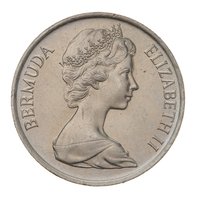
Obverse
Description:
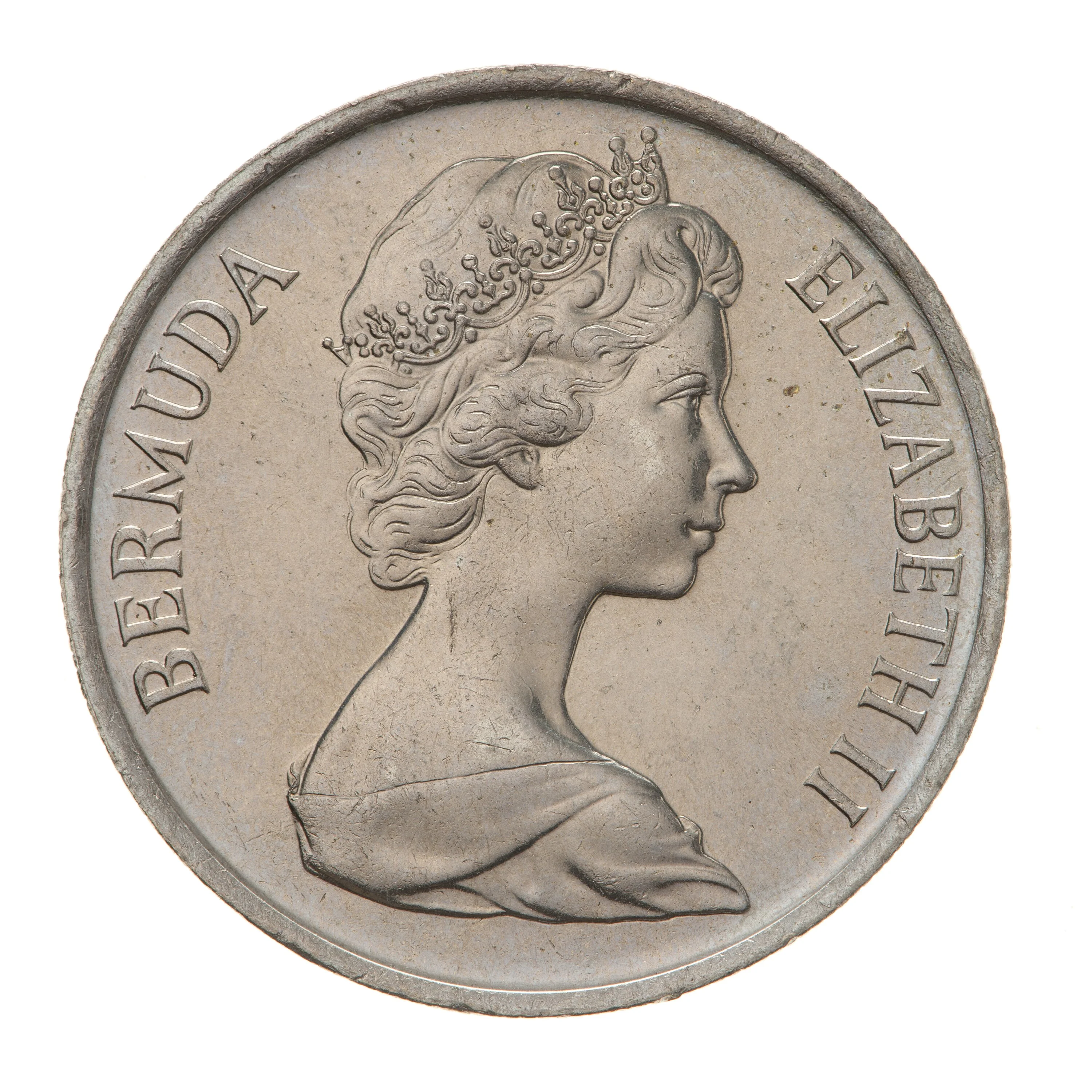
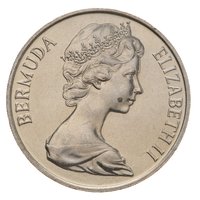
Queen Elizabeth II crowned bust, right profile.
Inscription:
BERMUDA ELIZABETH II
Translation:
Elizabeth II Bermuda
Script: Latin
Engraver: Arnold Machin
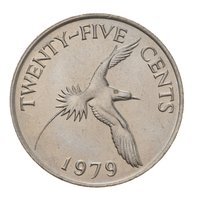
Reverse
Description:
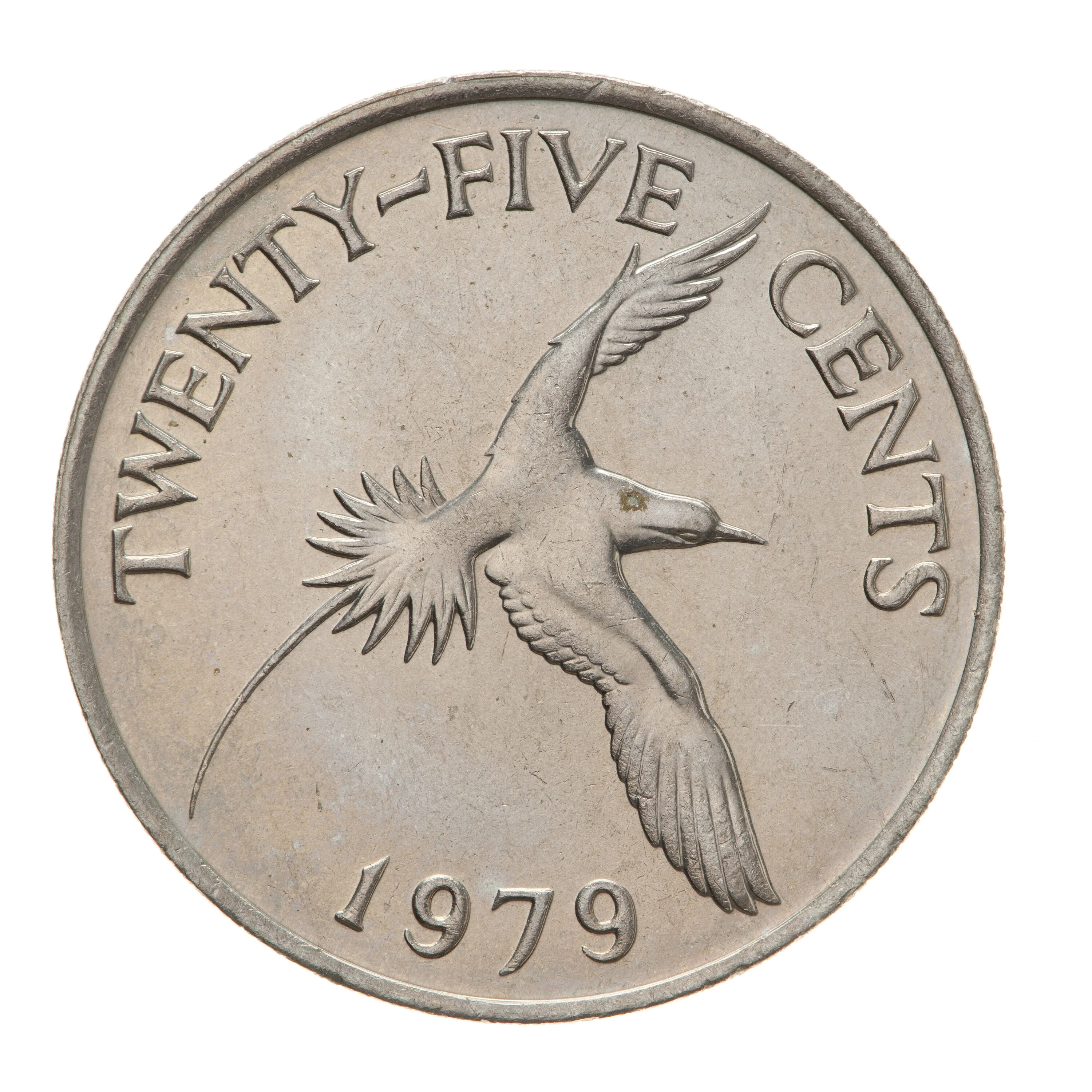
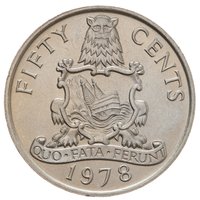
White-tailed Tropicbird flying, denomination above, date below.
Inscription:
TWENTY-FIVE CENTS
1981
1981
Script: Latin
Engraver: Michael Rizzello
Edge
Milled
Mints
| Name | Mark |
|---|---|
| Royal Mint | — |
Mintings
| Year | Mint Mark | Mintage | Quality | Collection |
|---|---|---|---|---|
| 1970 | — | 1,500,000 | ||
| 1970 | — | 11,000 | Proof | |
| 1973 | — | 1,000,000 | ||
| 1979 | — | 570,000 | ||
| 1980 | — | 1,120,000 | ||
| 1981 | — | 2,200,000 | ||
| 1982 | — | 160,000 | ||
| 1983 | — | 6,474 | Proof | |
| 1983 | — | 600,000 | ||
| 1984 | — | 400,000 | ||
| 1985 | — | 412,500 |
Historical background
In 1970, Bermuda's currency situation was defined by its unique colonial relationship with the United Kingdom and its deep economic ties to North America. Officially, the British Pound Sterling was the legal tender, a legacy of its status as a British Dependent Territory. However, the reality on the ground was far more complex and practically dollarized. The US Dollar circulated widely and was accepted almost universally alongside Sterling, a reflection of Bermuda's tourism and international business economy, which was overwhelmingly dominated by American visitors and companies.
This dual-currency system created operational inefficiencies. Businesses and banks had to manage two separate sets of accounts and navigate fluctuating exchange rates. For a small island whose livelihood depended on seamless service for the American market, the reliance on Sterling was increasingly seen as an anachronism and a hindrance. The inconvenience for tourists and the administrative burden for the local economy fueled a strong and growing movement for monetary reform.
Consequently, 1970 was a pivotal year of transition. The Bermuda Monetary Authority (established in 1969) was actively preparing for a historic change: the introduction of a distinct, decimalized Bermudian currency. This new dollar was designed to be pegged at par (1:1) with the US Dollar, finally severing the formal link to Sterling. The stage was set for the 1972 introduction of the Bermudian dollar, a move that formally recognized the island's economic realities and asserted greater local control over its financial affairs.
This dual-currency system created operational inefficiencies. Businesses and banks had to manage two separate sets of accounts and navigate fluctuating exchange rates. For a small island whose livelihood depended on seamless service for the American market, the reliance on Sterling was increasingly seen as an anachronism and a hindrance. The inconvenience for tourists and the administrative burden for the local economy fueled a strong and growing movement for monetary reform.
Consequently, 1970 was a pivotal year of transition. The Bermuda Monetary Authority (established in 1969) was actively preparing for a historic change: the introduction of a distinct, decimalized Bermudian currency. This new dollar was designed to be pegged at par (1:1) with the US Dollar, finally severing the formal link to Sterling. The stage was set for the 1972 introduction of the Bermudian dollar, a move that formally recognized the island's economic realities and asserted greater local control over its financial affairs.
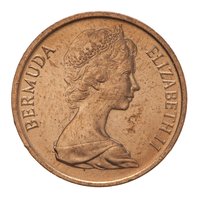
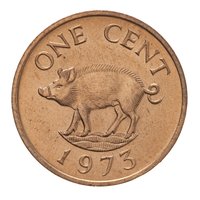
Series: 1970 Bermuda circulation coins
🌱 Very Common