

2 euro (first crossing of the South Atlantic by plane) – Portugal
Add to wishlist
Circulating commemorative coins
Commemoration: Centenary of the first crossing of the South Atlantic by plane
Portugal
Context
Material
References
KM: #
Numista: #321378
Value
Exchange value: 2 EUR
Inflation-adjusted value: 2.29 EUR
Obverse
Description:
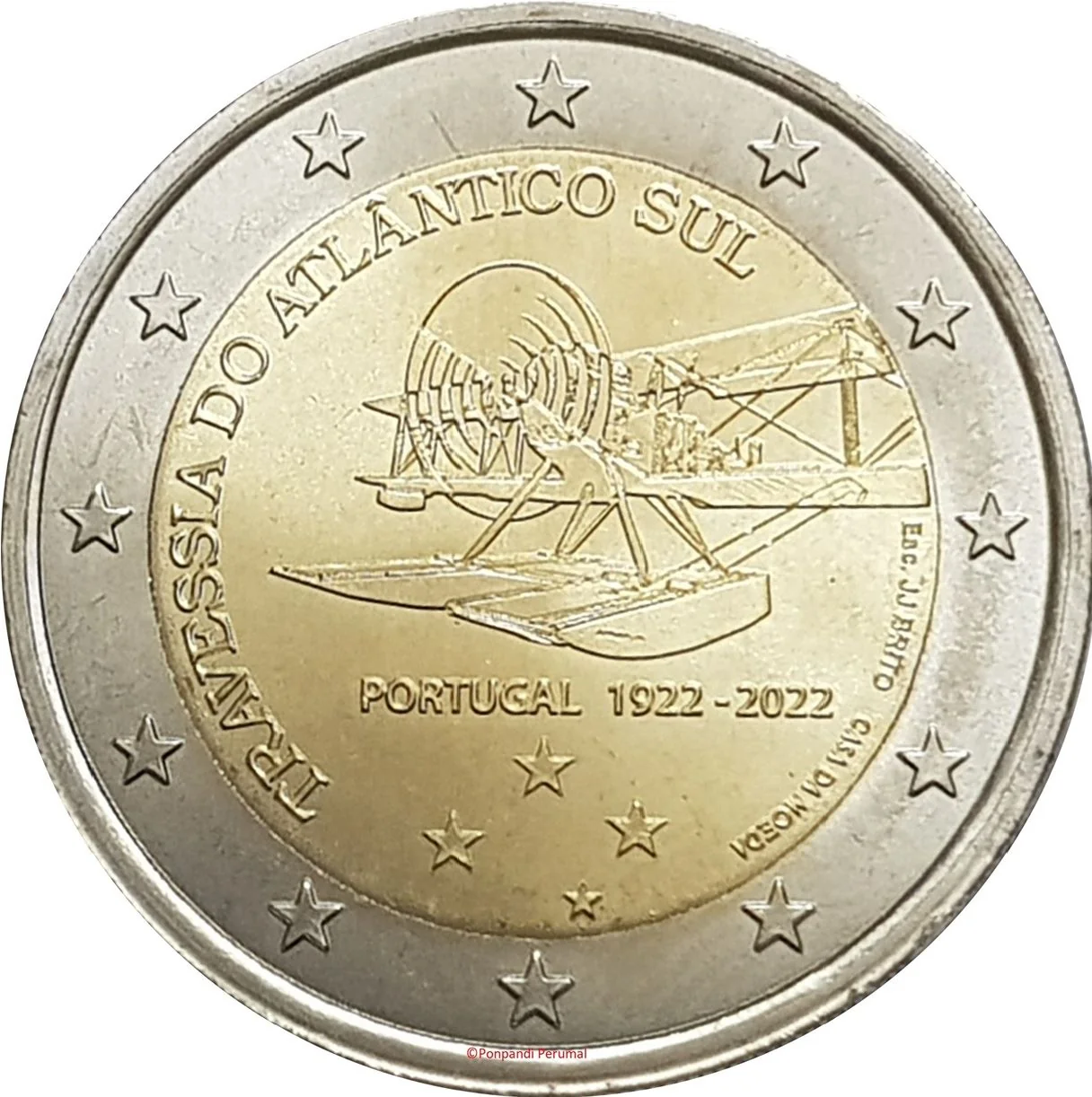
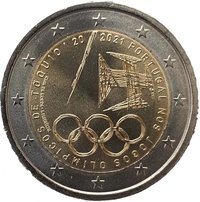
This coin commemorates the 1922 South Atlantic crossing by Portuguese aviators Sacadura Cabral and Gago Coutinho in the Lusitânia seaplane. Their journey, using only a modified sextant and course corrector for navigation, is depicted. Inscriptions include ‘TRAVESSIA DO ATLÂNTICO SUL’ and ‘PORTUGAL 1922-2022’. The mintmark is ‘CASA DA MOEDA’, and the outer ring features the 12 stars of the European flag.
Inscription:
TRAVESSIA DO ATLÂNTICO SUL
PORTUGAL 1922 – 2022
Esc. JJ BRITO
CASA DA MOEDA
PORTUGAL 1922 – 2022
Esc. JJ BRITO
CASA DA MOEDA
Translation:
Crossing of the South Atlantic
Portugal 1922 – 2022
Des. JJ BRITO
CASA DA MOEDA
Portugal 1922 – 2022
Des. JJ BRITO
CASA DA MOEDA
Script: Latin
Language: Portuguese
Designer: José João de Brito
Reverse
Edge
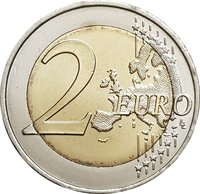
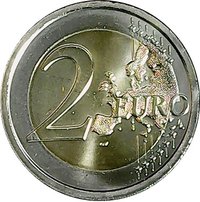
Finely reeded with inscription: seven castles and five coats of arms
Categories
| Map |
| Transportation> Aircraft |
Mints
| Name | Mark |
|---|---|
| Imprensa Nacional - Casa da Moeda | — |
Mintings
| Year | Mint Mark | Mintage | Quality | Collection |
|---|---|---|---|---|
| 2022 | — | 890,250 | ||
| 2022 | — | 7,406 | Proof |
Historical background
In 2022, Portugal's currency situation was firmly anchored within the Eurozone framework, using the euro (EUR) as its sole legal tender. As a member of the European Union and a participant in the Economic and Monetary Union (EMU), Portugal did not have an independent monetary policy. The European Central Bank (ECB) set key interest rates and controlled the money supply for the entire euro area, with its policies primarily focused on combating high inflation that emerged across the continent following the COVID-19 pandemic recovery and exacerbated by the energy crisis triggered by the war in Ukraine. This meant Portugal's domestic economic conditions, including its own inflation rate which peaked at over 10% in October 2022, were managed through a one-size-fits-all monetary strategy from Frankfurt.
The year was marked by significant external pressures on the euro itself. The EUR/USD exchange rate fell sharply, reaching parity (1:1) and even dipping below it in the summer for the first time in two decades. This depreciation was driven by a strong US dollar, fueled by aggressive Federal Reserve interest rate hikes, and market concerns over the Eurozone's vulnerability to an energy shock and potential recession. For Portugal, a weaker euro had a dual effect: it made imports (notably energy and raw materials) more expensive, further fueling domestic inflation, but it also made Portuguese exports and tourism more competitive on the global market, providing a boost to key sectors of the economy.
Domestically, the currency stability provided by the euro was seen as a crucial shield against market volatility, especially given Portugal's history of currency crises prior to adopting the euro. However, the lack of monetary policy tools meant the Portuguese government relied heavily on fiscal policy to address economic challenges. In 2022, this involved measures to support households and businesses through inflation relief packages, including energy subsidies and direct income support, funded in part by EU recovery funds. The overall currency situation was thus one of stability provided by the euro, but with domestic economic management constrained by shared monetary policy and heavily influenced by the ECB's continent-wide fight against inflation and the euro's external weakness.
The year was marked by significant external pressures on the euro itself. The EUR/USD exchange rate fell sharply, reaching parity (1:1) and even dipping below it in the summer for the first time in two decades. This depreciation was driven by a strong US dollar, fueled by aggressive Federal Reserve interest rate hikes, and market concerns over the Eurozone's vulnerability to an energy shock and potential recession. For Portugal, a weaker euro had a dual effect: it made imports (notably energy and raw materials) more expensive, further fueling domestic inflation, but it also made Portuguese exports and tourism more competitive on the global market, providing a boost to key sectors of the economy.
Domestically, the currency stability provided by the euro was seen as a crucial shield against market volatility, especially given Portugal's history of currency crises prior to adopting the euro. However, the lack of monetary policy tools meant the Portuguese government relied heavily on fiscal policy to address economic challenges. In 2022, this involved measures to support households and businesses through inflation relief packages, including energy subsidies and direct income support, funded in part by EU recovery funds. The overall currency situation was thus one of stability provided by the euro, but with domestic economic management constrained by shared monetary policy and heavily influenced by the ECB's continent-wide fight against inflation and the euro's external weakness.
Series: Portugal 2 euro commemoratives
🌱 Very Common