

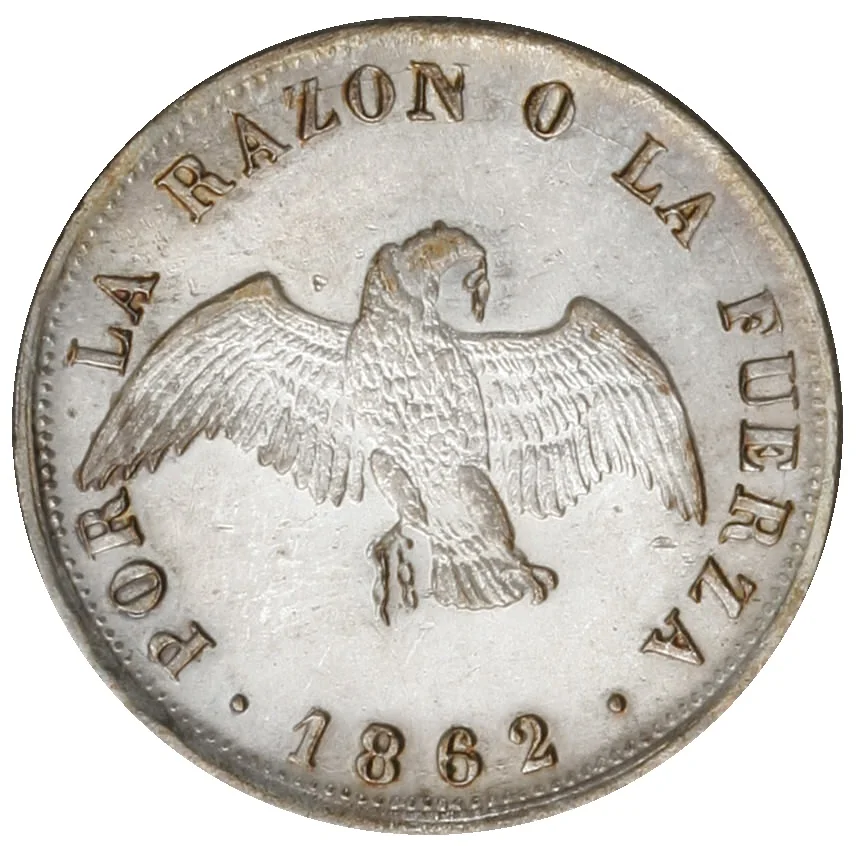
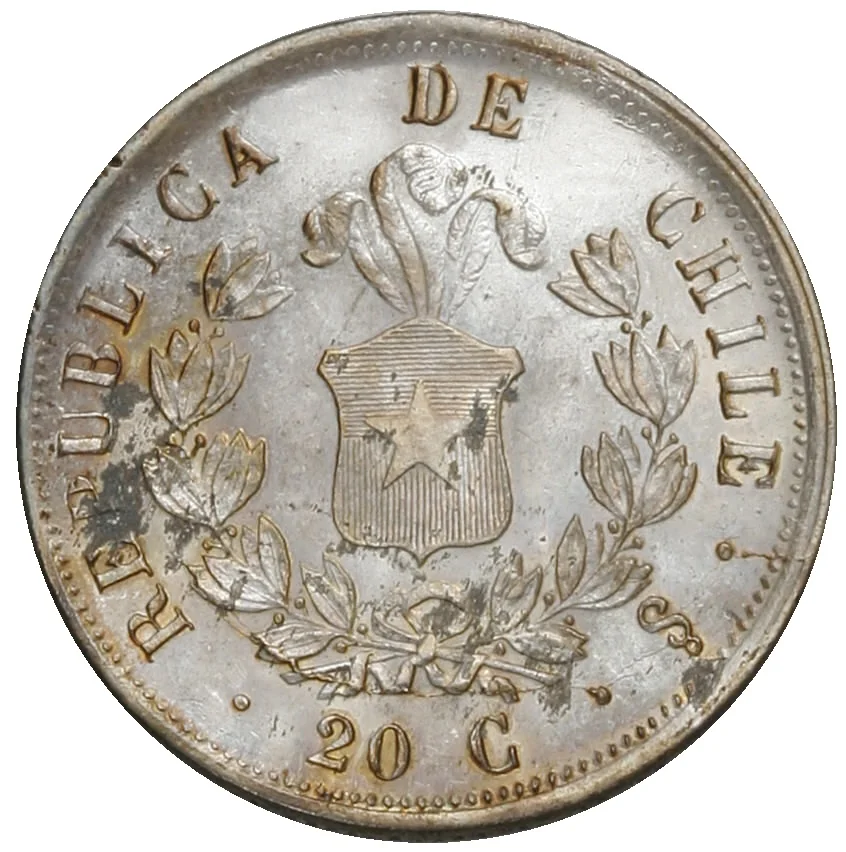
20 Centavos – Chile
Chile
Context

Material
References
KM: #Click to copy to clipboard125a
Numista: #31965
Value
Bullion value: $11.77
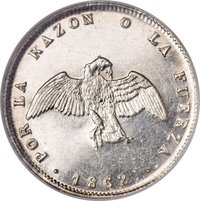
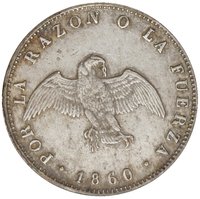
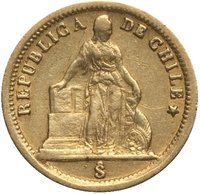
Obverse
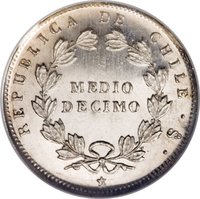
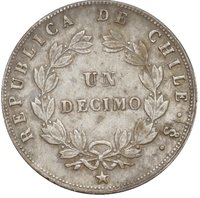
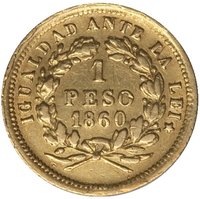
Reverse
Edge
Reeded
Mintings
| Year | Mint Mark | Mintage | Quality | Collection |
|---|---|---|---|---|
| 1860 | So | 388,000 | ||
| 1861 | So | 1,471,000 | ||
| 1862 | So | 324,000 |
Historical background
In 1860, Chile's currency situation was characterized by a complex and often chaotic system of multiple, concurrently circulating coins, both foreign and domestic. The official monetary system was theoretically bimetallic, based on the peso (divided into 8 reales), with its value defined by a fixed ratio between gold and silver. However, the discovery of rich silver deposits in the 1830s, particularly in Chañarcillo, led to a massive influx of silver coinage. This overabundance caused the market value of silver to fall below its official fixed rate relative to gold, leading to the practical disappearance of gold coins from circulation as they were hoarded or exported—a classic example of Gresham's Law, where "bad money drives out good."
This instability was compounded by the widespread use of foreign coins, especially Peruvian and Bolivian silver, as well as privately issued paper money from commercial banks and casas de comercio (trading houses). The lack of a centralized issuing authority meant the money supply was unreliable and varied greatly in quality and acceptance, creating confusion in commerce and hindering economic planning. The government's attempts to assert control, such as the 1851 law that aimed to make the Chilean peso the sole legal tender, were largely ineffective on the ground, as the public continued to trust and use familiar foreign silver.
Consequently, the 1860s represented a pivotal decade on the path toward reform. The monetary disorder was widely recognized as a major obstacle to modern banking, foreign investment, and national economic integration. This growing consensus would culminate in the landmark Currency Law of 1865, which finally established a gold standard for Chile. The law created a new national unit, the peso fuerte (strong peso), convertible into a fixed amount of gold, and granted exclusive note-issuing power to the newly chartered Banco Nacional de Chile. Thus, the situation in 1860 was one of lingering metallic confusion immediately preceding a decisive shift toward a modern, unified, and state-controlled monetary system.
This instability was compounded by the widespread use of foreign coins, especially Peruvian and Bolivian silver, as well as privately issued paper money from commercial banks and casas de comercio (trading houses). The lack of a centralized issuing authority meant the money supply was unreliable and varied greatly in quality and acceptance, creating confusion in commerce and hindering economic planning. The government's attempts to assert control, such as the 1851 law that aimed to make the Chilean peso the sole legal tender, were largely ineffective on the ground, as the public continued to trust and use familiar foreign silver.
Consequently, the 1860s represented a pivotal decade on the path toward reform. The monetary disorder was widely recognized as a major obstacle to modern banking, foreign investment, and national economic integration. This growing consensus would culminate in the landmark Currency Law of 1865, which finally established a gold standard for Chile. The law created a new national unit, the peso fuerte (strong peso), convertible into a fixed amount of gold, and granted exclusive note-issuing power to the newly chartered Banco Nacional de Chile. Thus, the situation in 1860 was one of lingering metallic confusion immediately preceding a decisive shift toward a modern, unified, and state-controlled monetary system.
Series: 1860 Chile circulation coins
🌟 Limited