

2 Euro (Universal Declaration of Human Rights) – Belgium
Circulating commemorative coins
Commemoration: 60th Anniversary of the Universal Declaration of Human Rights
Belgium
Obverse
Description:
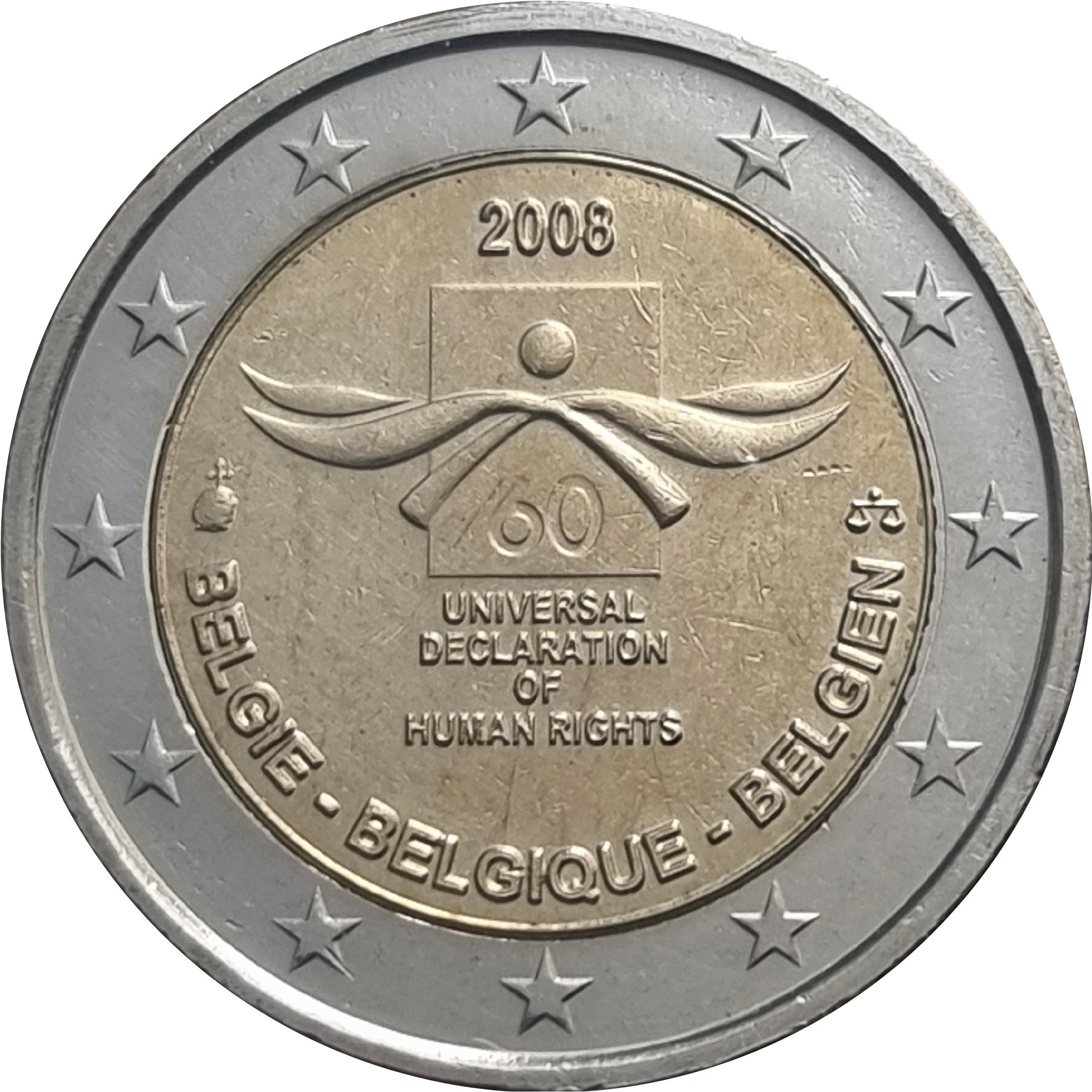
The coin depicts curved lines around a rectangle with "60," the year "2008" above, and "UNIVERSAL DECLARATION OF HUMAN RIGHTS" below. The country name "BELGIE – BELGIQUE – BELGIEN" is beneath the design, with the mintmark and Master of the Mint's signature on its left and right. The outer ring bears the twelve stars of the European Union.
Inscription:
2008
60
UNIVERSAL DECLARATION OF HUMAN RIGHTS
BELGIE-BELGIQUE-BELGIEN
60
UNIVERSAL DECLARATION OF HUMAN RIGHTS
BELGIE-BELGIQUE-BELGIEN
Translation:
2008
60
UNIVERSAL DECLARATION OF HUMAN RIGHTS
BELGIUM
60
UNIVERSAL DECLARATION OF HUMAN RIGHTS
BELGIUM
Script: Latin
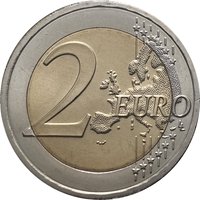
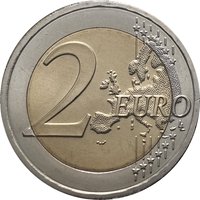
Reverse
Edge
Legend:
2 ** 2 ** 2 ** 2 ** 2 ** 2 **
Categories
| Human rights |
Mints
| Name | Mark |
|---|---|
| Royal Mint of Belgium | — |
Mintings
| Year | Mint Mark | Mintage | Quality | Collection |
|---|---|---|---|---|
| 2008 | — | 5,000,000 | ||
| 2008 | — | 12,000 | BU | |
| 2008 | — | 6,000 | Proof |
Historical background
In 2008, Belgium's currency situation was defined by its full participation in the Eurozone, having adopted the euro as its sole legal tender in 2002. The Belgian franc was a distant memory, and the country's monetary policy was entirely set by the European Central Bank (ECB) in Frankfurt. This framework provided Belgium with significant benefits, including exchange rate stability with its major trading partners, low inflation, and reduced transaction costs within the single market. The focus for Belgian authorities was therefore not on an independent currency, but on maintaining fiscal discipline under the EU's Stability and Growth Pact to support the common currency's strength.
However, the global financial crisis that erupted in late 2008 presented a severe external test. While Belgium did not face a currency-specific crisis like non-Eurozone countries, its financial sector was deeply exposed. The need for a massive state intervention to rescue and ultimately break up the giant bank Fortis in September-October 2008 placed enormous strain on Belgian public finances. This raised concerns in financial markets about Belgium's sovereign debt sustainability, leading to a widening of its bond yield spreads compared to German bunds.
Consequently, the primary "currency situation" in Belgium in 2008 was one of navigating a severe financial and banking crisis within the constraints and protections of the Eurozone framework. The stability of the euro itself was not in doubt, but the crisis forced the Belgian government into costly bailouts, highlighting the interdependence between national banking systems and sovereign debt within the monetary union. The year ended with Belgium facing a sharp economic downturn and rising budget deficits, setting the stage for future pressures on Eurozone fiscal governance.
However, the global financial crisis that erupted in late 2008 presented a severe external test. While Belgium did not face a currency-specific crisis like non-Eurozone countries, its financial sector was deeply exposed. The need for a massive state intervention to rescue and ultimately break up the giant bank Fortis in September-October 2008 placed enormous strain on Belgian public finances. This raised concerns in financial markets about Belgium's sovereign debt sustainability, leading to a widening of its bond yield spreads compared to German bunds.
Consequently, the primary "currency situation" in Belgium in 2008 was one of navigating a severe financial and banking crisis within the constraints and protections of the Eurozone framework. The stability of the euro itself was not in doubt, but the crisis forced the Belgian government into costly bailouts, highlighting the interdependence between national banking systems and sovereign debt within the monetary union. The year ended with Belgium facing a sharp economic downturn and rising budget deficits, setting the stage for future pressures on Eurozone fiscal governance.
Series: Belgium 2 euro commemoratives
🌱 Very Common