

1 Florin – Austrian Empire
Austria
Context
Years: 1867–1872
Country: Austria 
Issuer: Austrian Empire
Ruler: Francis Joseph I
Currency:
(1857—1892)
Demonetized: Yes
Total mintage: 12,187,986
Material
References
KM: #Click to copy to clipboard2221
Numista: #31958
Value
Bullion value: $31.16
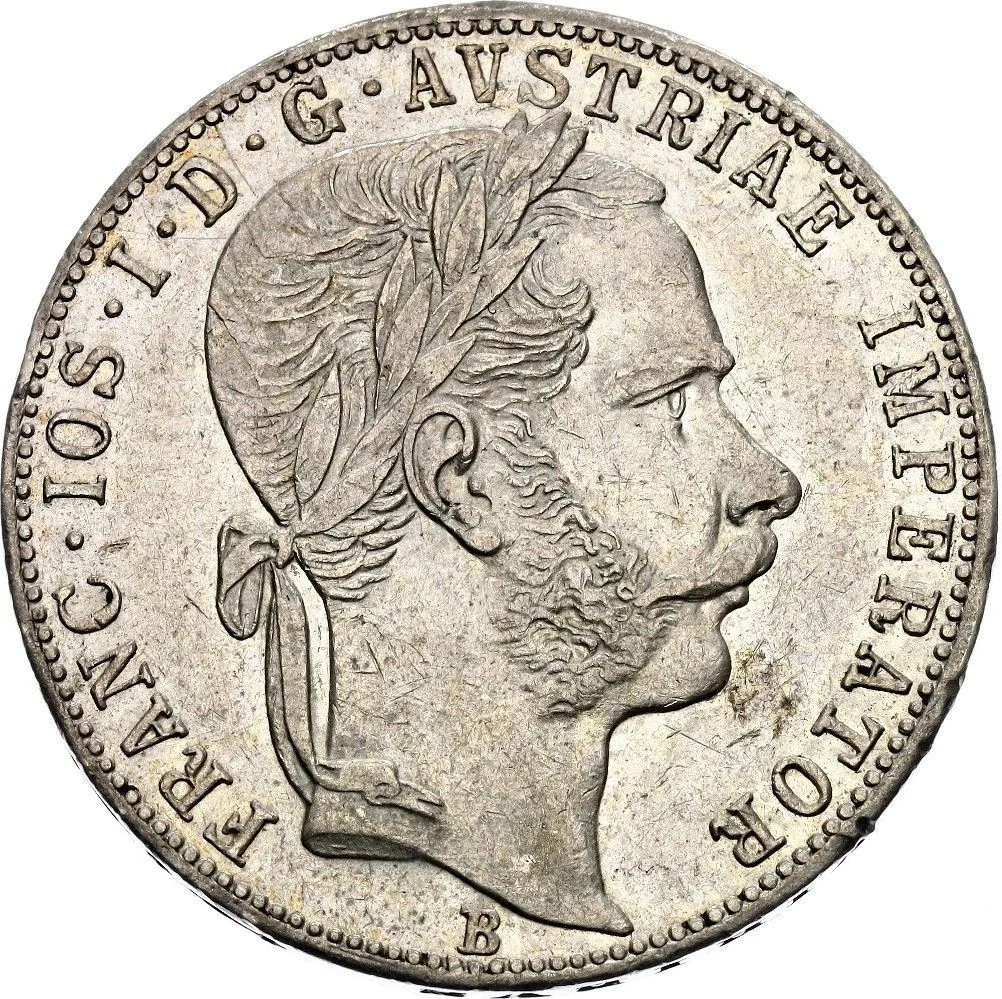
Obverse
Description:
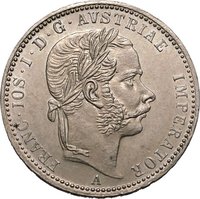
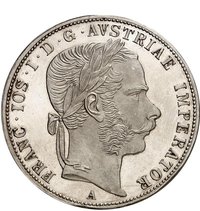
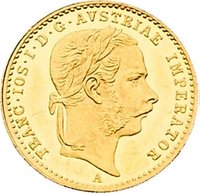
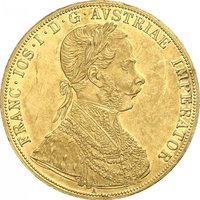
Portrait of Emperor Franz Josef I of Austria (1830-1916).
Inscription:
FRANC·IOS·I·D·G·AVSTRIAE IMPERATOR
A
A
Translation:
FRANCIS I, BY THE GRACE OF GOD, EMPEROR OF AUSTRIA
Script: Latin
Language: Latin
Engraver: Josef Tautenhayn
Reverse
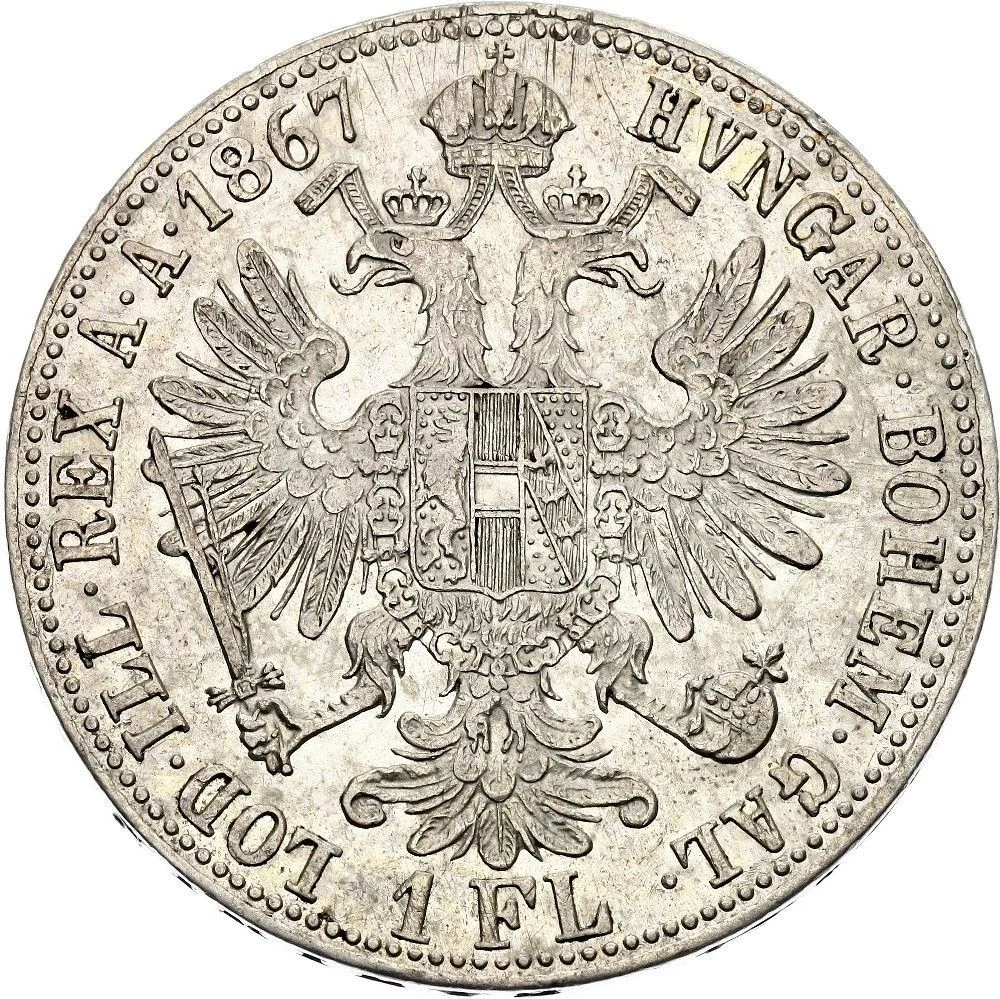
Description:
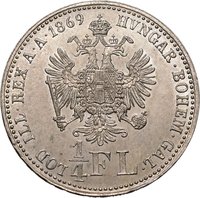
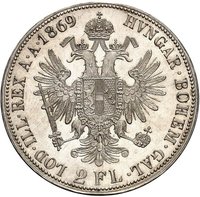
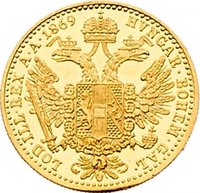
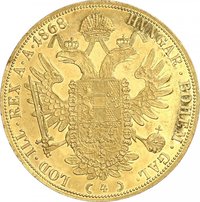
Two-headed eagle weapons.
Inscription:
HUNGAR·BOHEM·GAL· LOD·ILL·REX A·A·1867
1 FL
1 FL
Translation:
Hungary, Bohemia, Galicia, Lodomeria, Illyria, King, by the grace of God, 1867
1 Florin
1 Florin
Script: Latin
Language: Latin
Engraver: Josef Tautenhayn
Edge
Mints
| Name | Mark |
|---|---|
| Münze Österreich | A |
| Kremnica | B |
| Alba Iulia | E |
Mintings
Historical background
Following its defeat in the Austro-Prussian War of 1866, the Austrian Empire was compelled to undergo a fundamental political restructuring, formalized by the Austro-Hungarian Compromise of 1867. This created the Dual Monarchy of Austria-Hungary, establishing two separate, sovereign states (Cisleithania and Transleithania) under a common monarch and sharing only foreign, military, and certain financial policies. This constitutional shift had immediate and profound implications for the currency situation, as it necessitated a new financial and monetary agreement between the two halves of the empire.
Prior to 1867, the empire's currency was the Austrian Vereinsthaler, but the financial system was burdened by chronic state deficits and a heavily depreciated paper currency known as Banknoten. The Compromise required a ten-year renewal of the customs and commercial union and mandated the negotiation of a common monetary policy. The result was the adoption of a new, unified gold standard currency for the entire Dual Monarchy. The Austro-Hungarian gulden (or florin), divided into 100 kreuzer, was established as the sole legal tender, with its value defined as 0.304878 grams of fine gold.
The implementation of this new, stable currency was managed by the Austro-Hungarian Bank, a newly reorganized and jointly governed central bank that began operations in 1878. The reform of 1867 thus laid the critical legal and political foundation for a period of monetary modernization. It successfully ended the era of fluctuating paper money and moved the empire toward the financial stability required to foster economic growth and integration into the European capital markets, a process that would be fully realized with the later introduction of the gold-backed Krone in 1892.
Prior to 1867, the empire's currency was the Austrian Vereinsthaler, but the financial system was burdened by chronic state deficits and a heavily depreciated paper currency known as Banknoten. The Compromise required a ten-year renewal of the customs and commercial union and mandated the negotiation of a common monetary policy. The result was the adoption of a new, unified gold standard currency for the entire Dual Monarchy. The Austro-Hungarian gulden (or florin), divided into 100 kreuzer, was established as the sole legal tender, with its value defined as 0.304878 grams of fine gold.
The implementation of this new, stable currency was managed by the Austro-Hungarian Bank, a newly reorganized and jointly governed central bank that began operations in 1878. The reform of 1867 thus laid the critical legal and political foundation for a period of monetary modernization. It successfully ended the era of fluctuating paper money and moved the empire toward the financial stability required to foster economic growth and integration into the European capital markets, a process that would be fully realized with the later introduction of the gold-backed Krone in 1892.
⭐ Somewhat Rare