

25 Cents – Cayman Islands
United Kingdom
Context
Years: 1999–2019
Country: United Kingdom 
Issuer: Cayman Islands 
Ruler: Elizabeth II
Currency:
(since 1972)
Total mintage: 10,000,000
Material
References
KM: #Click to copy to clipboard134
Numista: #3192
Value
Exchange value: 0.25 KYD
Inflation-adjusted value: 0.56 KYD
Obverse
Description:
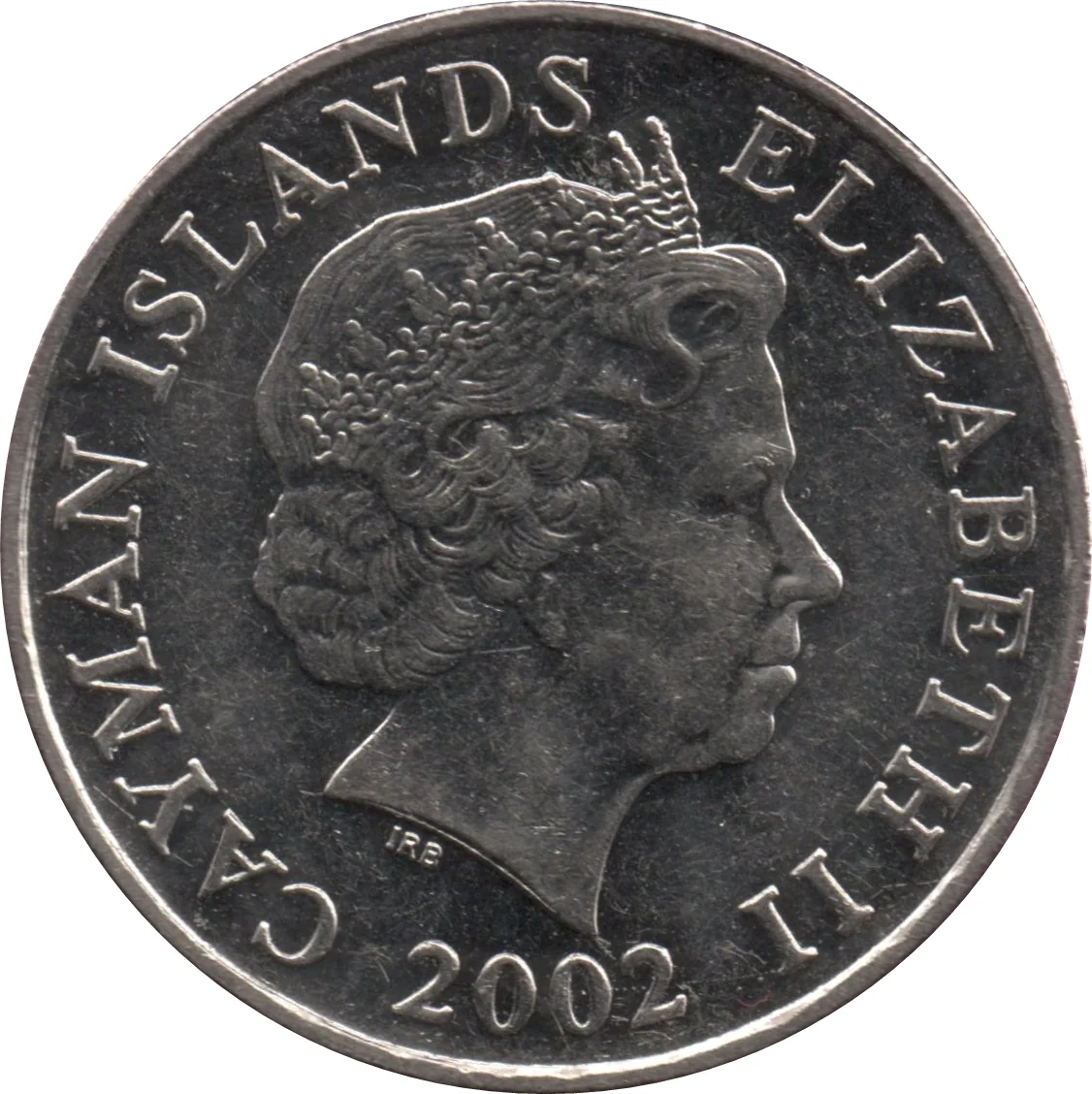
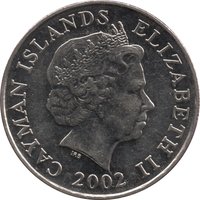
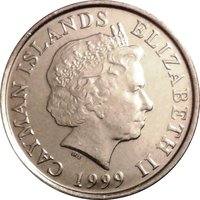
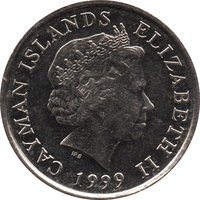
Queen Elizabeth II facing right, wearing the Girls of Great Britain and Ireland tiara. Legend surrounds, date below.
Inscription:
CAYMAN ISLANDS ELIZABETH II
2002
IRB
2002
IRB
Script: Latin
Engraver: Ian Rank-Broadley
Reverse
Description:
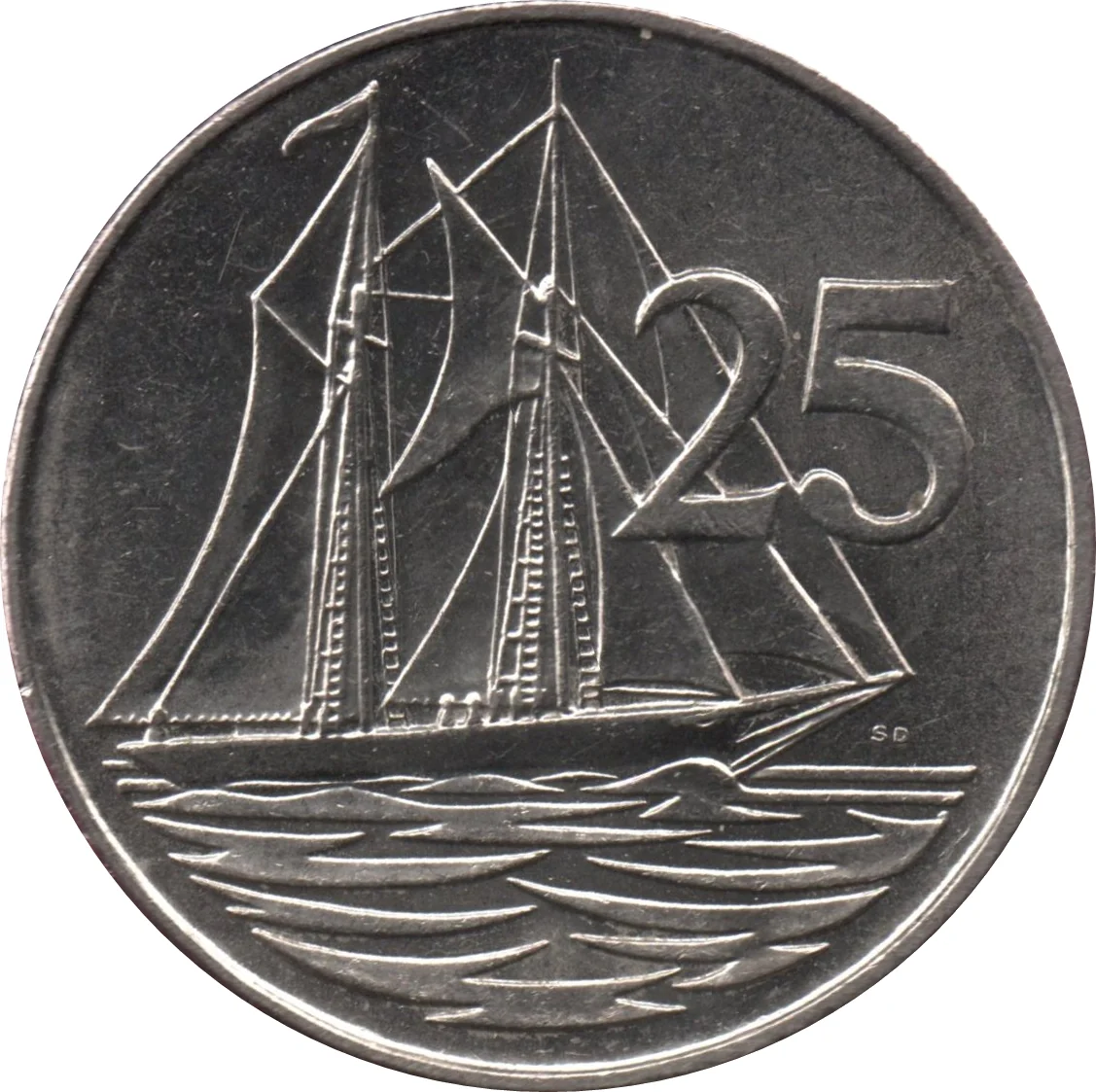
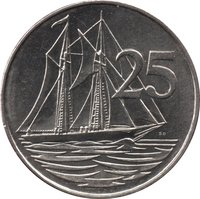
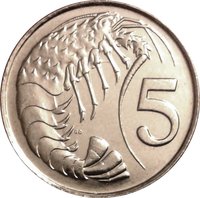
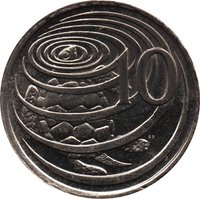
Schooner "Kirk B" sailing right.
Inscription:
25
SD
SD
Script: Latin
Engraver: Stuart Devlin
Edge
Reeded
Categories
| Transportation> Watercraft |
Mints
| Name | Mark |
|---|---|
| Royal Mint | — |
Mintings
| Year | Mint Mark | Mintage | Quality | Collection |
|---|---|---|---|---|
| 1999 | — | 2,500,000 | ||
| 2002 | — | 2,500,000 | ||
| 2005 | — | 2,500,000 | ||
| 2008 | — | 2,500,000 | ||
| 2013 | — | — | ||
| 2017 | — | — | ||
| 2019 | — | — |
Historical background
In 1999, the currency situation in the Cayman Islands was characterized by stability and a firm commitment to its long-standing peg to the United States dollar. Since 1972, the Cayman Islands Dollar (KYD) had been fixed at a rate of CI$1.00 = US$1.20, a unique valuation that made it one of the few currencies in the world worth more than the US dollar. This fixed exchange rate regime, managed by the Cayman Islands Monetary Authority (CIMA), which was established just four years prior in 1997, provided a predictable financial environment crucial for the territory's dominant offshore banking and tourism sectors.
The economy was highly dollarized, with US dollars circulating widely and being accepted interchangeably for most transactions, especially in tourism and high-value commerce. However, the local currency remained essential for government transactions and day-to-day local business. The stability of the peg was underpinned by substantial foreign exchange reserves, which were bolstered by the territory's status as a leading global financial centre. There were no significant currency crises or devaluation pressures in 1999, as the territory's prudent fiscal management and thriving financial services industry ensured ample reserve coverage.
Overall, the currency framework in 1999 was a cornerstone of the Cayman Islands' economic success, fostering confidence among international investors and financial institutions. The system faced no serious challenges that year, operating smoothly as a key component of the jurisdiction's appeal. This stable monetary foundation allowed the government and CIMA to focus on enhancing regulatory frameworks for the financial sector, rather than managing currency volatility.
The economy was highly dollarized, with US dollars circulating widely and being accepted interchangeably for most transactions, especially in tourism and high-value commerce. However, the local currency remained essential for government transactions and day-to-day local business. The stability of the peg was underpinned by substantial foreign exchange reserves, which were bolstered by the territory's status as a leading global financial centre. There were no significant currency crises or devaluation pressures in 1999, as the territory's prudent fiscal management and thriving financial services industry ensured ample reserve coverage.
Overall, the currency framework in 1999 was a cornerstone of the Cayman Islands' economic success, fostering confidence among international investors and financial institutions. The system faced no serious challenges that year, operating smoothly as a key component of the jurisdiction's appeal. This stable monetary foundation allowed the government and CIMA to focus on enhancing regulatory frameworks for the financial sector, rather than managing currency volatility.
🌱 Very Common