

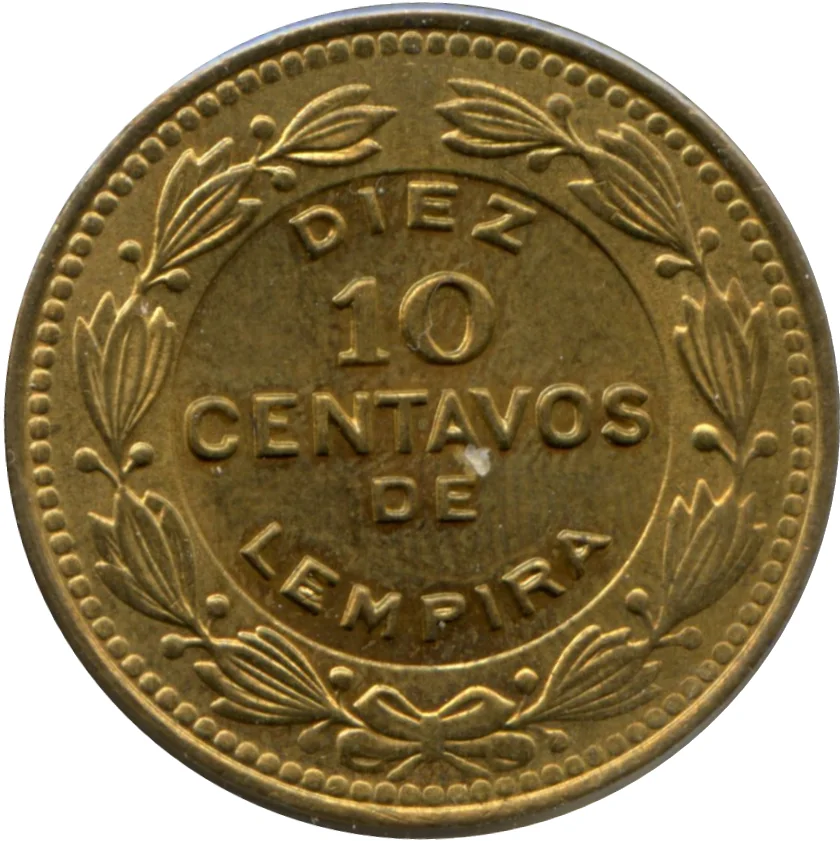
10 centavos – Honduras
Add to wishlist
Honduras
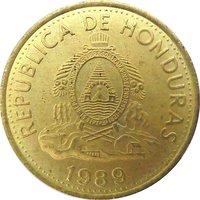
Obverse
Description:
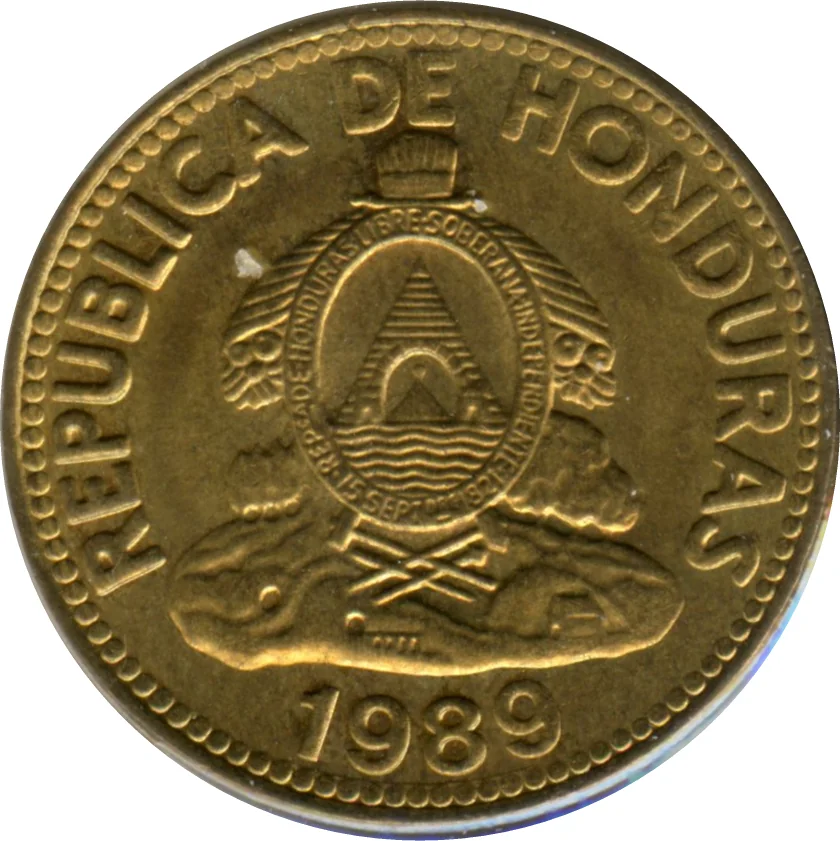
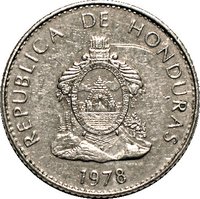
Coat of Arms (outer legend sizes vary).
Inscription:
REPUBLICA DE HONDURAS
REP CA DE · HONDURAS · LIBRE · SOBERANA · INDEPENDIENTE
· 15 SEPT BRE 1821 ·
1989
REP CA DE · HONDURAS · LIBRE · SOBERANA · INDEPENDIENTE
· 15 SEPT BRE 1821 ·
1989
Translation:
REPUBLIC OF HONDURAS
REPUBLIC OF HONDURAS, FREE, SOVEREIGN, INDEPENDENT
· 15 SEPTEMBER 1821 ·
1989
REPUBLIC OF HONDURAS, FREE, SOVEREIGN, INDEPENDENT
· 15 SEPTEMBER 1821 ·
1989
Script: Latin
Language: Spanish
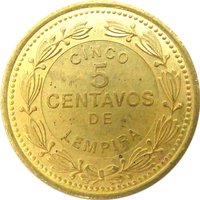
Reverse
Edge
Plain
Categories
| Symbols> Coat of Arms |
| Symbol> Wreath |
Mintings
| Year | Mint Mark | Mintage | Quality | Collection |
|---|---|---|---|---|
| 1976 | — | 10,000,000 | ||
| 1989 | — | 15,000,000 |
Historical background
In 1976, Honduras operated under a fixed exchange rate system, with its currency, the lempira, pegged to the United States dollar at a rate of 2 lempiras = 1 USD. This peg had been established in 1950 and was managed by the Central Bank of Honduras (BCH). The system provided a long period of monetary stability and predictability, which was seen as beneficial for foreign trade and investment, particularly for the country's key agricultural exports like bananas, coffee, and sugar. However, this rigidity also meant that Honduras's monetary policy was largely dependent on U.S. economic conditions and the management of its own foreign reserves.
The Honduran economy in the mid-1970s faced significant external pressures that strained this fixed regime. The 1974 oil crisis had increased import costs, while a major hurricane in 1974 (Hurricane Fifi) had devastated infrastructure and agricultural production. Furthermore, a border conflict with El Salvador in 1969 (the "Football War") continued to disrupt trade within the Central American Common Market. These factors contributed to growing trade deficits and put downward pressure on the lempira. To defend the peg, the BCH was forced to expend foreign reserves, leading to periodic concerns about overvaluation and competitiveness.
Despite these underlying pressures, 1976 did not see a devaluation. The fixed rate held, partly due to inflows of foreign aid and loans for reconstruction after the 1974 hurricane, as well as a rise in global coffee prices later in the decade which temporarily eased balance-of-payments pressures. The decisive break from the 2:1 peg would not occur until the early 1980s, following further global economic shocks. Thus, 1976 represents a late stage of the longstanding fixed system, where the currency regime remained officially stable but was increasingly undercut by structural economic vulnerabilities and the accumulating costs of maintaining an increasingly overvalued exchange rate.
The Honduran economy in the mid-1970s faced significant external pressures that strained this fixed regime. The 1974 oil crisis had increased import costs, while a major hurricane in 1974 (Hurricane Fifi) had devastated infrastructure and agricultural production. Furthermore, a border conflict with El Salvador in 1969 (the "Football War") continued to disrupt trade within the Central American Common Market. These factors contributed to growing trade deficits and put downward pressure on the lempira. To defend the peg, the BCH was forced to expend foreign reserves, leading to periodic concerns about overvaluation and competitiveness.
Despite these underlying pressures, 1976 did not see a devaluation. The fixed rate held, partly due to inflows of foreign aid and loans for reconstruction after the 1974 hurricane, as well as a rise in global coffee prices later in the decade which temporarily eased balance-of-payments pressures. The decisive break from the 2:1 peg would not occur until the early 1980s, following further global economic shocks. Thus, 1976 represents a late stage of the longstanding fixed system, where the currency regime remained officially stable but was increasingly undercut by structural economic vulnerabilities and the accumulating costs of maintaining an increasingly overvalued exchange rate.
🌱 Common