

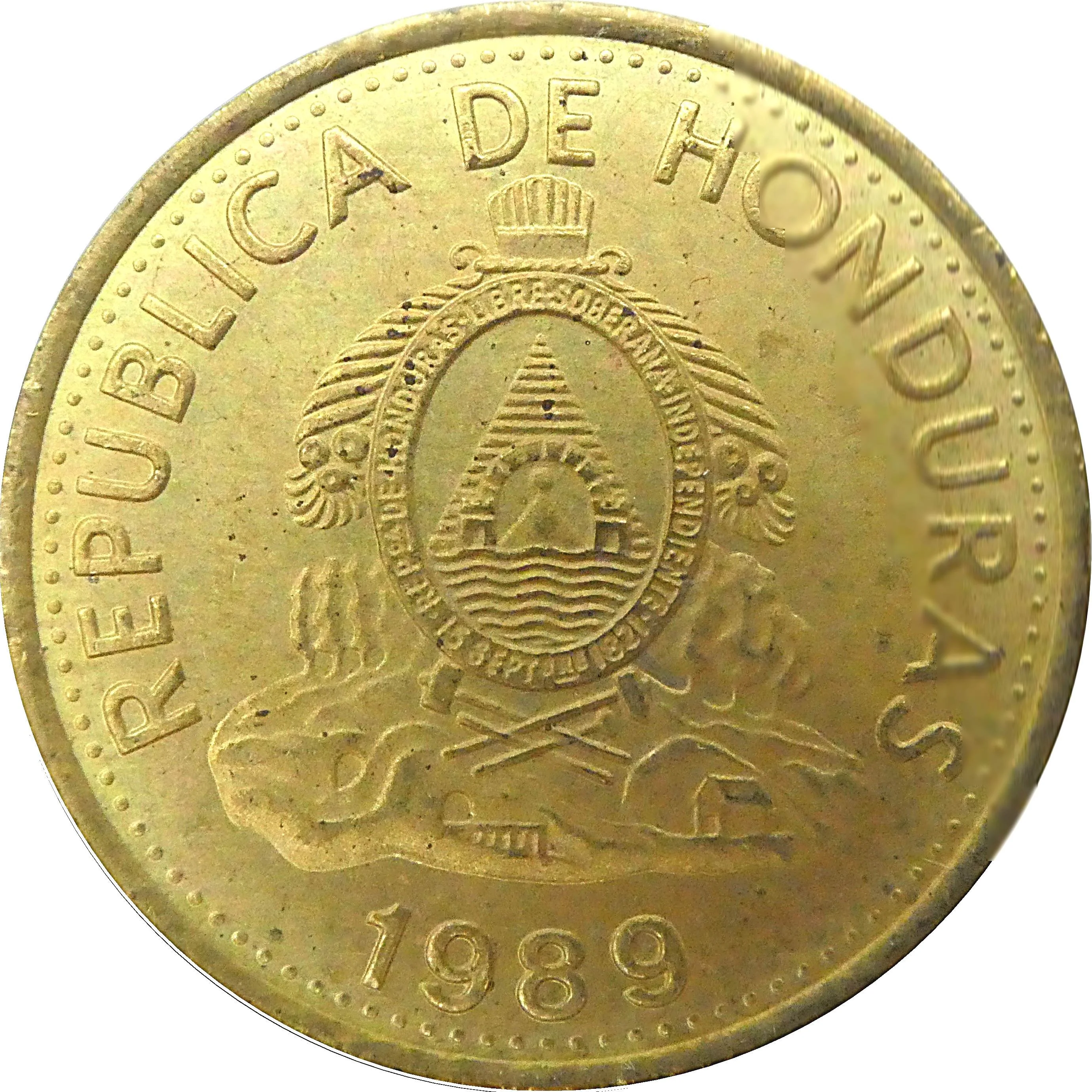
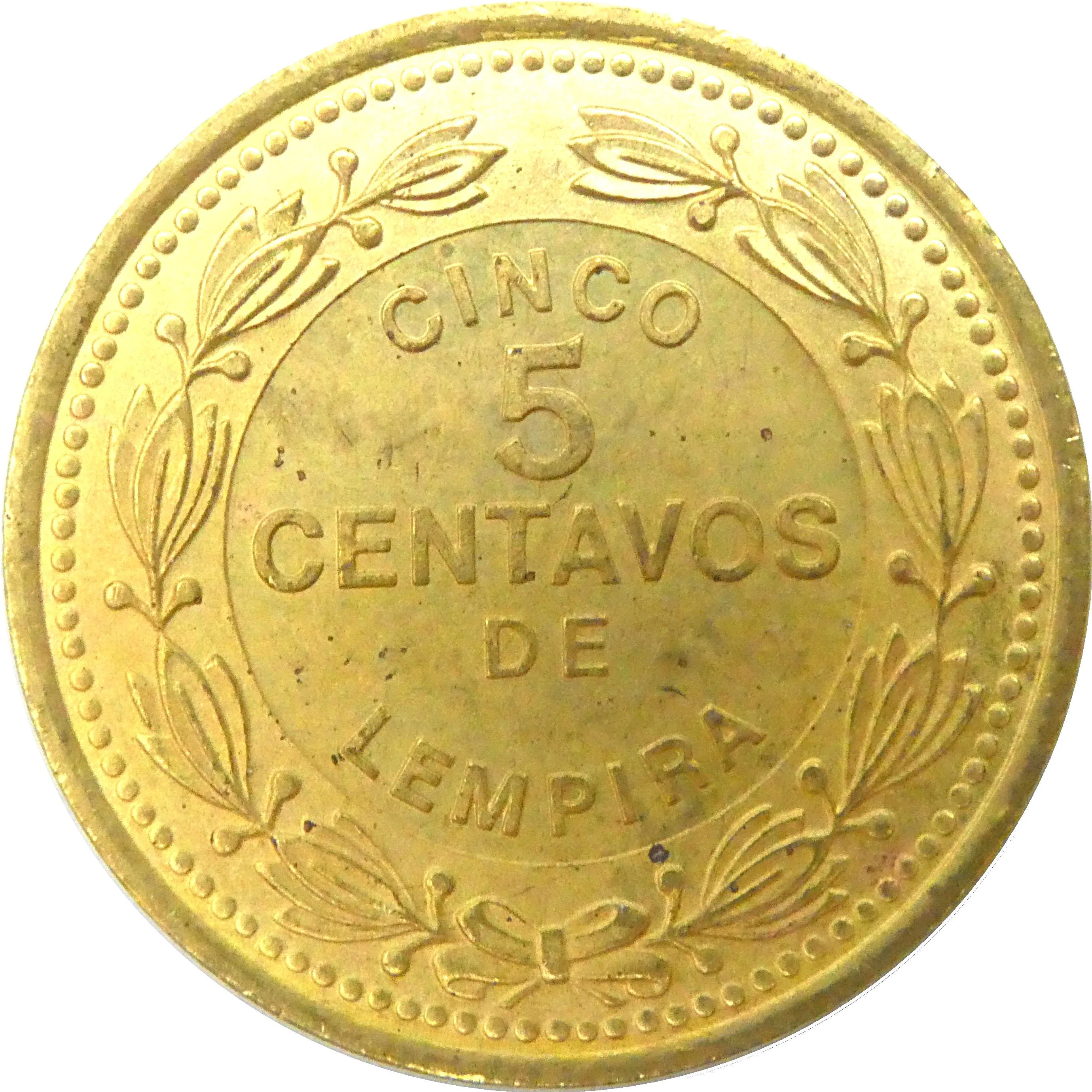
5 centavos – Honduras
Add to wishlist
Honduras
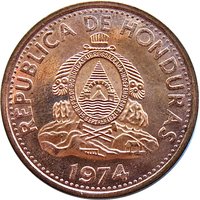
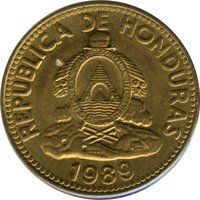
Obverse
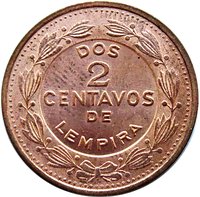
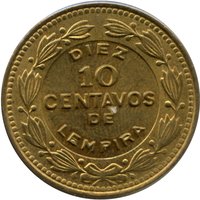
Reverse
Edge
Plain
Categories
| Symbols> Coat of Arms |
| Symbol> Wreath |
Mints
| Name | Mark |
|---|---|
| Royal Canadian Mint of Winnipeg | — |
| Royal Mint | — |
| VDM Metals / Vereinigte Deutsche Metallwerke | — |
Mintings
| Year | Mint Mark | Mintage | Quality | Collection |
|---|---|---|---|---|
| 1975 | — | 20,000,000 | ||
| 1989 | — | 20,000,000 |
Historical background
In 1975, Honduras operated under a fixed exchange rate system, with its currency, the lempira, pegged to the United States dollar at a rate of 2 lempiras = 1 USD. This peg, established in the post-World War II Bretton Woods era, provided a degree of monetary stability and predictability for international trade, which was crucial for an economy heavily dependent on agricultural exports like bananas, coffee, and sugar. The system was managed by the Central Bank of Honduras (Banco Central de Honduras), which maintained the peg through direct intervention in the foreign exchange market, using its reserves of gold and foreign currency.
However, this stability existed against a backdrop of significant underlying economic strain. The country faced persistent trade deficits, low foreign exchange reserves, and rising external debt. The global oil price shocks of 1973 had severely increased import costs, putting pressure on the balance of payments. Furthermore, Honduras was still recovering from the economic disruption and devastation caused by Hurricane Fifi in September 1974, which had crippled key agricultural sectors and infrastructure, exacerbating fiscal pressures and reducing export earnings.
Consequently, while the official exchange rate remained fixed on paper, 1975 represented a period of growing vulnerability for the Honduran lempira. The pressures from external shocks, natural disaster recovery, and structural trade imbalances were accumulating, setting the stage for future monetary challenges. The fixed peg, though still intact, was increasingly maintained through restrictive measures and was becoming difficult to defend, foreshadowing the economic adjustments and devaluations that would follow in the coming decades as the country grappled with sustaining its currency regime.
However, this stability existed against a backdrop of significant underlying economic strain. The country faced persistent trade deficits, low foreign exchange reserves, and rising external debt. The global oil price shocks of 1973 had severely increased import costs, putting pressure on the balance of payments. Furthermore, Honduras was still recovering from the economic disruption and devastation caused by Hurricane Fifi in September 1974, which had crippled key agricultural sectors and infrastructure, exacerbating fiscal pressures and reducing export earnings.
Consequently, while the official exchange rate remained fixed on paper, 1975 represented a period of growing vulnerability for the Honduran lempira. The pressures from external shocks, natural disaster recovery, and structural trade imbalances were accumulating, setting the stage for future monetary challenges. The fixed peg, though still intact, was increasingly maintained through restrictive measures and was becoming difficult to defend, foreshadowing the economic adjustments and devaluations that would follow in the coming decades as the country grappled with sustaining its currency regime.
🌱 Very Common