

2 Euro (National Ballet in Finland) – Finland
Circulating commemorative coins
Commemoration: 100 Years of National Ballet in Finland
Finland
Obverse
Description:
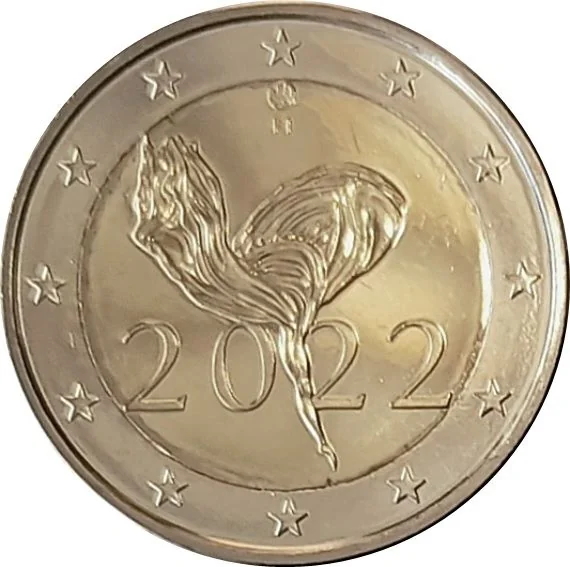
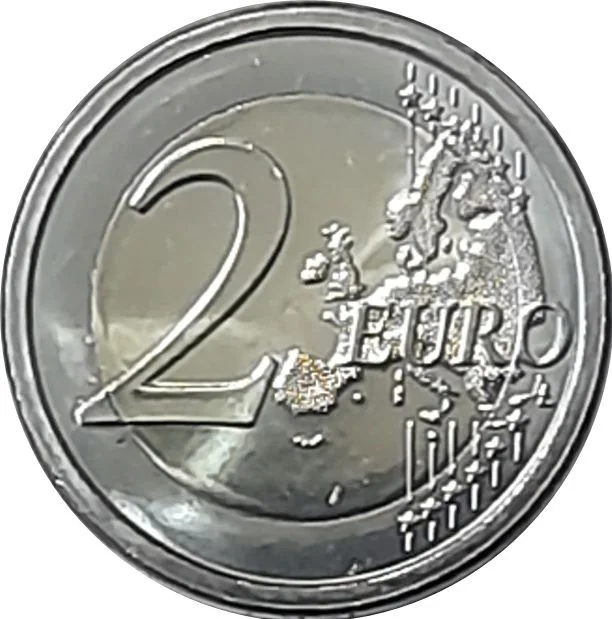
The design shows a dancer in free, powerful motion, draped in a light fabric that highlights the fluid pose. It includes the year ‘2022’, the country code ‘FI’, and the mintmark. The outer ring features the 12 stars of the European flag.
Inscription:
FI
2022
2022
Script: Latin
Designer: Rosita Kivinen
Reverse
Mints
| Name | Mark |
|---|---|
| Mint of Finland | (FI) |
Mintings
| Year | Mint Mark | Mintage | Quality | Collection |
|---|---|---|---|---|
| 2022 | FI | 394,500 | ||
| 2022 | FI | 3,500 | BU | |
| 2022 | FI | 5,500 | Proof |
Historical background
In 2022, Finland, as a member of the Eurozone, shared its currency situation with 18 other nations using the euro. The year was dominated by the European Central Bank's (ECB) decisive shift in monetary policy in response to soaring inflation, which reached a record high of 10% in the Eurozone by year's end. For Finnish households and businesses, this meant a rapid rise in the cost of living and borrowing costs, as the ECB ended its era of negative interest rates and began a series of aggressive rate hikes to combat inflation, directly impacting mortgages and loans.
The war in Ukraine, which began in February 2022, had a profound and specific impact on Finland's economic landscape. While the euro itself fluctuated against major currencies like the US dollar, Finland faced acute energy price shocks and supply chain disruptions due to its historical reliance on Russian imports. This external shock exacerbated inflationary pressures within the country, leading to government interventions such as temporary fuel price cuts and increased social benefits to shield consumers, all while operating within the constraints of the common monetary policy set by the ECB.
Furthermore, 2022 was a historic year for Finland's currency framework due to its pivotal decision to apply for NATO membership in May. This geopolitical shift, while not directly altering the day-to-day use of the euro, significantly influenced investor confidence and economic forecasts. The move reduced long-standing perceived risks associated with Russia, potentially strengthening Finland's economic position within the Eurozone by fostering greater stability and attracting investment, even amidst the broader European energy and inflation crisis.
The war in Ukraine, which began in February 2022, had a profound and specific impact on Finland's economic landscape. While the euro itself fluctuated against major currencies like the US dollar, Finland faced acute energy price shocks and supply chain disruptions due to its historical reliance on Russian imports. This external shock exacerbated inflationary pressures within the country, leading to government interventions such as temporary fuel price cuts and increased social benefits to shield consumers, all while operating within the constraints of the common monetary policy set by the ECB.
Furthermore, 2022 was a historic year for Finland's currency framework due to its pivotal decision to apply for NATO membership in May. This geopolitical shift, while not directly altering the day-to-day use of the euro, significantly influenced investor confidence and economic forecasts. The move reduced long-standing perceived risks associated with Russia, potentially strengthening Finland's economic position within the Eurozone by fostering greater stability and attracting investment, even amidst the broader European energy and inflation crisis.
Series: Finland 2 euro commemoratives
🌱 Common