

100 lire – San Marino
Add to wishlist
Circulating commemorative coins
Commemoration: Citizen's right to health
Series: Social Achievements
San Marino
Context
Year: 1982
Issuer: San Marino
Period:
(since 301)
Currency:
(1864—2001)
Demonetization: 1 March 2002
Total mintage: 100,000
Material
Diameter: 27.8 mm
Weight: 8 g
Shape: Round
Composition: Stainless steel
Technique: Milled
Alignment: Coin alignment
flip
References
KM: #
Numista: #13672
Value
Exchange value: 100 SML
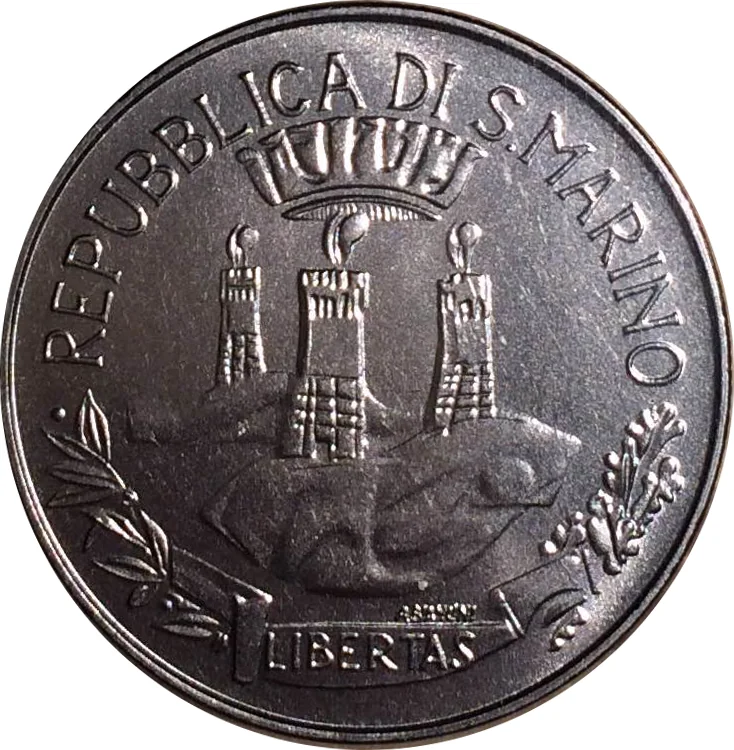
Obverse
Description:
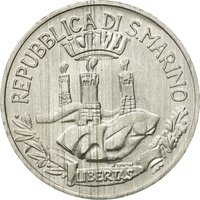
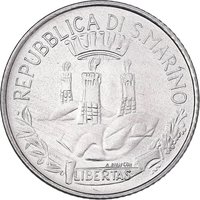
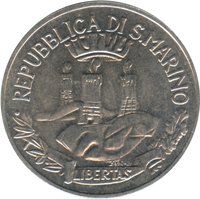
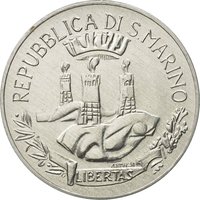
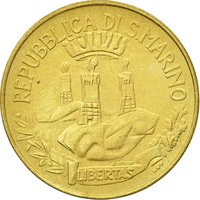
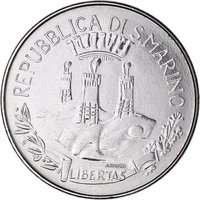
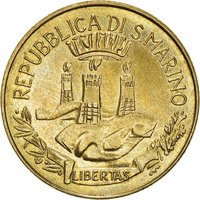
Crowned San Marino arms with wreath below.
Inscription:
REPUBBLICA DI SAN MARINO
LIBERTAS
LIBERTAS
Translation:
Liberty Republic of San Marino
Script: Latin
Engraver: Angelo Biancini
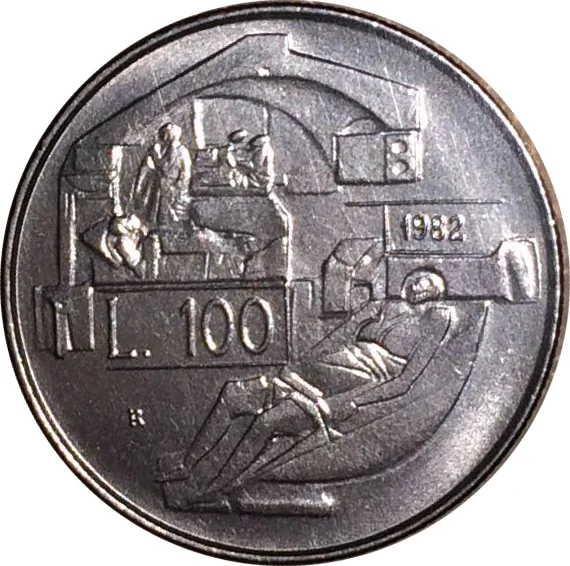
Reverse
Description:
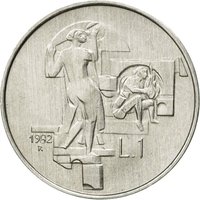
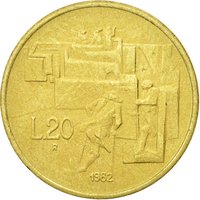
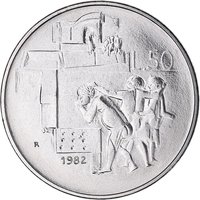
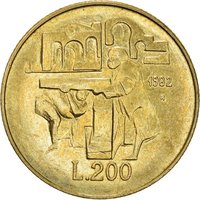
Bedridden patients with a standing nurse.
Inscription:
L 100
1982
1982
Translation:
Lire 100
1982
1982
Script: Latin
Language: Italian
Engraver: Angelo Biancini
Edge
Reeded
Mints
| Name | Mark |
|---|---|
| Rome | R |
Mintings
| Year | Mint Mark | Mintage | Quality | Collection |
|---|---|---|---|---|
| 1982 | R | 100,000 |
Historical background
In 1982, San Marino's currency situation was fundamentally defined by its close economic and monetary integration with Italy, governed by a series of bilateral treaties. The most important was the 1939 Agreement, which established the Italian Lira as legal tender within the republic and granted San Marino limited rights to mint its own coinage. These Sammarinese coins, denominated in lire, were issued in small, commemorative quantities and circulated alongside Italian currency, but the nation had no authority to print banknotes or conduct independent monetary policy. Its financial system was effectively an extension of Italy's, with the Bank of Italy serving as the de facto central bank for the microstate.
The early 1980s presented significant economic challenges within this framework. Italy itself was grappling with high inflation, currency instability, and the impacts of the European Monetary System (EMS), which it had joined in 1979. For San Marino, this meant imported inflationary pressure and economic vulnerability, as its fortunes were directly tied to the lira's performance. Furthermore, the republic's traditional economic pillars—tourism, postage stamps, and small-scale agriculture—were insufficient to generate substantial revenue, leading to a reliance on Italian budgetary contributions as stipulated in a 1953 Convention.
Consequently, 1982 was a year of operating within strict monetary constraints while laying the groundwork for future change. Discussions about modernizing the decades-old treaties with Italy were ongoing, driven by a Sammarinese desire for greater fiscal autonomy and a larger share of revenue from the circulation of its coins. This period set the stage for the more substantive negotiations later in the decade, which would eventually lead to the 1991 Monetary Agreement with Italy and, ultimately, San Marino's adoption of the Euro in partnership with the European Union.
The early 1980s presented significant economic challenges within this framework. Italy itself was grappling with high inflation, currency instability, and the impacts of the European Monetary System (EMS), which it had joined in 1979. For San Marino, this meant imported inflationary pressure and economic vulnerability, as its fortunes were directly tied to the lira's performance. Furthermore, the republic's traditional economic pillars—tourism, postage stamps, and small-scale agriculture—were insufficient to generate substantial revenue, leading to a reliance on Italian budgetary contributions as stipulated in a 1953 Convention.
Consequently, 1982 was a year of operating within strict monetary constraints while laying the groundwork for future change. Discussions about modernizing the decades-old treaties with Italy were ongoing, driven by a Sammarinese desire for greater fiscal autonomy and a larger share of revenue from the circulation of its coins. This period set the stage for the more substantive negotiations later in the decade, which would eventually lead to the 1991 Monetary Agreement with Italy and, ultimately, San Marino's adoption of the Euro in partnership with the European Union.
Series: Social Achievements
🌱 Common