

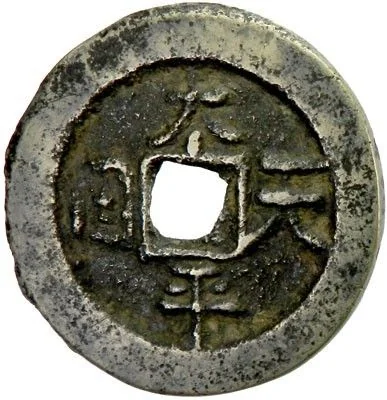
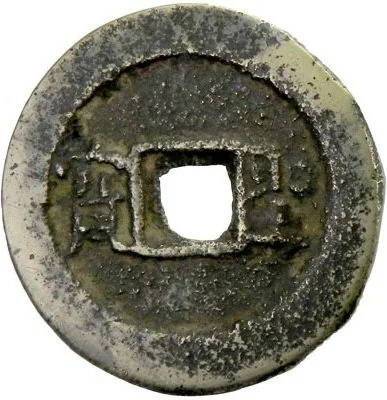
10 Cash – Taiping Heavenly Kingdom
China
Context
Years: 1856–1860
Country: China 
Issuer: Taiping Heavenly Kingdom
Ruler: Hong Xiuquan
Currency:
(1853—1864)
Demonetized: Yes
Material
Diameter: 38 mm
Weight: 15.03 g
Shape: Round with a square hole
Composition: Brass
Magnetic: No
Technique: Cast
Alignment: Medal alignment
flip
References
Numista: #318107
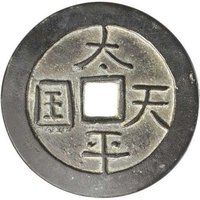
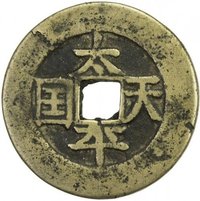
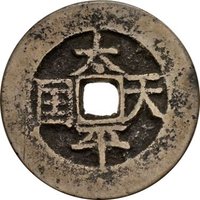
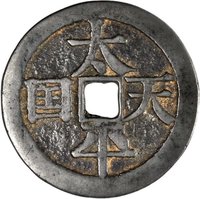
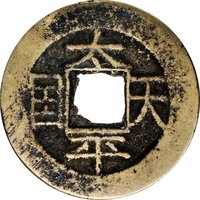
Obverse
Description:
Four characters, read top to bottom, right to left.
Inscription:
太
國 天
平
國 天
平
Translation:
Grand
State Heavenly
Peace
State Heavenly
Peace
Scripts: Chinese (traditional, regular script)
Language: Classical Chinese
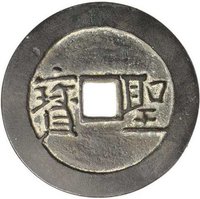
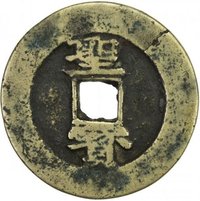
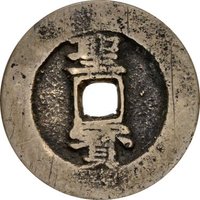
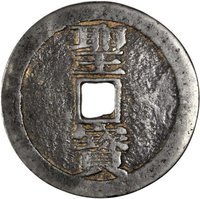
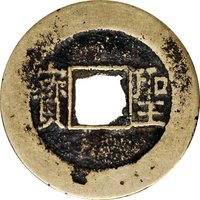
Reverse
Description:
Two Chinese characters, read right to left.
Inscription:
寶聖
Translation:
Treasure of the Sage
Scripts: Chinese (traditional, regular script)
Language: Classical Chinese
Edge
Plain
Mintings
| Year | Mint Mark | Mintage | Quality | Collection |
|---|---|---|---|---|
| — | — | — |
Historical background
By 1856, the Taiping Heavenly Kingdom, having established its capital at Nanjing in 1853, faced severe and escalating monetary challenges. The rebel state, which controlled key areas of the wealthy Yangtze River basin, sought to completely overturn the Qing financial system as part of its radical socio-religious revolution. It abolished the use of Qing coinage and introduced its own currency system, minting distinctive copper coins (known as "Holy Treasure" coins) and issuing paper notes denominated in silver taels. This was a bold assertion of sovereignty and an attempt to fund its massive military and administrative apparatus.
However, the currency situation was one of profound instability and crisis. The Taiping mints, located in Nanjing and other cities, struggled with inconsistent quality and supply of metal, leading to coins of varying weight and purity that eroded public trust. More critically, their paper money, which was decreed as legal tender for all transactions, suffered from catastrophic hyperinflation. The government, lacking substantial silver reserves and under immense financial pressure from the ongoing war, resorted to the unrestrained printing of notes to cover expenses, divorcing the currency from any tangible value.
Consequently, by 1856, the Taiping monetary system was failing. In the markets, both within and outside their territory, people increasingly rejected the devalued paper notes and preferred reliable silver or even old Qing copper cash, forcing the Taiping authorities to tacitly accept their use. This currency collapse severely undermined the Taiping economy, crippled supply lines, and fueled internal discontent, contributing to the weakening of the regime just as it was about to be shattered by the devastating "Heavenly Capital Incident"—a bloody internal power struggle later in 1856 that would cripple the rebellion from within.
However, the currency situation was one of profound instability and crisis. The Taiping mints, located in Nanjing and other cities, struggled with inconsistent quality and supply of metal, leading to coins of varying weight and purity that eroded public trust. More critically, their paper money, which was decreed as legal tender for all transactions, suffered from catastrophic hyperinflation. The government, lacking substantial silver reserves and under immense financial pressure from the ongoing war, resorted to the unrestrained printing of notes to cover expenses, divorcing the currency from any tangible value.
Consequently, by 1856, the Taiping monetary system was failing. In the markets, both within and outside their territory, people increasingly rejected the devalued paper notes and preferred reliable silver or even old Qing copper cash, forcing the Taiping authorities to tacitly accept their use. This currency collapse severely undermined the Taiping economy, crippled supply lines, and fueled internal discontent, contributing to the weakening of the regime just as it was about to be shattered by the devastating "Heavenly Capital Incident"—a bloody internal power struggle later in 1856 that would cripple the rebellion from within.

✨ Legendary