

1 Cash – South Xinjiang
China
Context
Years: 1878–1883
Country: China 
Issuer: South Xinjiang
Ruler: Qianlong
Currency:
(1759—1909)
Demonetized: Yes
Material
Diameter: 25 mm
Weight: 3.87 g
Shape: Round with a square hole
Composition: Copper
Magnetic: No
Technique: Cast
Alignment: Medal alignment
flip
References
Numista: #317982
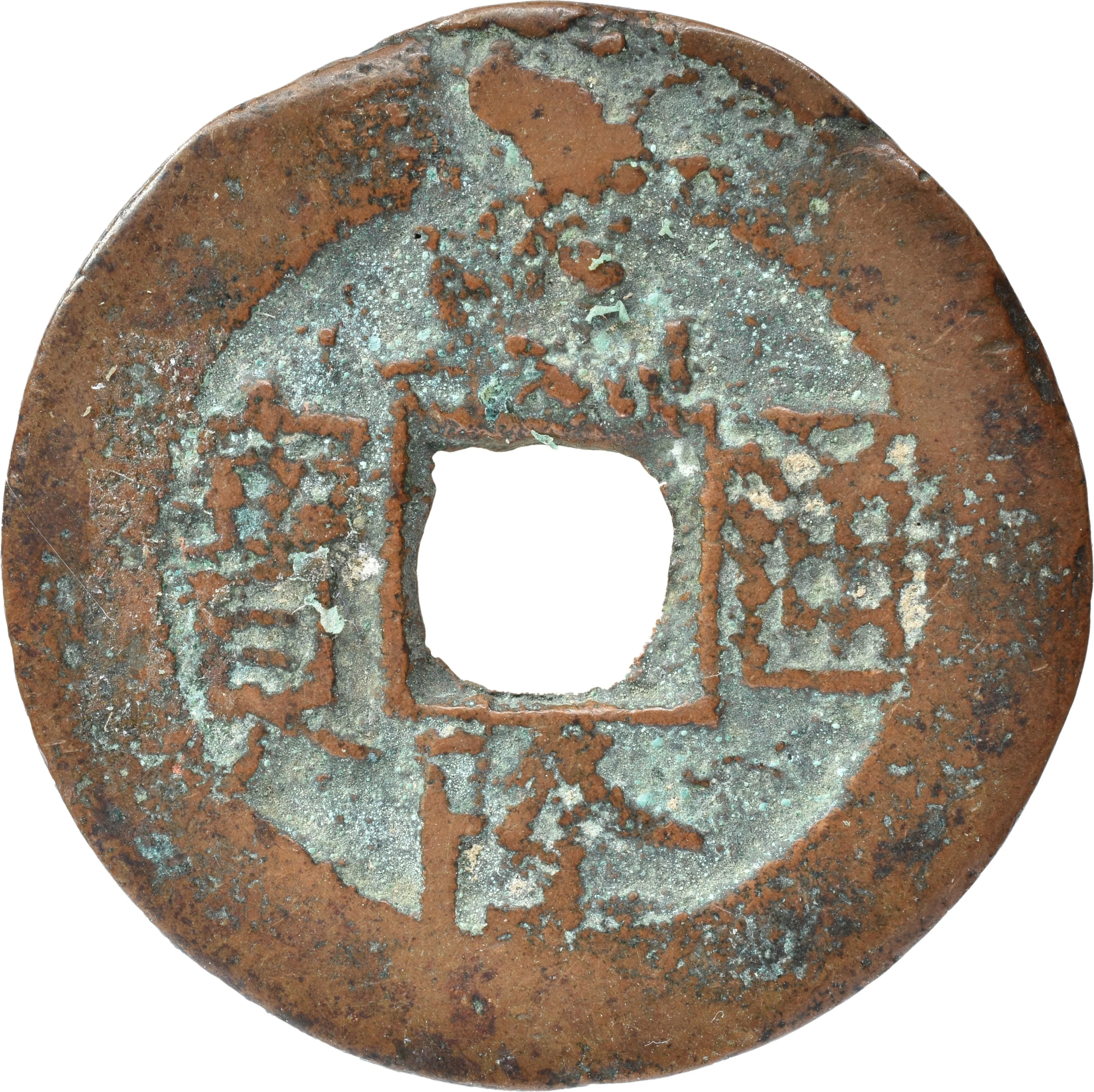
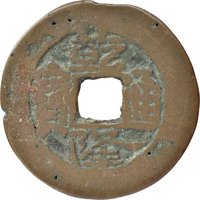
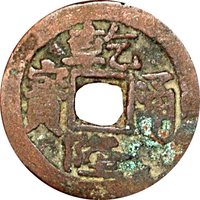
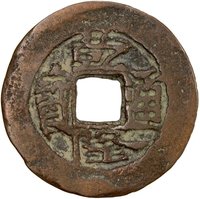
Obverse
Description:
Four Chinese characters read vertically, right to left.
Inscription:
乾
寶 通
隆
寶 通
隆
Translation:
Qianlong
Tongbao
Tongbao
Scripts: Chinese (traditional, regular script)
Language: Chinese
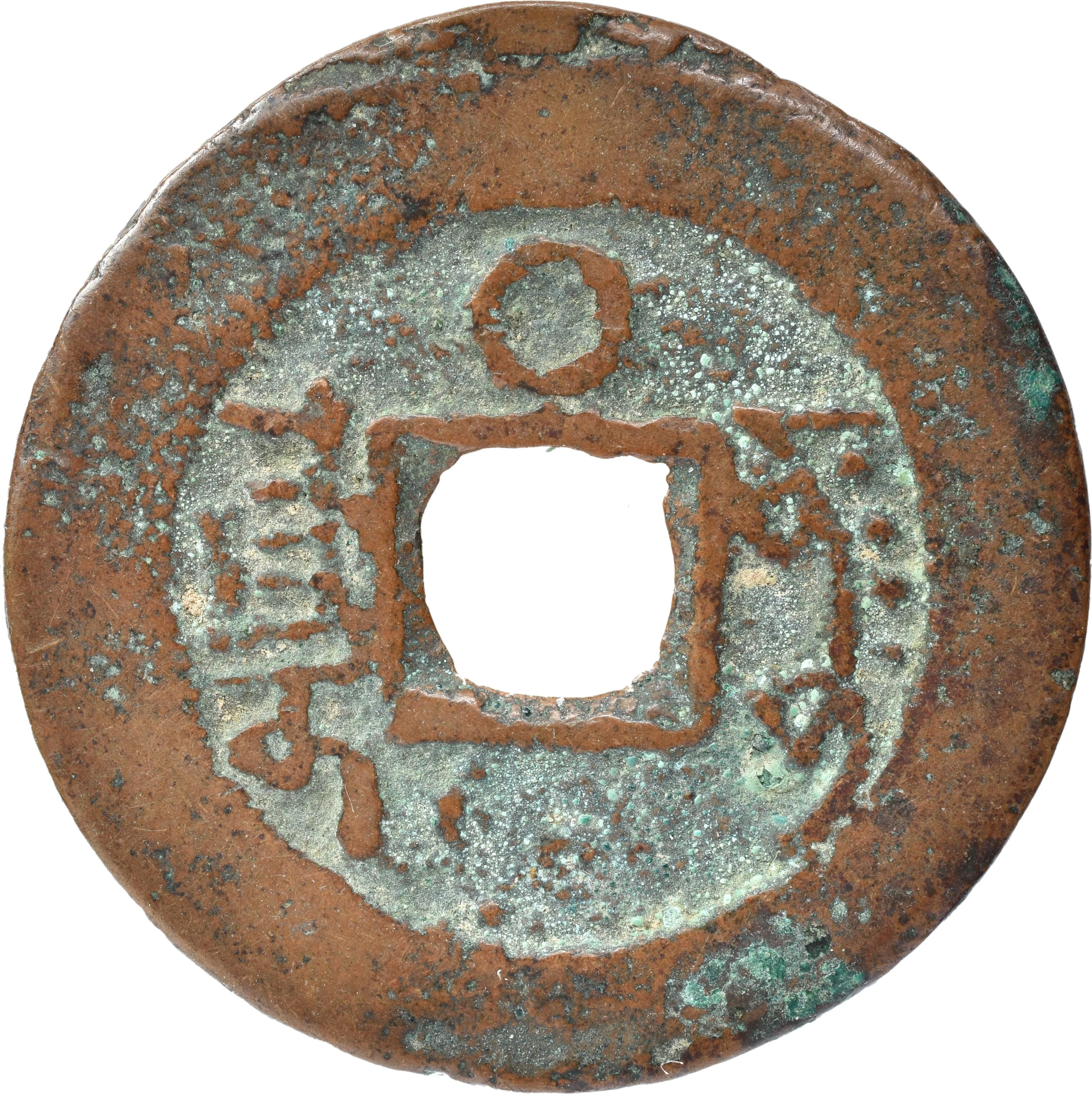
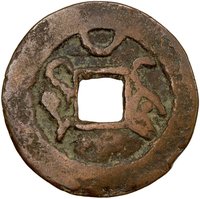
Reverse
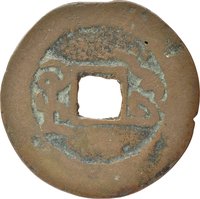
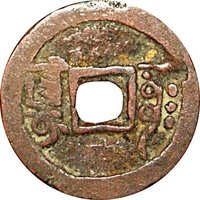
Description:
Uyghur right, Manchu left, each with a circle above.
Inscription:
ᠠᡴᠰᡠ اقسو
Translation:
Silver coin
Scripts: Mongolian / Manchu, Old Uyghur
Edge
Plain
Mintings
| Year | Mint Mark | Mintage | Quality | Collection |
|---|---|---|---|---|
| — | — | — |
Historical background
In the wake of the Qing reconquest of the Tarim Basin from the Yakub Beg-led Kokand Khanate in 1878, the currency situation in South Xinjiang (Altishahr) was one of profound disorder and fragmentation. The region had been severed from central Qing monetary systems for over a decade, during which a hybrid and depreciated currency regime had taken hold. Yakub Beg’s administration had issued its own crude, low-silver tanga coins, while older Qing pul copper coins and even barter remained in circulation, creating a multi-layered and unstable monetary environment that severely hampered trade and reconstruction.
The immediate challenge for the victorious Qing general, Zuo Zongtang, was to reassert monetary sovereignty and economic stability. He recognized that simply reintroducing standard Qing coinage was insufficient, as the local population was accustomed to a silver-based standard. His solution, implemented with the support of the imperial court, was the creation of a distinctive new silver coin—the "Qianlong" coin. Struck in Kashgar using captured enemy cannons, these coins bore the reign name of the Qianlong Emperor (who had originally conquered the region a century prior), a clever symbolic move to re-link the territory to Qing legitimacy. They were intentionally minted with a high, reliable silver content to build trust and drive the debased Yakub Beg currency out of circulation.
This successful currency reform was a cornerstone of the broader pacification and integration of South Xinjiang. The new silver coins facilitated tax collection, soldier pay, and the revival of Silk Road commerce, while clearly signaling the restoration of Qing control. The monetary stability they provided was crucial for Zuo Zongtang’s subsequent argument to the throne for the establishment of Xinjiang as a formal province in 1884, transforming it from a frontier territory into an integral administrative unit of the Qing empire. Thus, the currency situation of 1878 marked a critical pivot from chaos to a state-managed system aimed at permanent consolidation.
The immediate challenge for the victorious Qing general, Zuo Zongtang, was to reassert monetary sovereignty and economic stability. He recognized that simply reintroducing standard Qing coinage was insufficient, as the local population was accustomed to a silver-based standard. His solution, implemented with the support of the imperial court, was the creation of a distinctive new silver coin—the "Qianlong" coin. Struck in Kashgar using captured enemy cannons, these coins bore the reign name of the Qianlong Emperor (who had originally conquered the region a century prior), a clever symbolic move to re-link the territory to Qing legitimacy. They were intentionally minted with a high, reliable silver content to build trust and drive the debased Yakub Beg currency out of circulation.
This successful currency reform was a cornerstone of the broader pacification and integration of South Xinjiang. The new silver coins facilitated tax collection, soldier pay, and the revival of Silk Road commerce, while clearly signaling the restoration of Qing control. The monetary stability they provided was crucial for Zuo Zongtang’s subsequent argument to the throne for the establishment of Xinjiang as a formal province in 1884, transforming it from a frontier territory into an integral administrative unit of the Qing empire. Thus, the currency situation of 1878 marked a critical pivot from chaos to a state-managed system aimed at permanent consolidation.

✨ Legendary