

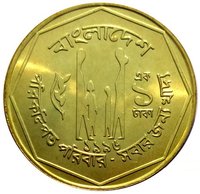
1 taka – Bangladesh
Add to wishlist
Circulating commemorative coins
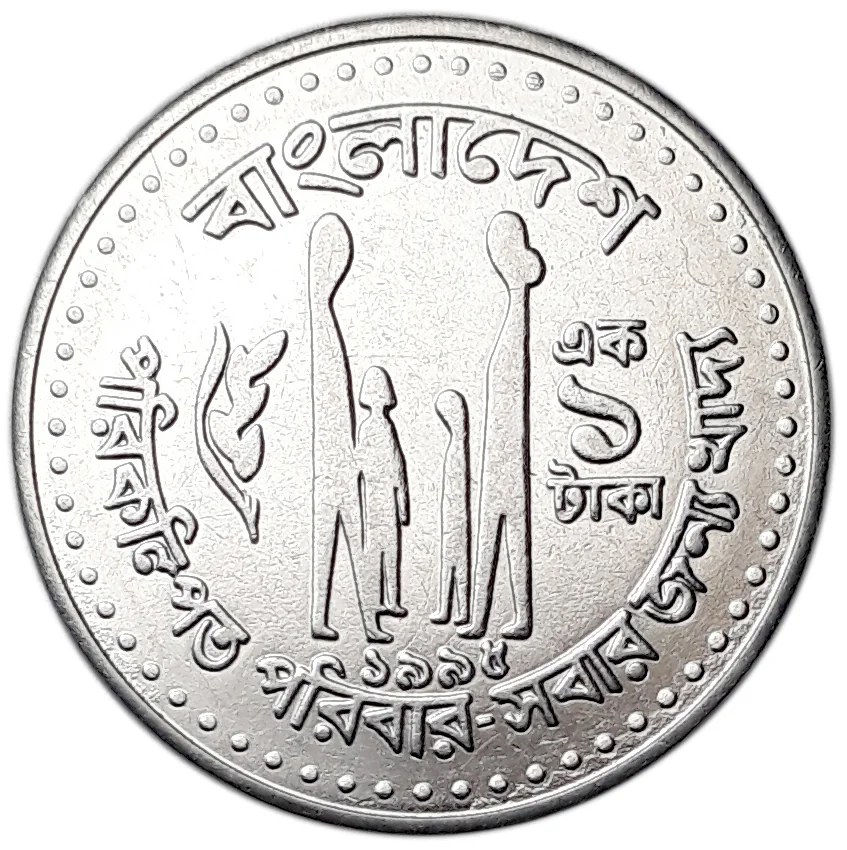
Commemoration: FAO - family planning
Bangladesh
Context
Material
References
KM: #
Numista: #3165
Value
Exchange value: 1 BDT
Obverse
Description:
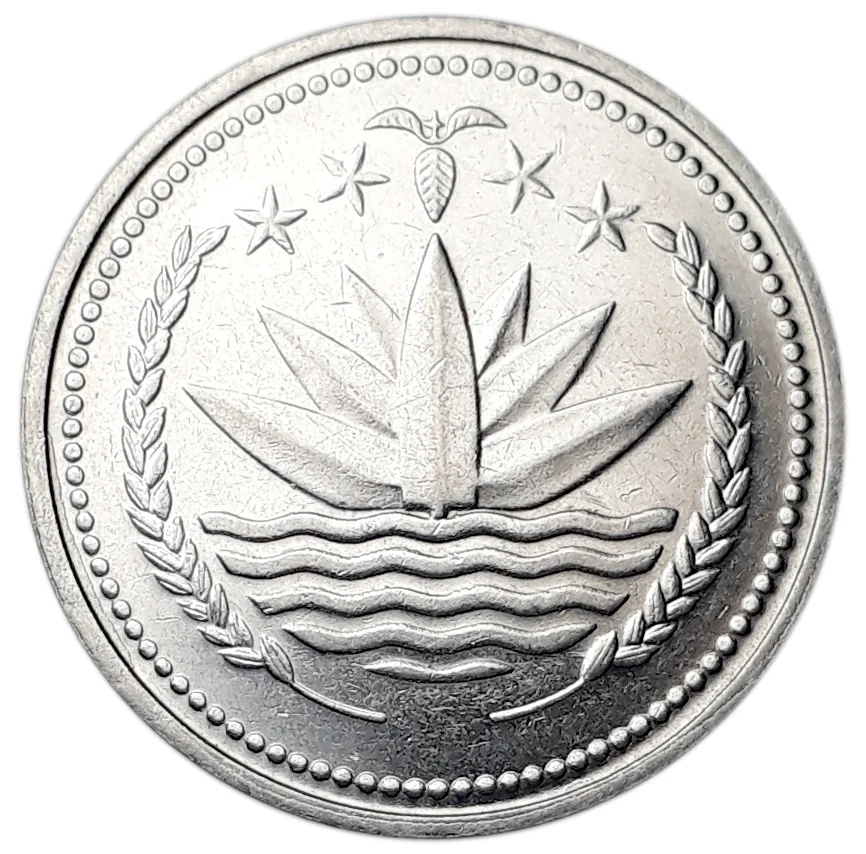
National emblem of Bangladesh: a water lily between rice sheaves, topped by tea leaves and four stars.
Reverse
Edge
Reeded
Categories
| Symbols> Coat of Arms |
| Organization> FAO |
| Plants> Flower |
Mintings
| Year | Mint Mark | Mintage | Quality | Collection |
|---|---|---|---|---|
| 1992 | — | — | ||
| 1993 | — | — | ||
| 1995 | — | — |
Historical background
In 1992, Bangladesh's currency situation was characterized by a managed floating exchange rate regime, a significant shift from the earlier fixed-rate system. The country had undertaken a major structural adjustment program under the guidance of the International Monetary Fund (IMF) and the World Bank, which included the crucial step of making the Taka convertible on the current account in the previous year, 1991. This move was aimed at liberalizing the economy, boosting exports, and attracting foreign investment by moving towards a more market-determined exchange rate, though the Bangladesh Bank maintained active management to prevent excessive volatility.
The economy was still grappling with the aftermath of the devastating 1991 cyclone and the political transition to parliamentary democracy, which put pressure on the Taka. Inflation remained a persistent concern, eroding purchasing power and complicating monetary policy. The central bank's focus was on stabilizing the currency to control import costs—particularly for essential goods and machinery—while trying to foster a competitive exchange rate for the ready-made garment (RMG) sector, which was rapidly becoming the cornerstone of export earnings and economic growth.
Overall, the currency landscape in 1992 was one of cautious transition and stabilization. The reforms of the early 1990s set the foundation for greater integration into the global economy, but the immediate focus was on maintaining macroeconomic stability. The managed float allowed for some flexibility, but the Taka's value was closely monitored to balance the objectives of controlling inflation, supporting a burgeoning export sector, and managing the country's limited foreign exchange reserves in a challenging post-disaster environment.
The economy was still grappling with the aftermath of the devastating 1991 cyclone and the political transition to parliamentary democracy, which put pressure on the Taka. Inflation remained a persistent concern, eroding purchasing power and complicating monetary policy. The central bank's focus was on stabilizing the currency to control import costs—particularly for essential goods and machinery—while trying to foster a competitive exchange rate for the ready-made garment (RMG) sector, which was rapidly becoming the cornerstone of export earnings and economic growth.
Overall, the currency landscape in 1992 was one of cautious transition and stabilization. The reforms of the early 1990s set the foundation for greater integration into the global economy, but the immediate focus was on maintaining macroeconomic stability. The managed float allowed for some flexibility, but the Taka's value was closely monitored to balance the objectives of controlling inflation, supporting a burgeoning export sector, and managing the country's limited foreign exchange reserves in a challenging post-disaster environment.


🌱 Very Common