

¼ dollar – United States
Add to wishlist
United States
Context
Years: 1875–1891
Issuer: United States
Period:
(since 1776)
Currency:
(since 1785)
Subdivision: ¼ dollar = 25 Cents
Total mintage: 71,607,194
Material
References
KM: #
Numista: #316352
Value
Exchange value: ¼ USD = $0.25
Bullion value: $14.37
Obverse
Description:
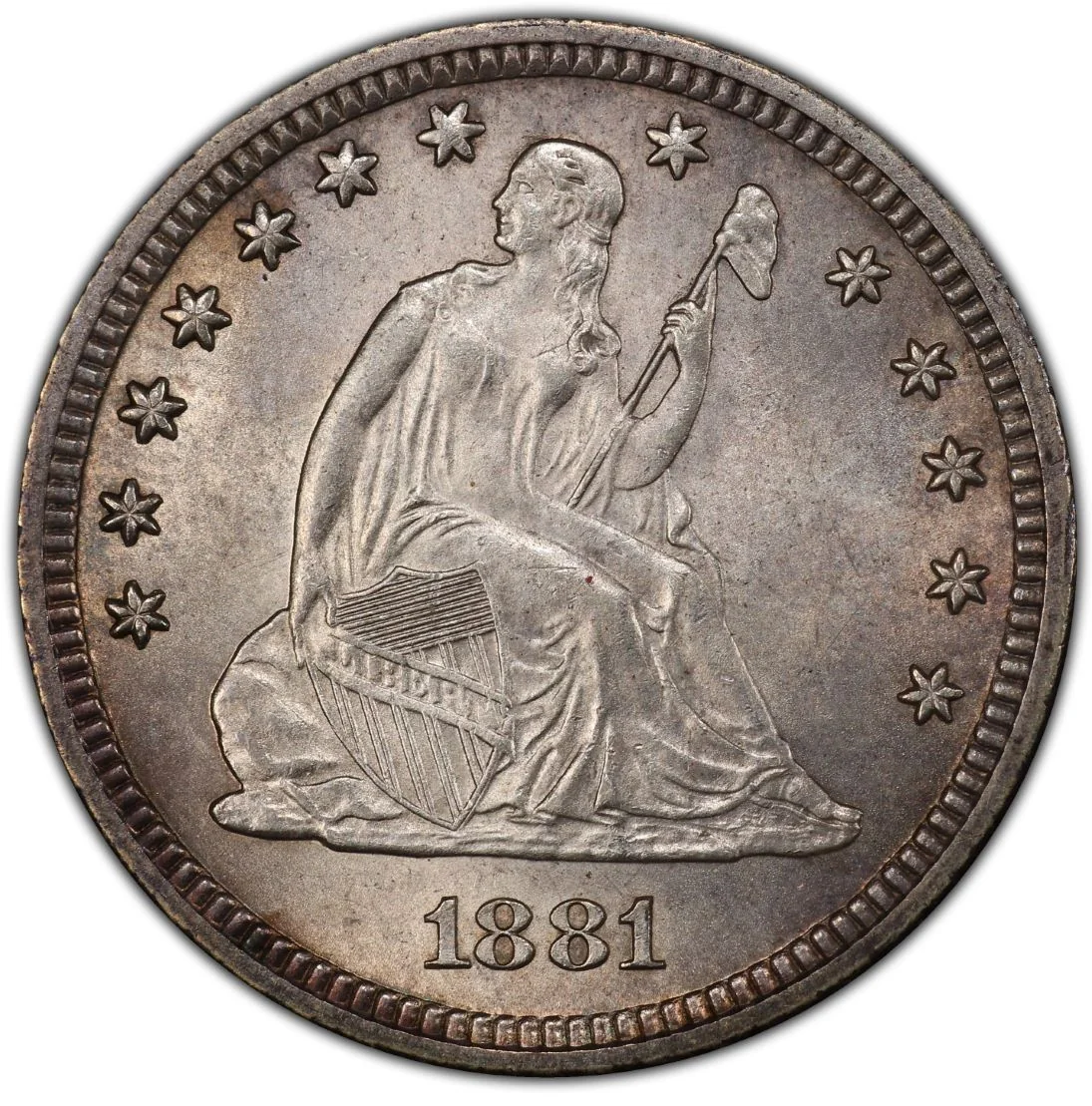
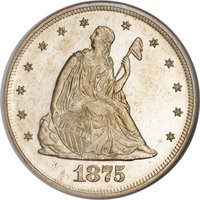
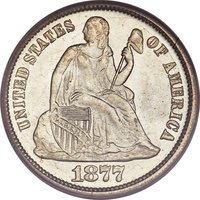
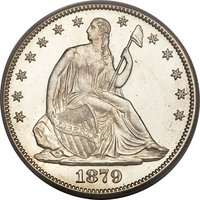
Seated Liberty facing right, holding cap on staff and shield, surrounded by 13 stars.
Inscription:
1881
Script: Latin
Engraver: Christian Gobrecht
Reverse
Description:
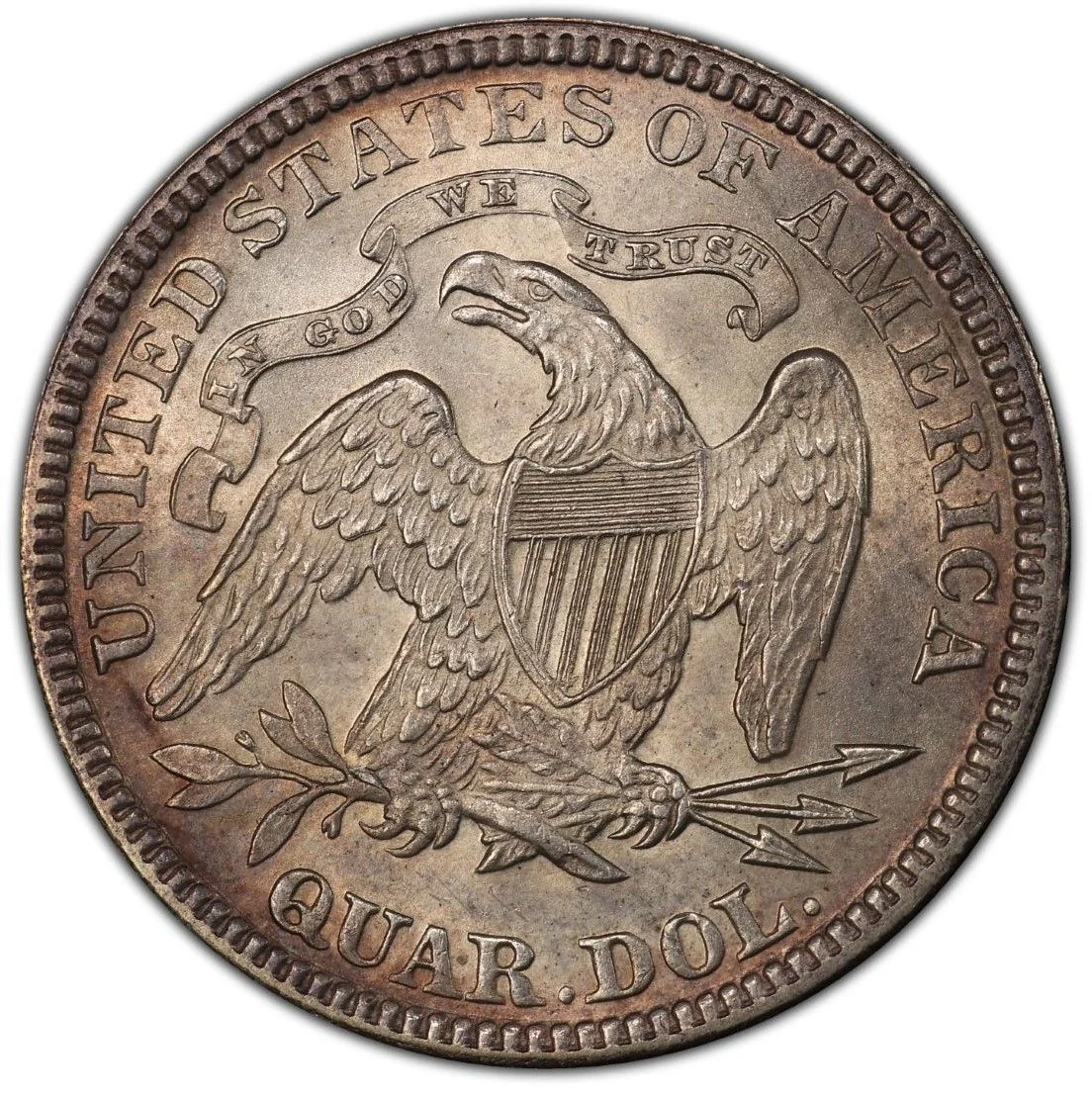
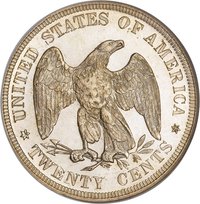
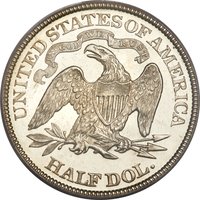
Eagle clutching arrows and an olive branch, with a motto banner above.
Inscription:
UNITED STATES OF AMERICA
IN GOD WE TRUST
QUAR. DOL.
IN GOD WE TRUST
QUAR. DOL.
Script: Latin
Engraver: Christian Gobrecht
Edge
Reeded
Categories
| Symbol> Phrygian cap |
| Object> Cold weapons |
| Animal> Bird> Eagle |
| Symbol> Allegory |
Mints
| Name | Mark |
|---|---|
| United States Mint of Philadelphia | — |
| United States Mint of Carson City | CC |
| United States Mint of New Orleans | O |
| United States Mint of San Francisco | S |
Mintings
| Year | Mint Mark | Mintage | Quality | Collection |
|---|---|---|---|---|
| 1875 | — | 4,292,800 | ||
| 1875 | — | 700 | Proof | |
| 1875 | CC | 140,000 | ||
| 1875 | S | 680,000 | ||
| 1876 | S | 8,596,000 | ||
| 1876 | — | 17,816,000 | ||
| 1876 | — | 1,150 | Proof | |
| 1876 | CC | 4,944,000 | ||
| 1877 | — | 10,911,200 | ||
| 1877 | — | 510 | Proof | |
| 1877 | CC | 4,192,000 | ||
| 1877 | S | 8,996,000 | ||
| 1878 | — | 2,260,000 | ||
| 1878 | — | 800 | Proof | |
| 1878 | CC | 996,000 | ||
| 1878 | S | 140,000 | ||
| 1879 | — | 13,600 | ||
| 1879 | — | 1,100 | Proof | |
| 1880 | — | 13,600 | ||
| 1880 | — | 1,355 | Proof | |
| 1881 | — | 12,000 | ||
| 1881 | — | 975 | Proof | |
| 1882 | — | 1,100 | Proof | |
| 1882 | — | 15,200 | ||
| 1883 | — | 1,039 | Proof | |
| 1883 | — | 14,400 | ||
| 1884 | — | 8,000 | ||
| 1884 | — | 875 | Proof | |
| 1885 | — | 14,530 | ||
| 1885 | — | 930 | Proof | |
| 1886 | — | 5,000 | ||
| 1886 | — | 886 | Proof | |
| 1887 | — | 710 | Proof | |
| 1887 | — | 10,000 | ||
| 1888 | S | 1,216,000 | ||
| 1888 | — | 10,001 | ||
| 1888 | — | 832 | Proof | |
| 1889 | — | 12,000 | ||
| 1889 | — | 711 | Proof | |
| 1890 | — | 80,000 | ||
| 1890 | — | 590 | Proof | |
| 1891 | — | 3,920,000 | ||
| 1891 | — | 600 | Proof | |
| 1891 | O | 68,000 | ||
| 1891 | S | 2,216,000 |
Historical background
In 1875, the United States stood at a pivotal moment in its monetary history, transitioning from the financial chaos of the Civil War toward a definitive gold standard. The wartime necessity had led to the issuance of "greenbacks"—fiat paper money not backed by gold—and the suspension of specie payments, creating a dual-currency system of depreciated paper and precious metal. This period, known as the "Contraction," was defined by intense political conflict between "hard money" advocates (creditors, industrialists, and Eastern bankers) who demanded a swift return to the gold standard to ensure stable, deflationary currency, and "soft money" proponents (debtors, farmers, and Western interests) who favored retaining or expanding greenbacks to create inflation and ease the repayment of loans.
The political landscape was dominated by the 1873 "Crime of '73," the controversial act that demonetized silver, ending the minting of standard silver dollars and effectively placing the nation on a de facto gold standard. This ignited the growing Silverite movement, which argued that the coining of silver would expand the money supply, assist indebted farmers, and reflect the nation's growing silver production. Thus, by 1875, the currency debate was a three-sided struggle: gold monometallists, silver remonetization forces, and proponents of fiat greenbacks.
Against this backdrop, the Specie Resumption Act of 1875 was the defining legislative achievement, passed by a Republican Congress committed to financial orthodoxy. It set January 1, 1879, as the date for the Treasury to resume redeeming greenbacks for gold at face value, thereby legally committing the nation to a de jure gold standard. The Act also provided for a gradual reduction of greenbacks in circulation, a clause that would later be repealed under political pressure. Consequently, 1875 marked the decisive turn toward gold, setting the stage for the bitter political battles over silver that would dominate the next two decades, culminating in the presidential campaigns of William Jennings Bryan.
The political landscape was dominated by the 1873 "Crime of '73," the controversial act that demonetized silver, ending the minting of standard silver dollars and effectively placing the nation on a de facto gold standard. This ignited the growing Silverite movement, which argued that the coining of silver would expand the money supply, assist indebted farmers, and reflect the nation's growing silver production. Thus, by 1875, the currency debate was a three-sided struggle: gold monometallists, silver remonetization forces, and proponents of fiat greenbacks.
Against this backdrop, the Specie Resumption Act of 1875 was the defining legislative achievement, passed by a Republican Congress committed to financial orthodoxy. It set January 1, 1879, as the date for the Treasury to resume redeeming greenbacks for gold at face value, thereby legally committing the nation to a de jure gold standard. The Act also provided for a gradual reduction of greenbacks in circulation, a clause that would later be repealed under political pressure. Consequently, 1875 marked the decisive turn toward gold, setting the stage for the bitter political battles over silver that would dominate the next two decades, culminating in the presidential campaigns of William Jennings Bryan.
🌱 Common