

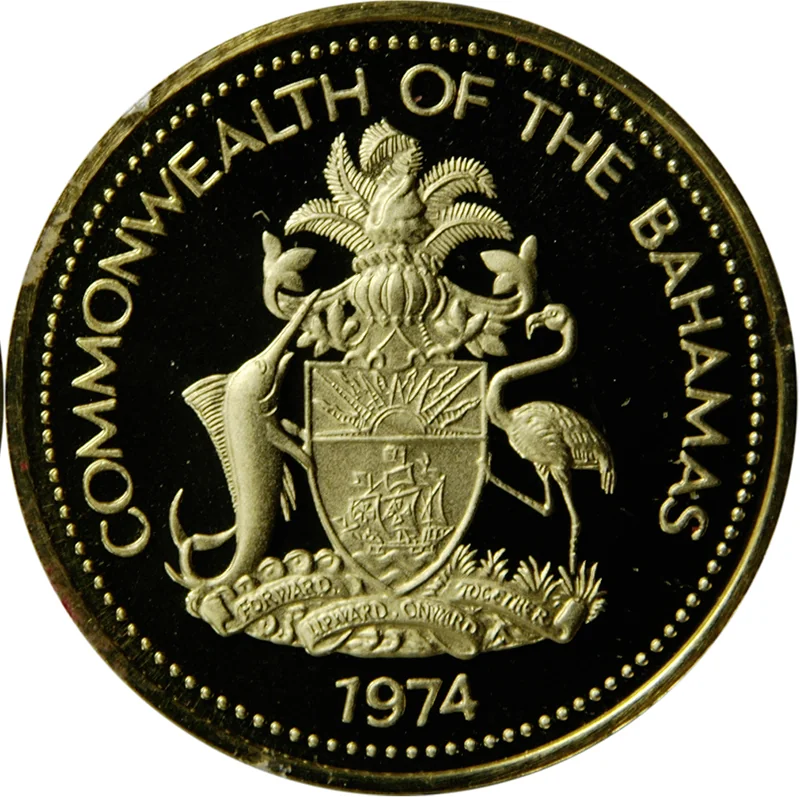
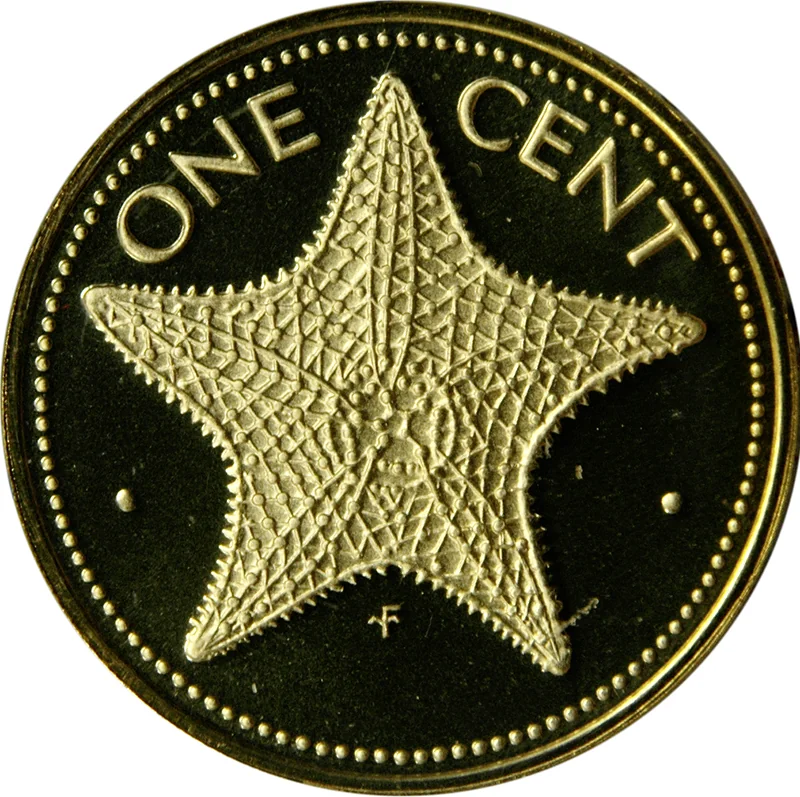
1 Cent – The Bahamas
Bahamas
Context
Years: 1974–1985
Country: Bahamas 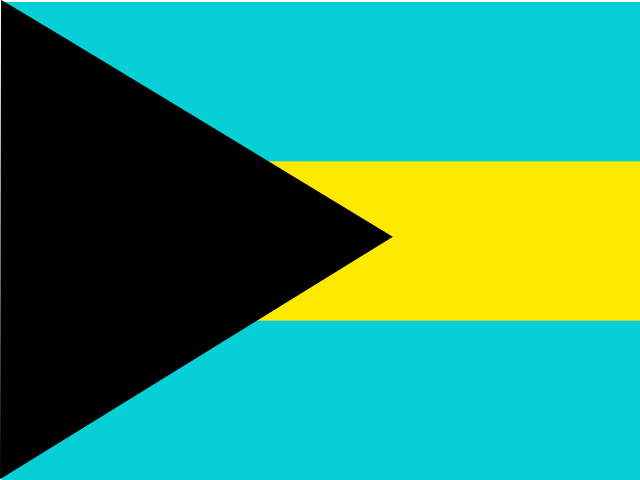
Issuer: The Bahamas
Ruler: Elizabeth II
Currency:
(since 1966)
Demonetization: 31 December 2020
Total mintage: 41,575,504
Material
Diameter: 19.05 mm
Weight: 3.16 g
Thickness: 1.4 mm
Shape: Round
Standard: Gold tenth ounce
Magnetic: No
Technique: Milled
Alignment: Medal alignment
flip
References
KM: #Click to copy to clipboard59
Numista: #3159
Value
Exchange value: 0.01 BSD
Obverse
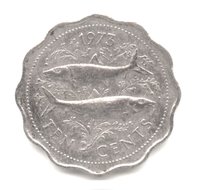
Reverse
Edge
Plain
Categories
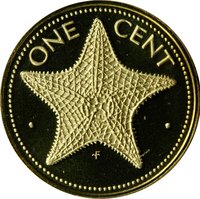
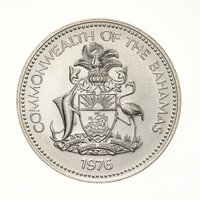
| Animal> Bird |
| Animal> Fish |
| Animal> Marine invertebrate |
| Symbol> Shell |
| Transportation> Watercraft |
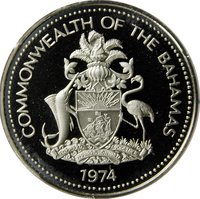
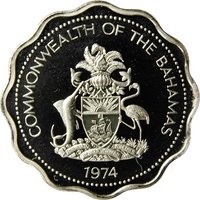
| Symbols> Coat of Arms |
Mints
| Name | Mark |
|---|---|
| Royal Mint | — |
| Franklin Mint | (FM) |
Mintings
| Year | Mint Mark | Mintage | Quality | Collection |
|---|---|---|---|---|
| 1974 | — | 11,000 | ||
| 1974 | FM | 71,000 | ||
| 1974 | FM | 93,776 | Proof | |
| 1975 | FM | 60,000 | Matte | |
| 1975 | FM | 29,095 | Proof | |
| 1975 | FM | 3,845 | ||
| 1976 | FM | 60,000 | Matte | |
| 1976 | FM | 22,570 | Proof | |
| 1976 | FM | 1,453 | ||
| 1977 | — | 3,000,000 | ||
| 1977 | FM | 60,000 | Matte | |
| 1977 | FM | 11,000 | Proof | |
| 1977 | FM | 713 | ||
| 1978 | FM | 60,000 | Matte | |
| 1978 | FM | 6,931 | Proof | |
| 1978 | FM | 767 | ||
| 1979 | — | 4,060,000 | ||
| 1979 | FM | 2,053 | Proof | |
| 1980 | — | 4,000,000 | ||
| 1980 | FM | 2,084 | Proof | |
| 1981 | FM | 1,980 | Proof | |
| 1981 | — | 5,000,000 | ||
| 1981 | FM | — | Matte | |
| 1982 | — | 5,000,000 | ||
| 1982 | FM | — | Matte | |
| 1982 | FM | 1,217 | Proof | |
| 1983 | — | 8,000,000 | ||
| 1983 | FM | 1,020 | Proof | |
| 1984 | — | — | ||
| 1984 | FM | 7,500 | Proof | |
| 1985 | FM | 7,500 | Proof | |
| 1985 | — | 12,000,000 |
Historical background
By 1974, The Bahamas was navigating a complex currency situation rooted in its recent independence from Britain in 1973. The nation continued to use the Bahamian dollar (BSD), which had been introduced in 1966 to replace the British pound sterling. Crucially, this new currency was pegged at par to the US dollar (USD), a strategic decision reflecting the country's deep economic ties to the United States, particularly through tourism and banking. This fixed exchange rate, maintained by the newly established Central Bank of The Bahamas, provided stability and confidence for the vital foreign investment sector.
However, the global economic environment of the early 1970s presented significant challenges. The collapse of the Bretton Woods system in 1971 and the subsequent shift to floating exchange rates for major world currencies created international monetary instability. For The Bahamas, this period tested the resilience of its USD peg. While the fixed rate was a cornerstone of policy, there was ongoing internal debate about monetary sovereignty and the benefits of a potential currency board system versus a fully active central bank capable of directing credit.
Ultimately, the year 1974 solidified the chosen path. The Central Bank of The Bahamas successfully defended the one-to-one peg, affirming its commitment to a stable, US-dollar-linked currency as a bedrock for the nation's post-independence economy. This stability was deemed essential for continuing to attract the foreign capital upon which the country's development model relied. The successful management through this turbulent global period entrenched the Bahamian dollar's fixed parity as a lasting feature of the nation's financial landscape.
However, the global economic environment of the early 1970s presented significant challenges. The collapse of the Bretton Woods system in 1971 and the subsequent shift to floating exchange rates for major world currencies created international monetary instability. For The Bahamas, this period tested the resilience of its USD peg. While the fixed rate was a cornerstone of policy, there was ongoing internal debate about monetary sovereignty and the benefits of a potential currency board system versus a fully active central bank capable of directing credit.
Ultimately, the year 1974 solidified the chosen path. The Central Bank of The Bahamas successfully defended the one-to-one peg, affirming its commitment to a stable, US-dollar-linked currency as a bedrock for the nation's post-independence economy. This stability was deemed essential for continuing to attract the foreign capital upon which the country's development model relied. The successful management through this turbulent global period entrenched the Bahamian dollar's fixed parity as a lasting feature of the nation's financial landscape.
🌱 Very Common