

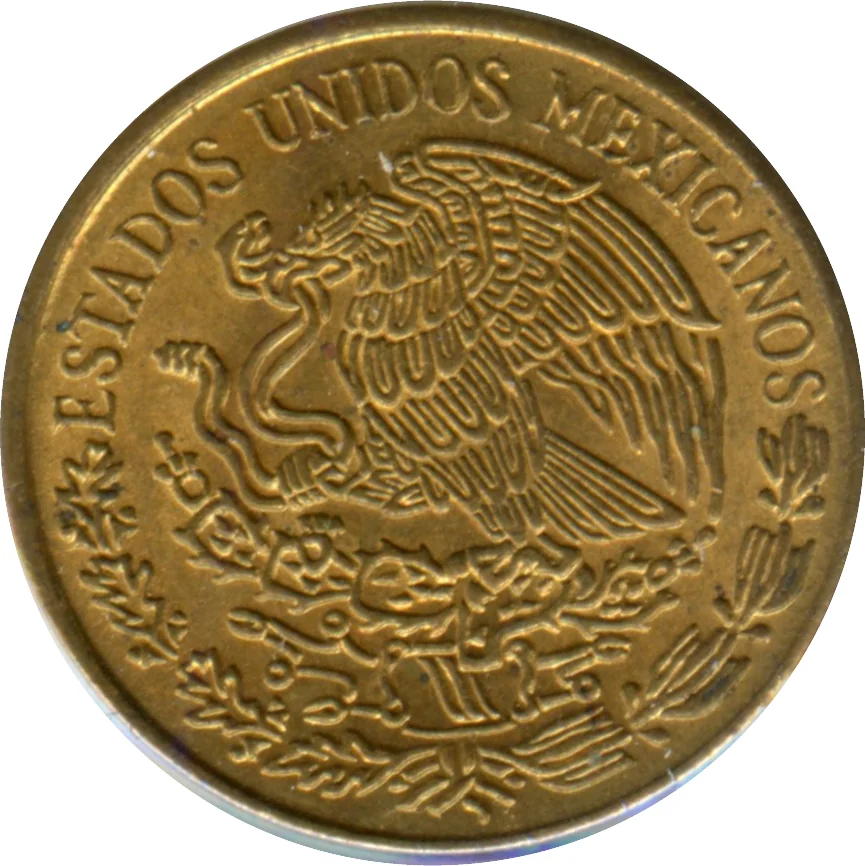
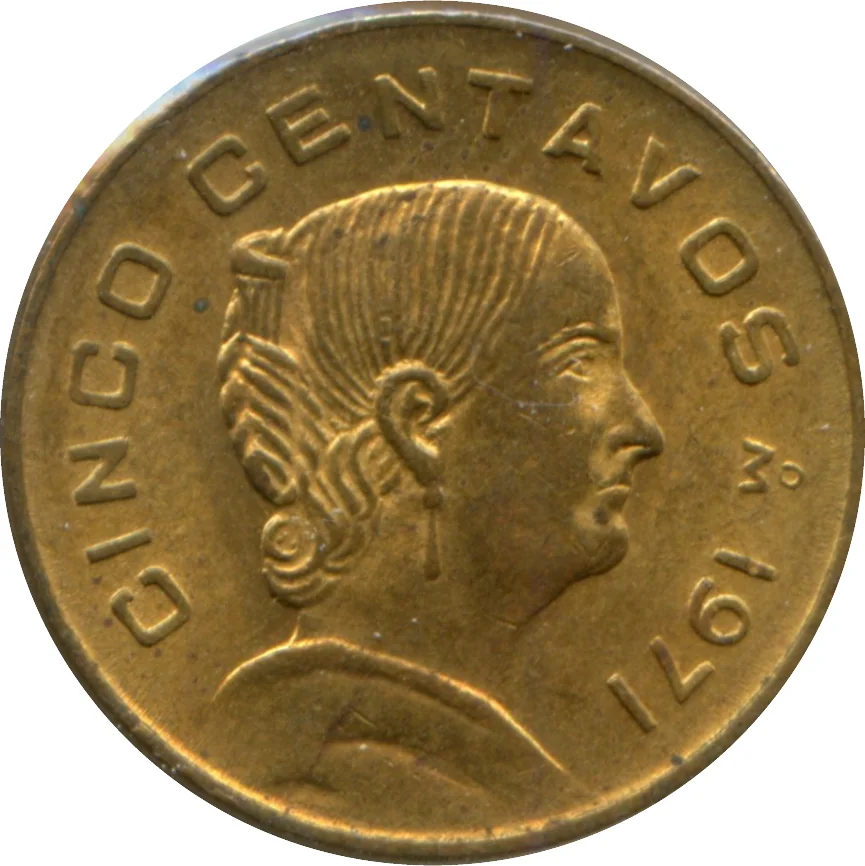
5 centavos – Mexico
Add to wishlist
Mexico
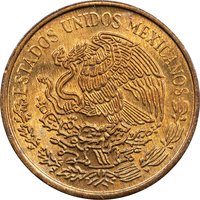
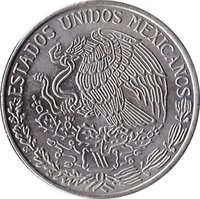
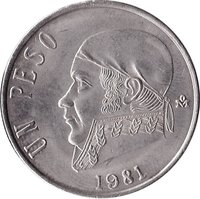
Obverse
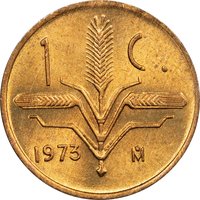
Reverse
Edge
Plain
Mints
| Name | Mark |
|---|---|
| Mexican Mint | (Mo) |
Mintings
| Year | Mint Mark | Mintage | Quality | Collection |
|---|---|---|---|---|
| 1970 | Mo | 163,368,000 | ||
| 1971 | Mo | 198,844,000 | ||
| 1972 | Mo | 225,000,000 | ||
| 1973 | Mo | 595,070,000 | ||
| 1974 | Mo | 401,584,000 | ||
| 1975 | Mo | 342,308,000 | ||
| 1976 | Mo | 367,524,000 |
Historical background
Mexico entered the 1970s with a currency, the peso, that was a symbol of the nation's post-war "Mexican Miracle"—a period of sustained economic growth and stability. Since 1954, the peso had been fixed at an exchange rate of 12.5 pesos to the U.S. dollar, a parity maintained through conservative fiscal policies and controlled capital flows. This fixed rate provided a bedrock of predictability for trade and investment, underpinning the import-substitution industrialization model. However, this apparent stability masked growing structural weaknesses, including a persistent trade deficit, rising public spending, and an overvalued peso that made Mexican exports less competitive.
The administration of President Luis Echeverría (1970-1976) marked a decisive shift. Abandoning the austerity of his predecessors, Echeverría embarked on a populist spending program to address social inequality and stimulate the economy, financed largely by external borrowing and expanding the money supply. This led to rising inflation, which the fixed exchange rate could not accommodate. Pressure mounted as the trade deficit ballooned and capital flight accelerated, with investors losing confidence in the government's ability to maintain the peso's value.
Consequently, by the mid-1970s, the long-standing currency stability unraveled. In 1976, facing severe speculative pressure and depleted foreign reserves, Mexico was forced to abandon the fixed exchange rate. The peso was devalued by nearly 50%, ending its 22-year peg and ushering in an era of devaluation and economic crisis that would culminate in the 1982 debt default. Thus, the currency situation of 1970 represented the calm before the storm, a rigid parity that would soon fracture under the weight of expansive economic policies and global financial realities.
The administration of President Luis Echeverría (1970-1976) marked a decisive shift. Abandoning the austerity of his predecessors, Echeverría embarked on a populist spending program to address social inequality and stimulate the economy, financed largely by external borrowing and expanding the money supply. This led to rising inflation, which the fixed exchange rate could not accommodate. Pressure mounted as the trade deficit ballooned and capital flight accelerated, with investors losing confidence in the government's ability to maintain the peso's value.
Consequently, by the mid-1970s, the long-standing currency stability unraveled. In 1976, facing severe speculative pressure and depleted foreign reserves, Mexico was forced to abandon the fixed exchange rate. The peso was devalued by nearly 50%, ending its 22-year peg and ushering in an era of devaluation and economic crisis that would culminate in the 1982 debt default. Thus, the currency situation of 1970 represented the calm before the storm, a rigid parity that would soon fracture under the weight of expansive economic policies and global financial realities.
Series: 1970 Mexico circulation coins
🌱 Very Common