

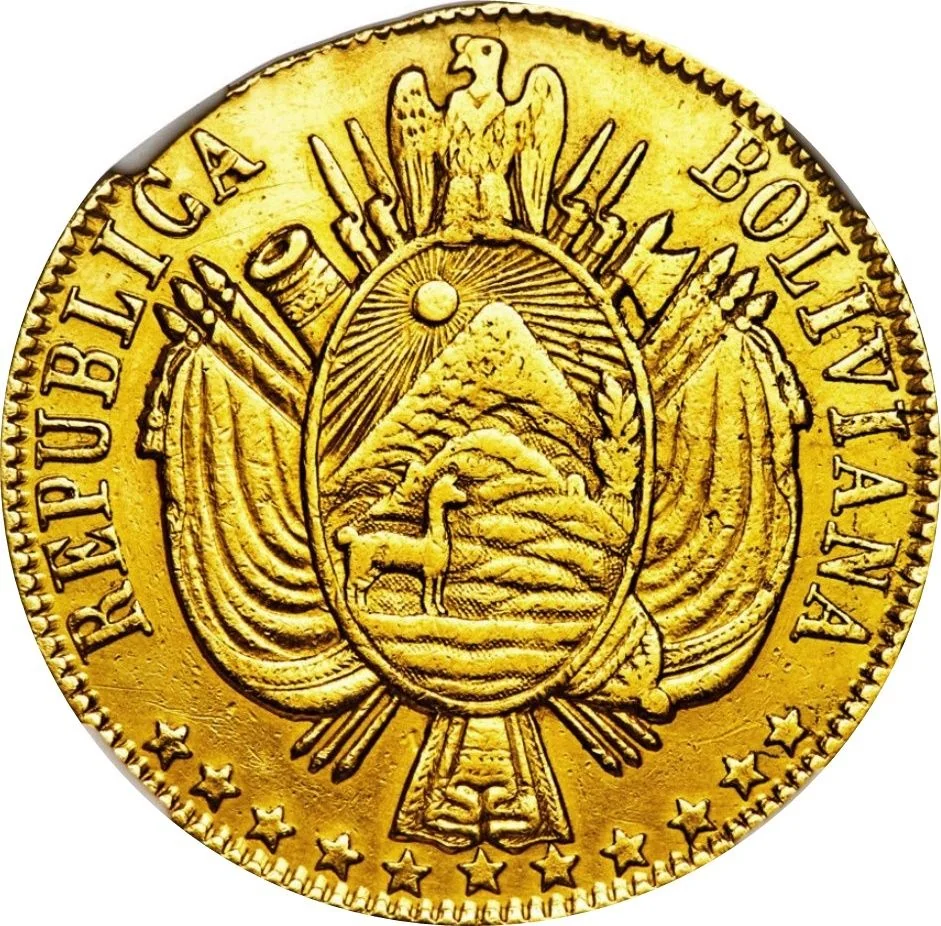
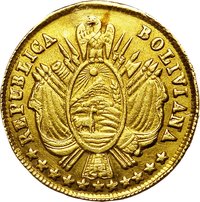
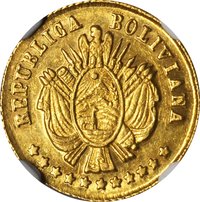
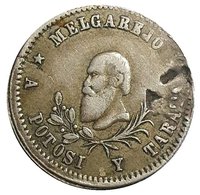
Obverse
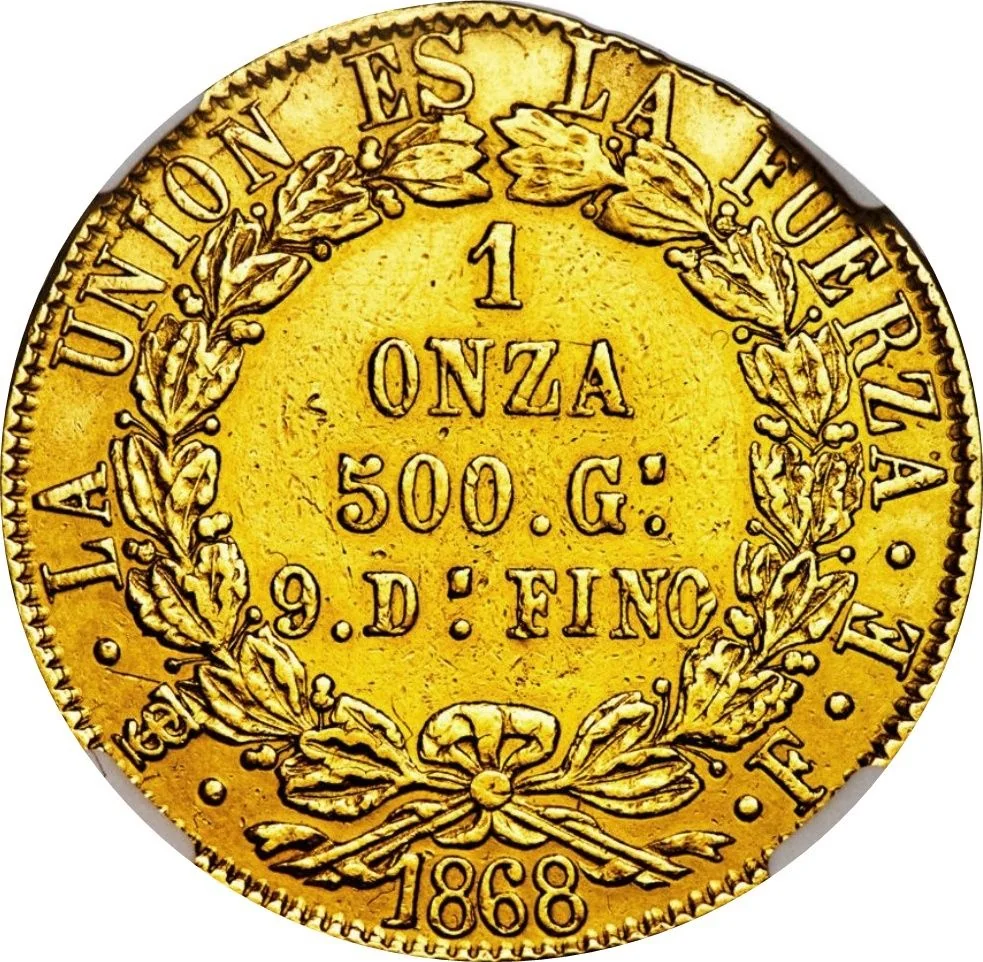
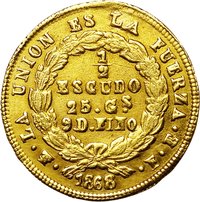
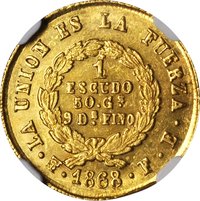
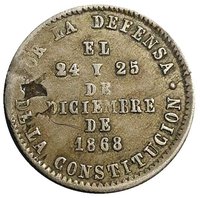
Reverse
Edge
Mints
| Name | Mark |
|---|---|
| Potosi | PTS |
Mintings
| Year | Mint Mark | Mintage | Quality | Collection |
|---|---|---|---|---|
| 1868 | PTS | — |
Historical background
In 1868, Bolivia's currency situation was characterized by profound instability and fragmentation, a direct legacy of the economic devastation following the War of the Pacific (1879-1884) still in the future, but rooted in earlier regional conflicts and fiscal weakness. The national treasury was chronically depleted from costly wars and internal strife, leading to severe deficits. The country lacked a unified, trusted national coinage; instead, the monetary sphere was a chaotic mix of foreign silver coins, primarily Peruvian and Chilean pesos ("peso fuerte"), Bolivian minted coins of varying purity, and even rudimentary credit notes from private merchants and regional caudillos. This multiplicity of mediums of exchange, each with its own fluctuating value, crippled commerce and state finances.
The government's response to this crisis was largely ineffective and often counterproductive. Facing empty coffers, successive administrations, including that of President Mariano Melgarejo (1864-1871), frequently resorted to debasing the coinage or authorizing the minting of low-quality silver coins (such as the peso feble) to generate immediate revenue. This practice, alongside the unchecked circulation of foreign currency, led to Gresham's Law in action: "bad money drove out good." Higher-quality silver coins were hoarded or exported, leaving the economy saturated with inferior currency, which further eroded public trust and spurred inflation in key markets.
Consequently, the monetary anarchy of 1868 stifled economic development and foreign investment. The lack of a reliable standard of value created uncertainty for both large-scale mining operations—the nation's potential economic backbone—and everyday trade. This financial disarray was symptomatic of the broader political instability and weak central authority that plagued Bolivia in the mid-19th century. The currency situation would only find a temporary and tenuous resolution later under Melgarejo with the short-lived adoption of the Bolivian peso tied to the French franc, but true monetary consolidation and stability remained a distant goal.
The government's response to this crisis was largely ineffective and often counterproductive. Facing empty coffers, successive administrations, including that of President Mariano Melgarejo (1864-1871), frequently resorted to debasing the coinage or authorizing the minting of low-quality silver coins (such as the peso feble) to generate immediate revenue. This practice, alongside the unchecked circulation of foreign currency, led to Gresham's Law in action: "bad money drove out good." Higher-quality silver coins were hoarded or exported, leaving the economy saturated with inferior currency, which further eroded public trust and spurred inflation in key markets.
Consequently, the monetary anarchy of 1868 stifled economic development and foreign investment. The lack of a reliable standard of value created uncertainty for both large-scale mining operations—the nation's potential economic backbone—and everyday trade. This financial disarray was symptomatic of the broader political instability and weak central authority that plagued Bolivia in the mid-19th century. The currency situation would only find a temporary and tenuous resolution later under Melgarejo with the short-lived adoption of the Bolivian peso tied to the French franc, but true monetary consolidation and stability remained a distant goal.
✨ Legendary