

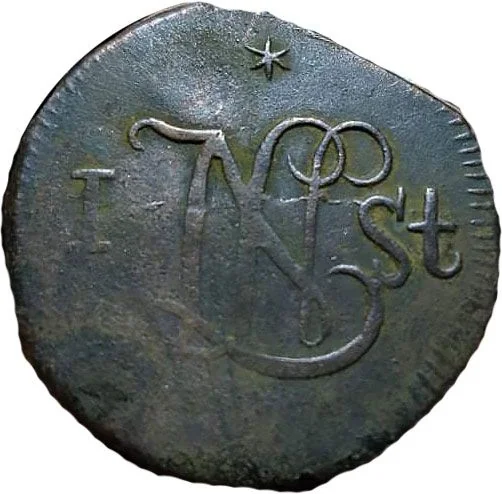
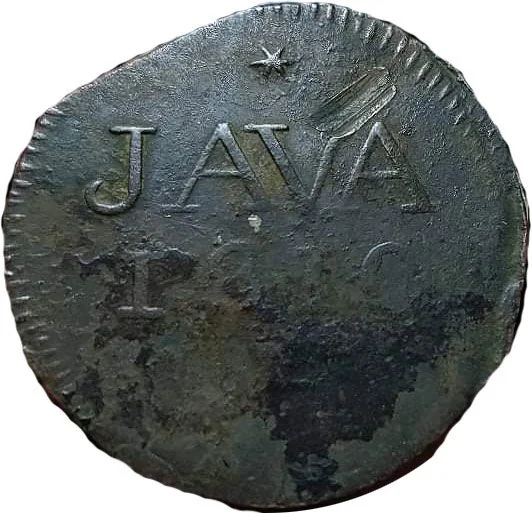
1 stuiver – Java
Add to wishlist
Indonesia
Context
Year: 1810
Country: Indonesia
Issuer: Java
Period:
(1806—1811)
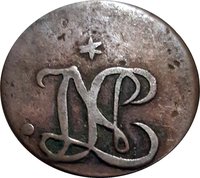
Ruler: Louis Napoléon
Currency:
(1744—1818)
Demonetized: Yes
Material
Diameter: 31 mm
Weight: 10.5 g
Thickness: 1.5 mm
Shape: Irregular round
Composition: Copper
Magnetic: No
Technique: Hammered
Alignment: Medal alignment
flip
References
KM: #
Numista: #314708
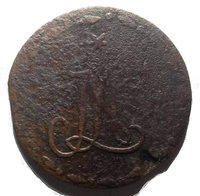
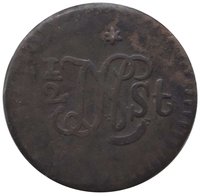
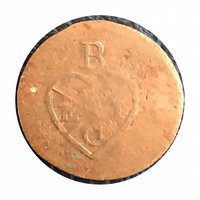
Obverse
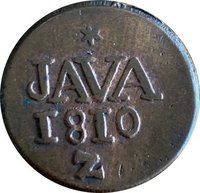
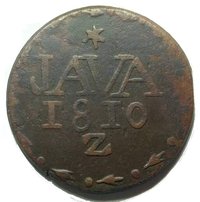
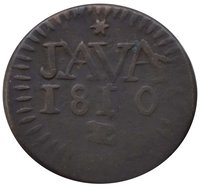
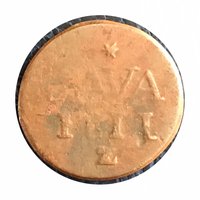
Reverse
Description:
Territory name between star and date, privy mark below.
Inscription:
*
JAVA
1810
Z
JAVA
1810
Z
Script: Latin
Edge
Plain
Mints
| Name | Mark |
|---|---|
| Surabaya | — |
Mintings
| Year | Mint Mark | Mintage | Quality | Collection |
|---|---|---|---|---|
| 1810 | — | — |
Historical background
In 1810, Java was under the administration of the Dutch East Indies government, which was a client state of Napoleonic France following the dissolution of the Dutch Republic. The colony's currency system was in a state of severe dislocation and complexity. The official currency was the Dutch guilder, but the chronic shortage of specie (coinage) due to disrupted trade with Europe and the financial strain of maintaining the colonial administration led to a proliferation of alternative currencies. These included Spanish-American silver dollars (reales), local copper duit coins, and a vast array of privately issued paper money and credit notes from various trading houses and regional authorities, creating a chaotic and unreliable monetary environment.
The situation was exacerbated by the British naval blockade, which isolated Java from its traditional European financial networks. To finance government operations and the military, Governor-General Herman Willem Daendels, who ruled from 1808 to 1811, resorted to extreme measures. He massively increased the issuance of paper money, known as "credit bills," without sufficient metallic backing, leading to rapid depreciation and a loss of public confidence. Furthermore, Daendels famously melted down precious metal items from the palaces and even church bells to mint emergency coinage, a desperate act that underscored the dire shortage of sound money.
Consequently, by 1810, Java suffered from acute inflation, multiple competing currencies of fluctuating value, and a deep crisis of monetary trust. This financial instability weakened the colonial economy on the eve of a major geopolitical shift. The very next year, in 1811, British forces would invade and capture Java, with the chaotic currency situation being one of the significant legacies and problems the incoming British administration under Stamford Raffles had to immediately address.
The situation was exacerbated by the British naval blockade, which isolated Java from its traditional European financial networks. To finance government operations and the military, Governor-General Herman Willem Daendels, who ruled from 1808 to 1811, resorted to extreme measures. He massively increased the issuance of paper money, known as "credit bills," without sufficient metallic backing, leading to rapid depreciation and a loss of public confidence. Furthermore, Daendels famously melted down precious metal items from the palaces and even church bells to mint emergency coinage, a desperate act that underscored the dire shortage of sound money.
Consequently, by 1810, Java suffered from acute inflation, multiple competing currencies of fluctuating value, and a deep crisis of monetary trust. This financial instability weakened the colonial economy on the eve of a major geopolitical shift. The very next year, in 1811, British forces would invade and capture Java, with the chaotic currency situation being one of the significant legacies and problems the incoming British administration under Stamford Raffles had to immediately address.
✨ Legendary