

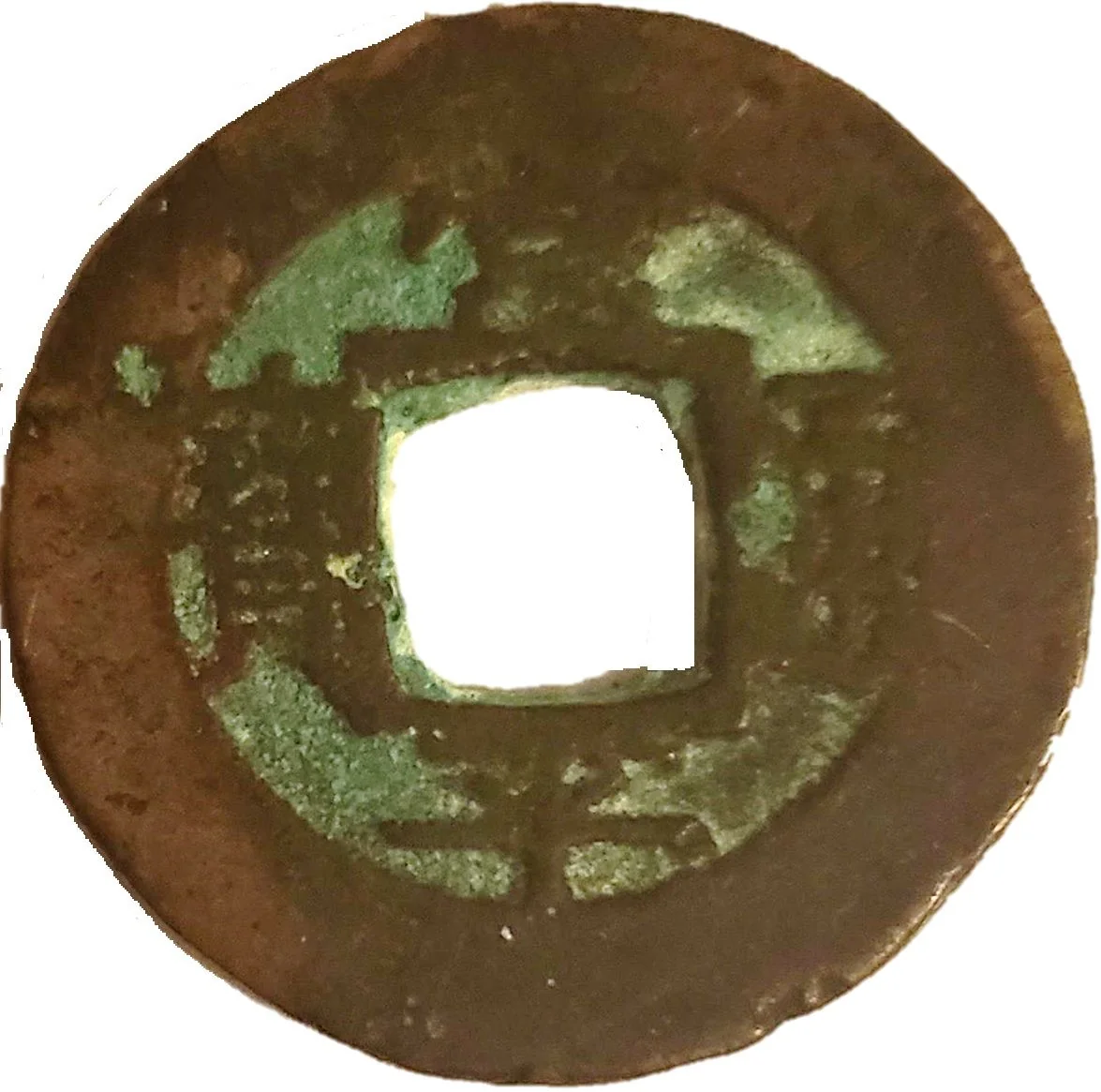
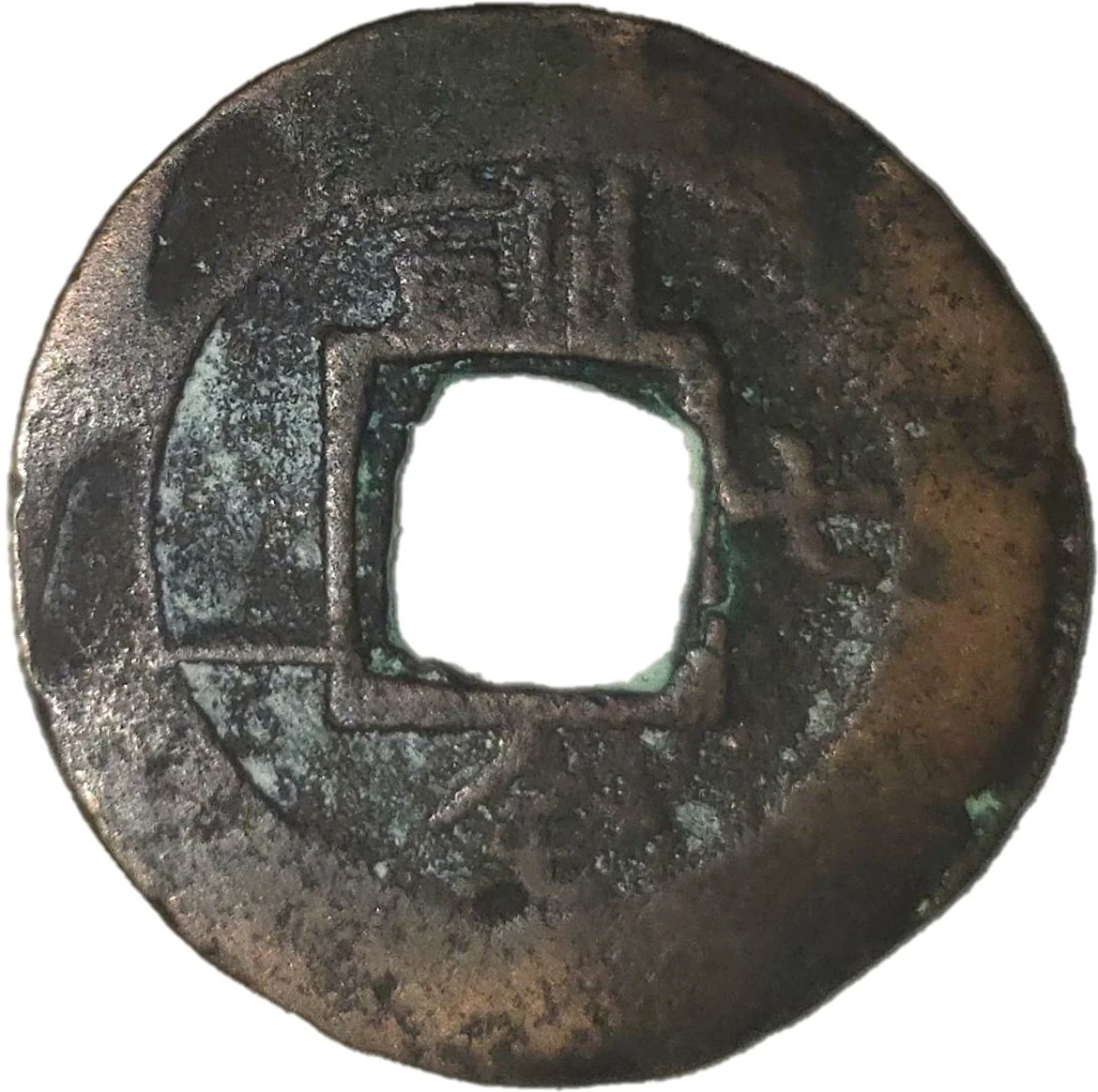
1 mun – Joseon
Add to wishlist
Context
Material
Diameter: 24 mm
Weight: 4 g
Thickness: 1.1 mm
Shape: Round with a square hole
Composition: Brass
Magnetic: No
Technique: Cast
Alignment: Medal alignment
flip
References
KM: #
Numista: #313794
Obverse
Description:
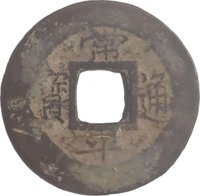
常平通寶 (Sang pyong tong bo) - Korean Yi Dynasty currency.
Inscription:
常
寶 通
平
寶 通
平
Translation:
Eternal Treasure
Circulating Currency
Circulating Currency
Scripts: Chinese (traditional, regular script)
Language: Chinese
Reverse
Description:
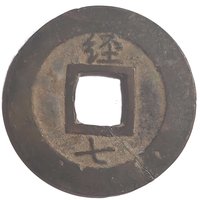
Mint mark top, series bottom, serial number right. 訓 (Hun): Military Training Command.
Inscription:
訓
七
全
七
全
Translation:
Instruct the seven clans to be complete.
Scripts: Chinese (traditional, regular script)
Language: Classical Chinese
Edge
Mints
| Name | Mark |
|---|---|
| Military Training Command | 訓 |
Mintings
| Year | Mint Mark | Mintage | Quality | Collection |
|---|---|---|---|---|
| — | 訓 | — |
Historical background
In 1828, the currency system of the Joseon Dynasty was in a state of severe strain and transition, caught between the state's desire for control and the powerful realities of market forces. The official system relied on a bimetallic standard of copper mun coins (the primary everyday currency) and silver yang (used for large transactions and taxes), but it was fundamentally undermined by chronic debasement and counterfeiting. To finance state expenditures, the government had repeatedly minted lighter, inferior coins, leading to a loss of public trust and wild fluctuations in the value of copper cash against silver and rice. This instability was exacerbated by the widespread circulation of privately minted "various coins" (abyeong), which further eroded the monetary authority of the state.
The situation was deeply intertwined with broader economic shifts, particularly the growth of a commercial economy and the influence of international silver flows. The increased production of goods for market exchange demanded a more reliable and abundant currency than the official mint could supply. Furthermore, silver imported from Qing China and Japan through trade had become a crucial medium for large-scale commerce and government finance, creating a de facto silver standard that operated alongside the faltering copper system. This created a complex and often chaotic multi-currency environment where exchange rates between copper, silver, and even commodity money like rice were volatile and regionally inconsistent.
Consequently, the year 1828 fell within a prolonged period of monetary disorder that plagued the early 19th century. The government's attempts to rectify the situation through periodic recoinages and bans on private money had failed to restore stability. The monetary instability placed a heavy burden on the peasantry, who paid taxes in fixed amounts of grain or cash but faced unpredictable prices, while benefiting merchants and speculators who could manipulate the chaotic exchanges. This systemic dysfunction in the currency was not merely a financial issue but a significant symptom of the weakening administrative control and growing social tensions that would challenge the dynasty in the decades to come.
The situation was deeply intertwined with broader economic shifts, particularly the growth of a commercial economy and the influence of international silver flows. The increased production of goods for market exchange demanded a more reliable and abundant currency than the official mint could supply. Furthermore, silver imported from Qing China and Japan through trade had become a crucial medium for large-scale commerce and government finance, creating a de facto silver standard that operated alongside the faltering copper system. This created a complex and often chaotic multi-currency environment where exchange rates between copper, silver, and even commodity money like rice were volatile and regionally inconsistent.
Consequently, the year 1828 fell within a prolonged period of monetary disorder that plagued the early 19th century. The government's attempts to rectify the situation through periodic recoinages and bans on private money had failed to restore stability. The monetary instability placed a heavy burden on the peasantry, who paid taxes in fixed amounts of grain or cash but faced unpredictable prices, while benefiting merchants and speculators who could manipulate the chaotic exchanges. This systemic dysfunction in the currency was not merely a financial issue but a significant symptom of the weakening administrative control and growing social tensions that would challenge the dynasty in the decades to come.


✨ Legendary