

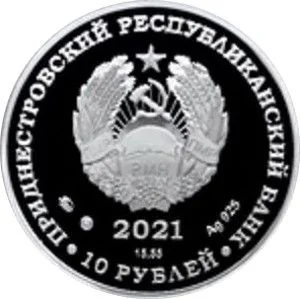
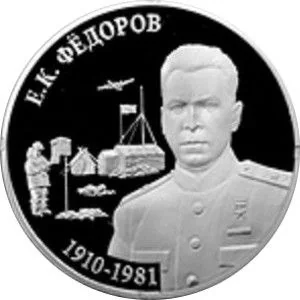
10 rubles – Transnistria
Add to wishlist
Moldova
Context
Year: 2021
Country: Moldova
Issuer: Transnistria
Issuing organization: Transnistrian Republican Bank
Period:
(since 1990)
Currency:
(since 2000)
Total mintage: 20
Material
Diameter: 32 mm
Weight: 15.55 g
Silver Weight:: 14.38 g
Shape: Round
Composition: 92.5% Silver
Standard: Silver half ounce
Magnetic: No
Technique: Milled
References
KM: #
Numista: #313634
Value
Exchange value: 10 PRB
Bullion value: $36.47
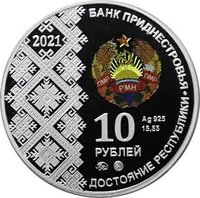
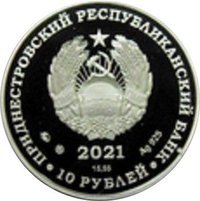
Obverse
Reverse
Edge
Plain
Mints
| Name | Mark |
|---|---|
| Moscow Mint | (ММД) |
Mintings
| Year | Mint Mark | Mintage | Quality | Collection |
|---|---|---|---|---|
| 2021 | ММД | 20 |
Historical background
In 2021, the currency situation in the unrecognized Pridnestrovian Moldavian Republic (Transnistria) remained complex and defined by its geopolitical isolation. The region continued to operate with a multi-currency system, primarily reliant on the Transnistrian ruble (PRB), a non-convertible currency used for all domestic transactions, salaries, and local payments. However, due to a lack of international recognition and subsequent exclusion from global financial systems, the Transnistrian ruble existed only in physical cash form and its value was entirely managed by the local central bank, without the backing of substantial foreign reserves.
Alongside the local ruble, foreign currencies—especially the Russian ruble, US dollar, and euro—circulated widely and were essential for external trade and savings. The population and businesses heavily depended on these currencies for purchasing imported goods and for any financial interactions beyond the region's borders. This created a two-tier economy: a domestic sphere using the local currency and an external sphere requiring hard currency. Notably, Russia's financial support, including direct budgetary aid and subsidized natural gas, remained a critical lifeline, indirectly propping up the local currency's stability and the region's overall economic functionality.
The year did not see major shifts in this entrenched system, but underlying pressures persisted. Inflation was a constant concern, influenced by both local monetary policy and the economic health of its main patron, Russia. Furthermore, Moldova's ongoing efforts to align its own regulations with the European Union, including potential measures to curb Transnistria's economic autonomy, presented a long-term challenge to the region's financial status quo. Thus, the 2021 currency landscape reflected Transnistria's enduring paradox: a functionally separate monetary system that remained fragile and externally dependent.
Alongside the local ruble, foreign currencies—especially the Russian ruble, US dollar, and euro—circulated widely and were essential for external trade and savings. The population and businesses heavily depended on these currencies for purchasing imported goods and for any financial interactions beyond the region's borders. This created a two-tier economy: a domestic sphere using the local currency and an external sphere requiring hard currency. Notably, Russia's financial support, including direct budgetary aid and subsidized natural gas, remained a critical lifeline, indirectly propping up the local currency's stability and the region's overall economic functionality.
The year did not see major shifts in this entrenched system, but underlying pressures persisted. Inflation was a constant concern, influenced by both local monetary policy and the economic health of its main patron, Russia. Furthermore, Moldova's ongoing efforts to align its own regulations with the European Union, including potential measures to curb Transnistria's economic autonomy, presented a long-term challenge to the region's financial status quo. Thus, the 2021 currency landscape reflected Transnistria's enduring paradox: a functionally separate monetary system that remained fragile and externally dependent.



✨ Legendary